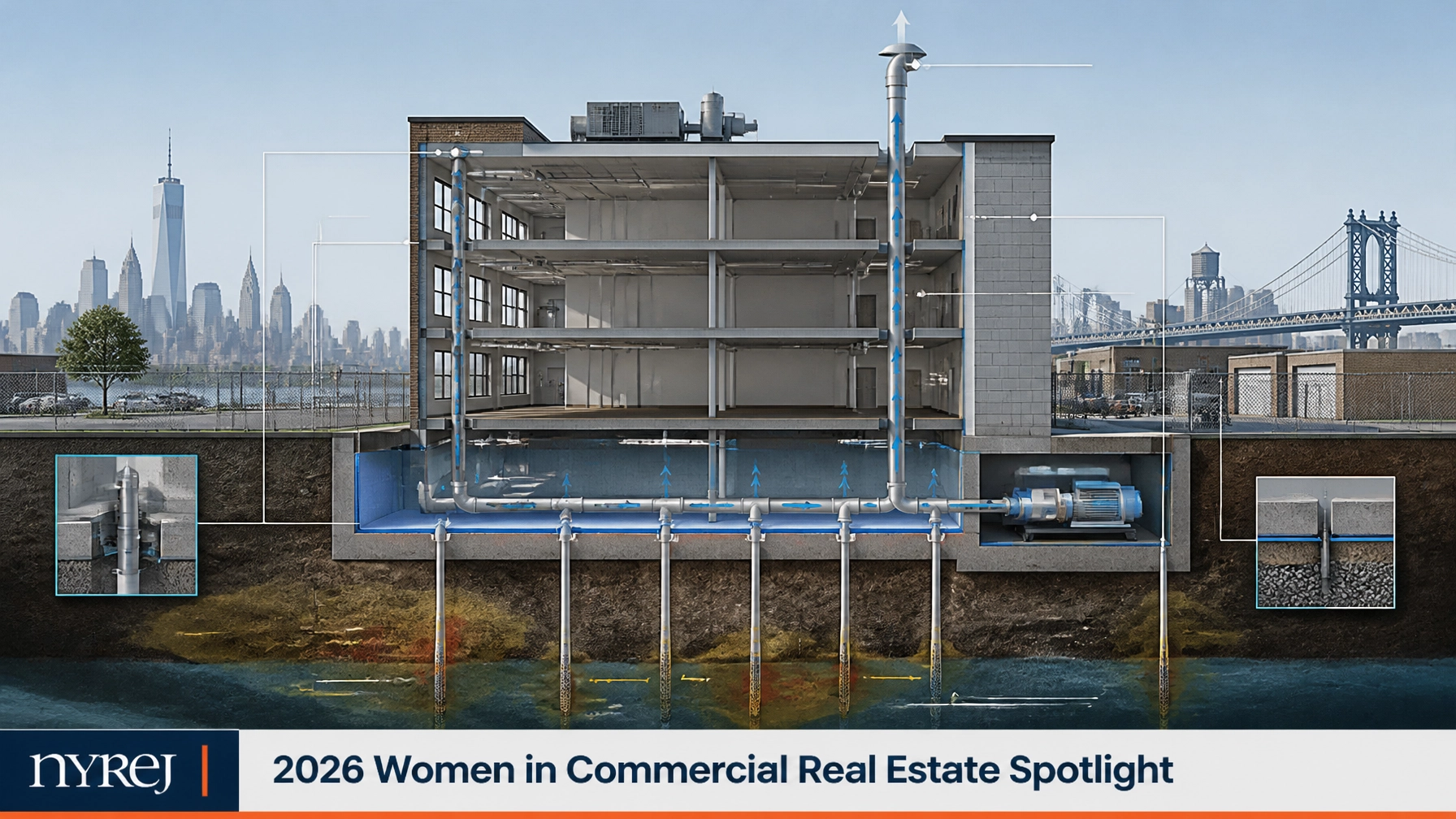
A vapor intrusion assessment can affect whether a Newark warehouse closes, whether a Jersey City redevelopment receives lender approval, and whether a contaminated property has a clear path to construction.
The starting point is the NJDEP vapor intrusion guidance, including the current Vapor Intrusion Screening Levels, or VISL, tables. These values help investigators decide when additional evaluation, mitigation, or regulatory coordination may be necessary.
They are not a substitute for site-specific professional judgment. They are also not automatically the final remediation standards for every property.
What NJDEP vapor intrusion screening levels measure
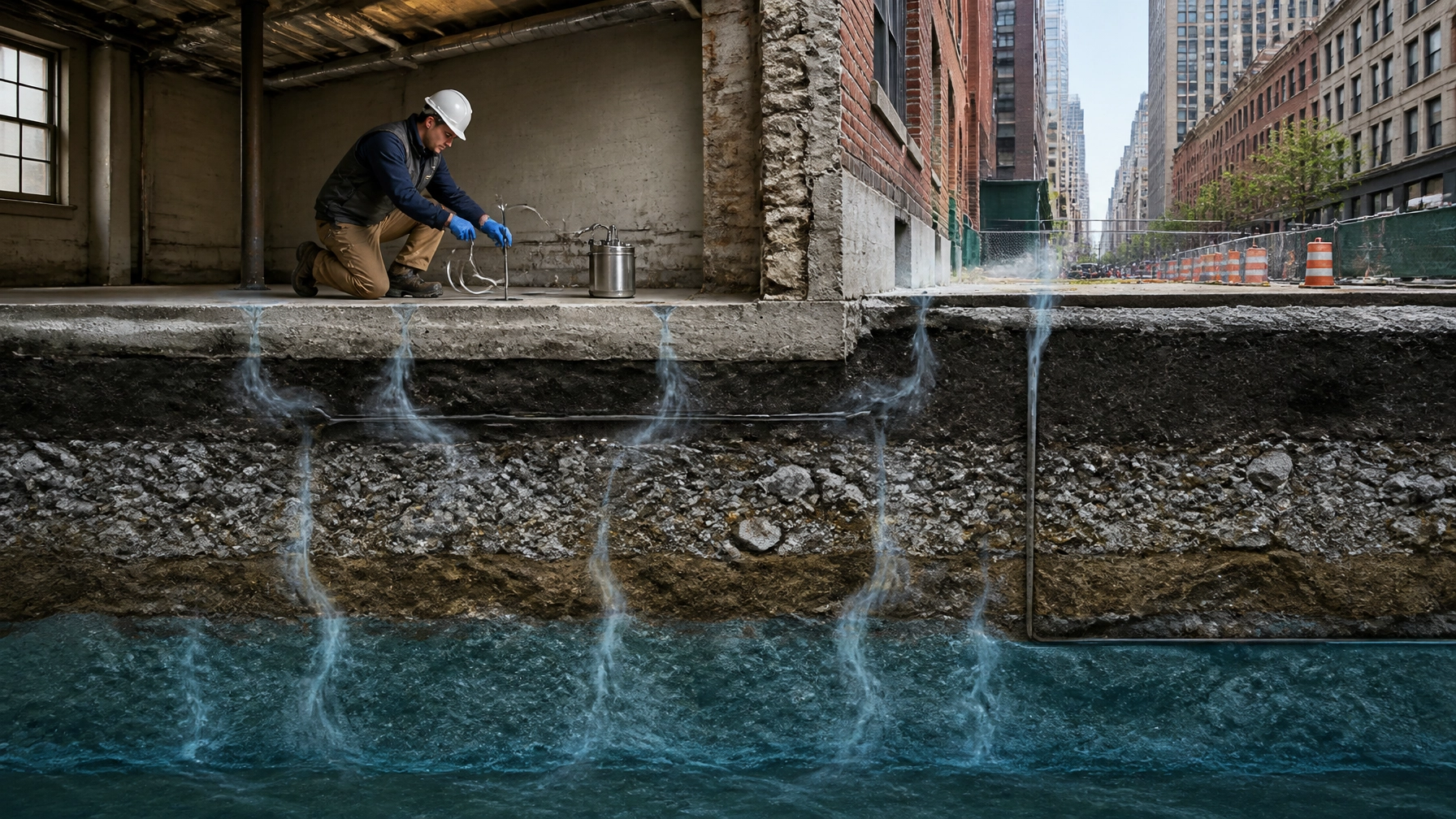
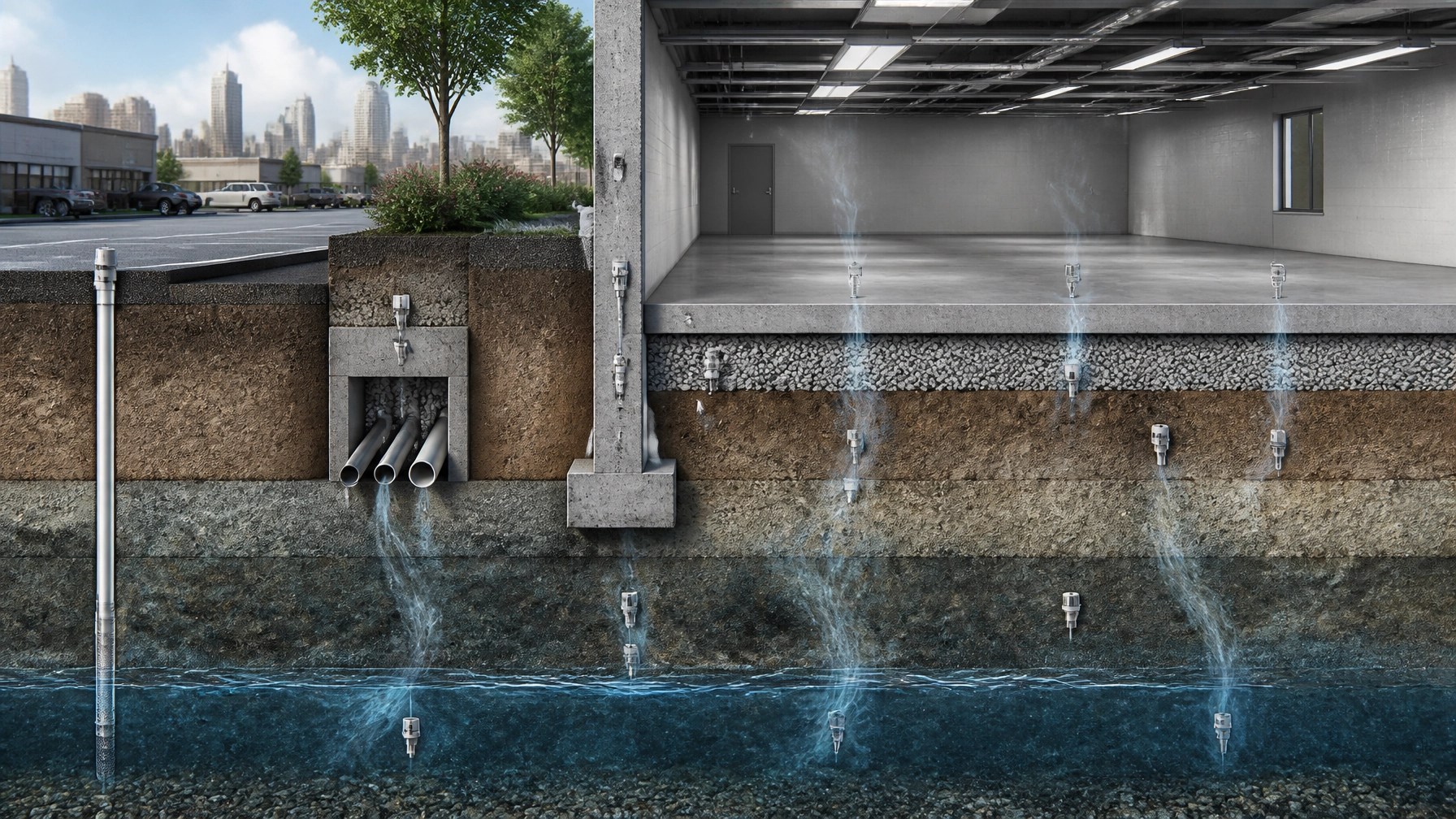
Vapor intrusion occurs when volatile organic compounds, or VOCs, migrate from soil, groundwater, or other subsurface sources into an occupied or potentially occupied building.
Common VOCs include:
- Trichloroethene, or TCE
- Tetrachloroethene, or PCE
- Benzene
- Vinyl chloride
- Methylene chloride
- Petroleum-related compounds such as toluene, ethylbenzene, and xylenes
NJDEP evaluates the pathway through several media:
- Groundwater: Ground Water Screening Levels, or GWSL
- Soil vapor and sub-slab vapor: Soil Gas Screening Levels, or SGSL
- Indoor air: Indoor Air Remediation Standards and Rapid Action Levels, or RALs
The current NJDEP Vapor Intrusion Screening Levels Basis and Background document, issued in February 2025, explains how the values were developed. The associated tables distinguish residential and nonresidential exposure scenarios and include alternate groundwater screening levels for certain soil textures.
The conceptual site model comes first
NJDEP guidance places the conceptual site model, or CSM, at the center of a vapor intrusion investigation.
A CSM identifies:
- The suspected VOC source
- The affected soil, groundwater, or vapor zone
- The direction and mechanism of vapor migration
- The building or future structure that may be affected
- The potential human receptors
- The data gaps that must be addressed
The source may be contaminated soil, shallow groundwater, residual petroleum, a former dry-cleaning operation, an underground storage tank, or a release from industrial process equipment.
The pathway may involve diffusion through soil, vapor movement along utility corridors, cracks in a slab, foundation penetrations, sumps, drains, or other preferential pathways.
NJDEP states that starting an investigation without a CSM is likely to increase costs and decrease efficiency. That matters during a property transaction. A poorly scoped sampling event can produce data that a lender, attorney, or regulator cannot use.
For Newark, Jersey City, Hoboken, Bayonne, and other Hudson, Bergen, and Essex County properties, the CSM should account for urban fill, old utility corridors, basements, slab construction, tidal influences, variable groundwater elevations, and adjacent historical operations.
Soil vapor testing in Newark and Jersey City
Soil vapor testing does not mean placing one probe anywhere on a property and comparing the result to a table.
The sampling location matters.
NJDEP distinguishes between:
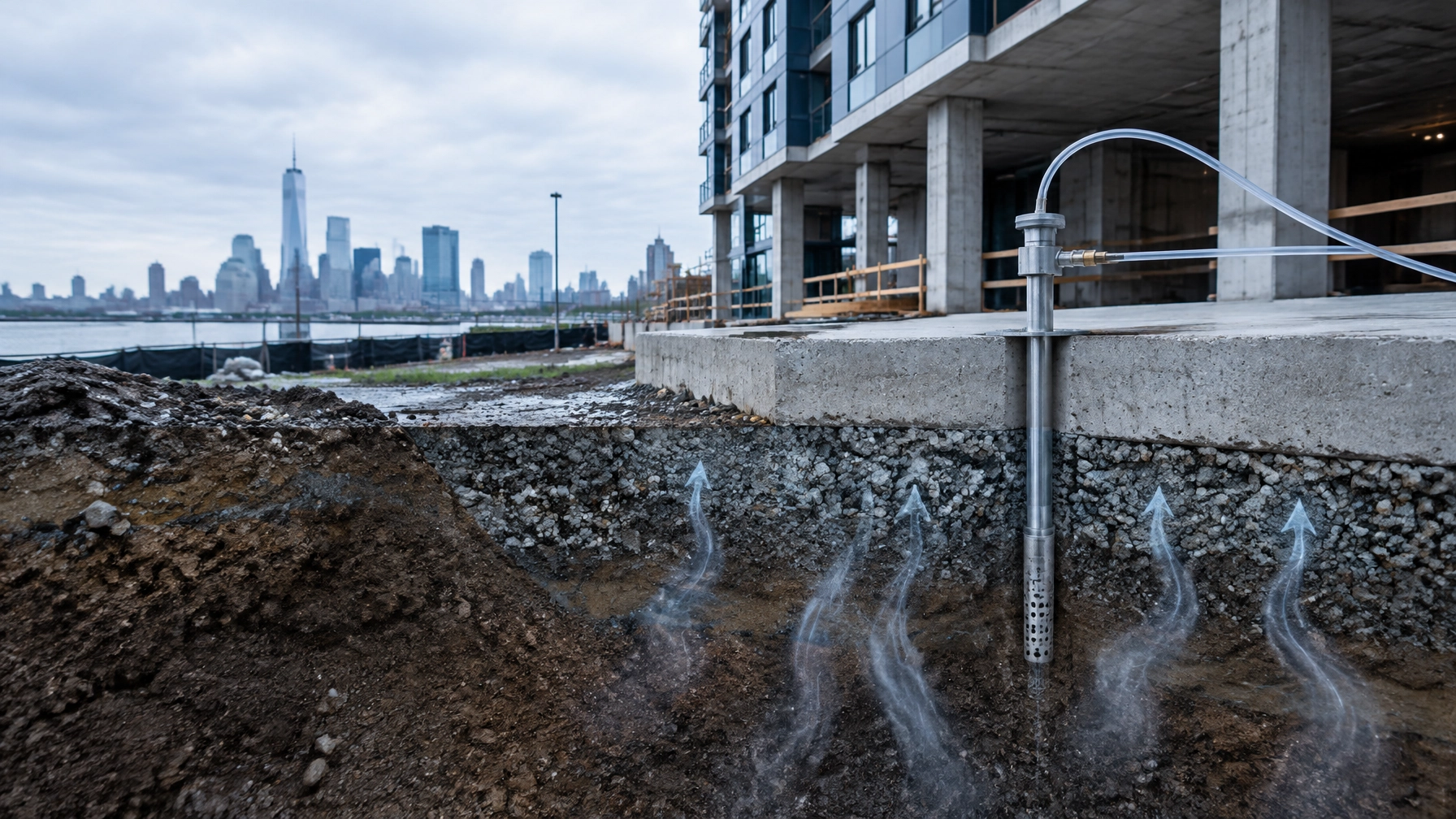
- Sub-slab soil gas: Collected directly beneath a building slab
- Near-slab soil gas: Collected within approximately 10 feet of a foundation
- Exterior soil gas: Collected beyond the near-slab area, often for screening or future-use evaluations
- Indoor air: Collected inside the building
- Ambient air: Collected outside the building to evaluate background conditions
For an existing building, sub-slab sampling generally provides more direct information about the vapor immediately below the structure. Exterior soil vapor data alone may not establish whether the vapor intrusion pathway is complete.
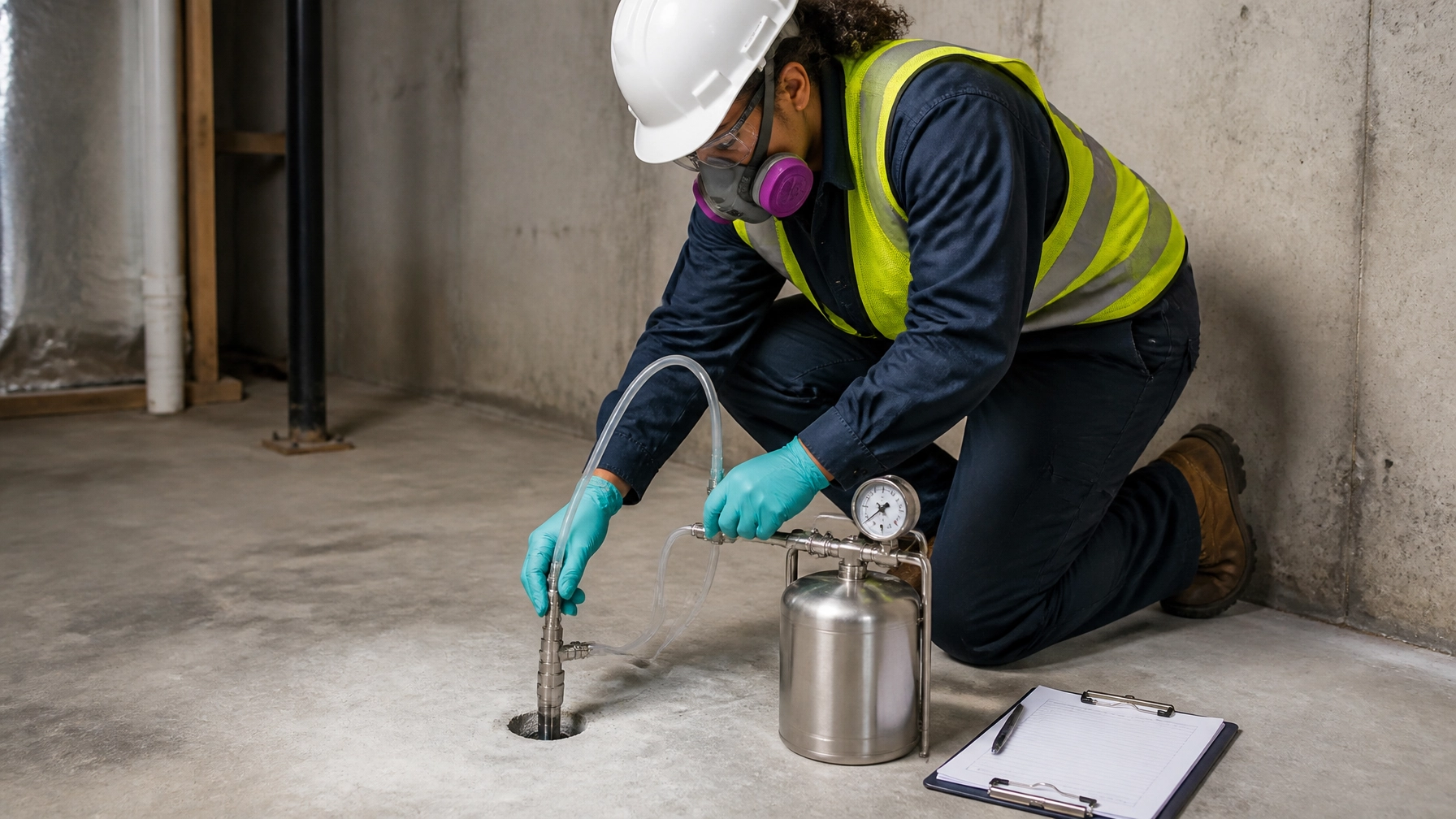
A typical soil vapor testing Newark NJ or sub-slab sampling Hudson County scope may include:
- Review of historical property use and existing environmental data
- Mapping of buildings, foundations, utilities, basements, sumps, drains, and cracks
- Development of the CSM and sampling plan
- Installation of temporary or permanent sub-slab sampling points
- Leak testing and tracer gas evaluation
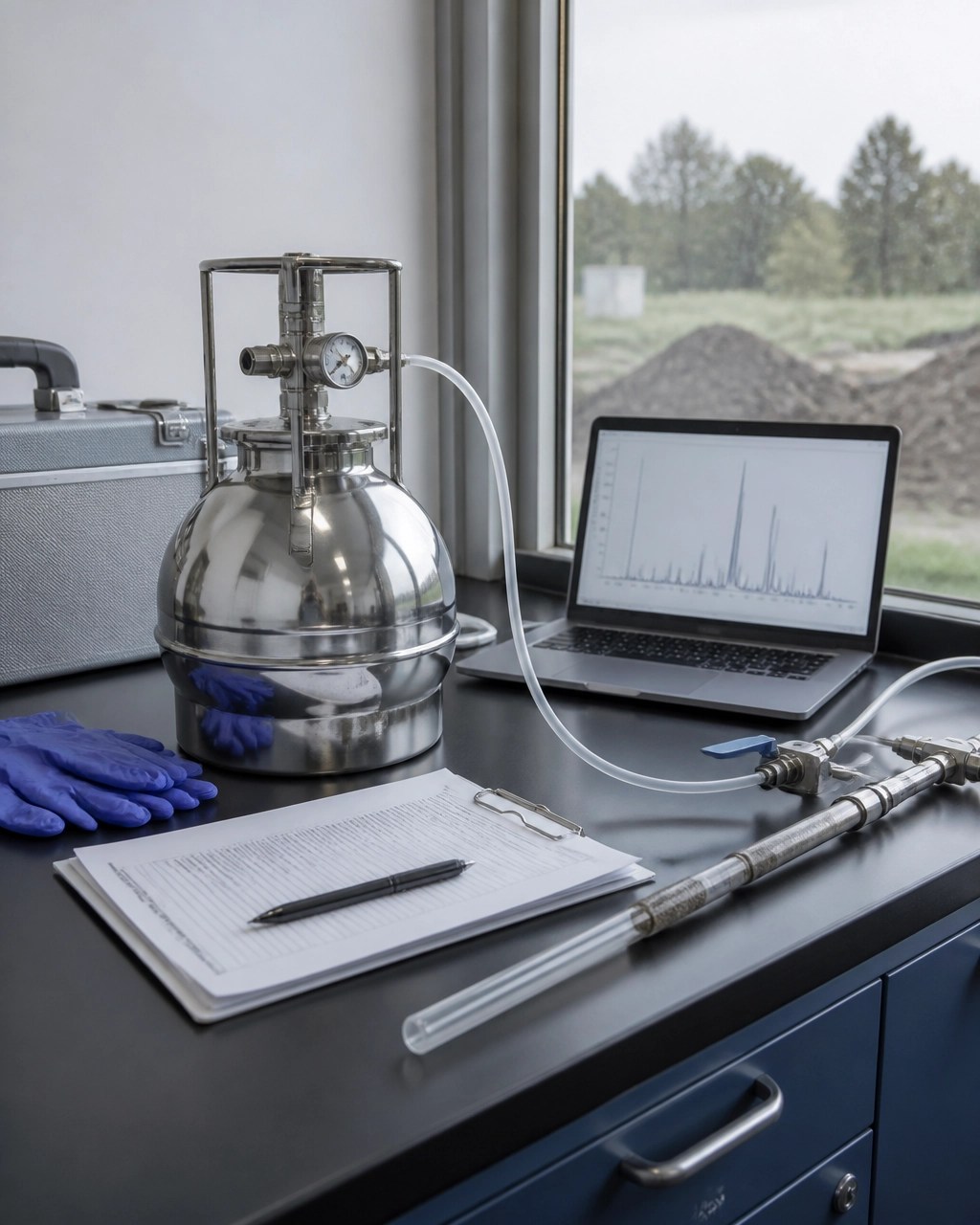
- Collection of soil vapor samples in laboratory-certified canisters
- Analysis using an appropriate air method, commonly EPA Method TO-15
- Data validation and comparison to current NJDEP screening levels
- Evaluation of indoor air, ambient air, and background sources
- Written recommendations for mitigation, monitoring, or additional investigation
A building survey is essential. Paints, solvents, dry-cleaned clothing, gasoline, adhesives, cleaning products, new flooring, cigarette smoke, and attached garages can contribute VOCs to indoor air. Without evaluating those sources, an indoor air result may be difficult to attribute to subsurface contamination.
How to use the NJDEP VI screening level table
The NJDEP VI screening level table contains different values for different media. The result must be compared to the correct value and exposure scenario.
The February 2025 NJDEP materials describe:
- GWSL: Used to evaluate whether groundwater may create a vapor intrusion concern
- SGSL: Used for representative sub-slab and near-slab soil gas results
- Indoor air values: Used to evaluate indoor air concentrations
- RALs: Used to identify indoor air concentrations that may require prompt action
For context, the 2025 NJDEP Basis and Background document lists examples of residential and nonresidential SGSL values such as:
| Compound | Residential SGSL | Nonresidential SGSL |
|---|---|---|
| Benzene | 18 µg/m³ | 79 µg/m³ |
| PCE | 540 µg/m³ | 2,400 µg/m³ |
| TCE | 34 µg/m³ | 150 µg/m³ |
| Vinyl chloride | 32 µg/m³ | 140 µg/m³ |
These values are examples for orientation. They should not replace review of the current NJDEP table, applicable footnotes, reporting limits, or site-specific conditions.
NJDEP’s 2025 document also lists updated groundwater screening values for certain compounds, including:
- 1,1-Dichloroethene: 31 µg/L
- Ethylbenzene: 150 µg/L
- Vinyl chloride: 0.59 µg/L
The table values can change. Before submitting a report or relying on results for a closing, verify that the laboratory data and screening comparison use the current NJDEP materials.
Screening levels are not final cleanup standards
This distinction is critical.
A screening-level exceedance indicates that vapor intrusion may require further evaluation. It does not automatically establish the final cleanup obligation, prove that occupants are exposed, or determine the final remedy.
The investigation may need to consider:
- Whether the data are representative
- Whether the sampling point was properly installed
- Whether the sample was collected at an appropriate depth
- Whether the laboratory reporting limits were adequate
- Whether indoor background sources affected the result
- Whether groundwater, soil, or soil vapor is the actual source
- Whether the building has preferential pathways
- Whether the result is consistent across multiple sampling events
- Whether a site-specific attenuation factor or model is appropriate
NJDEP may also make a site-specific determination based on building construction, soil texture, hydrogeology, groundwater depth, current or future land use, and other lines of evidence.
A screening value is a decision tool. It is not the entire regulatory analysis.
Mitigation, verification, and long-term controls
When the vapor intrusion pathway is confirmed or cannot be ruled out, mitigation may include:
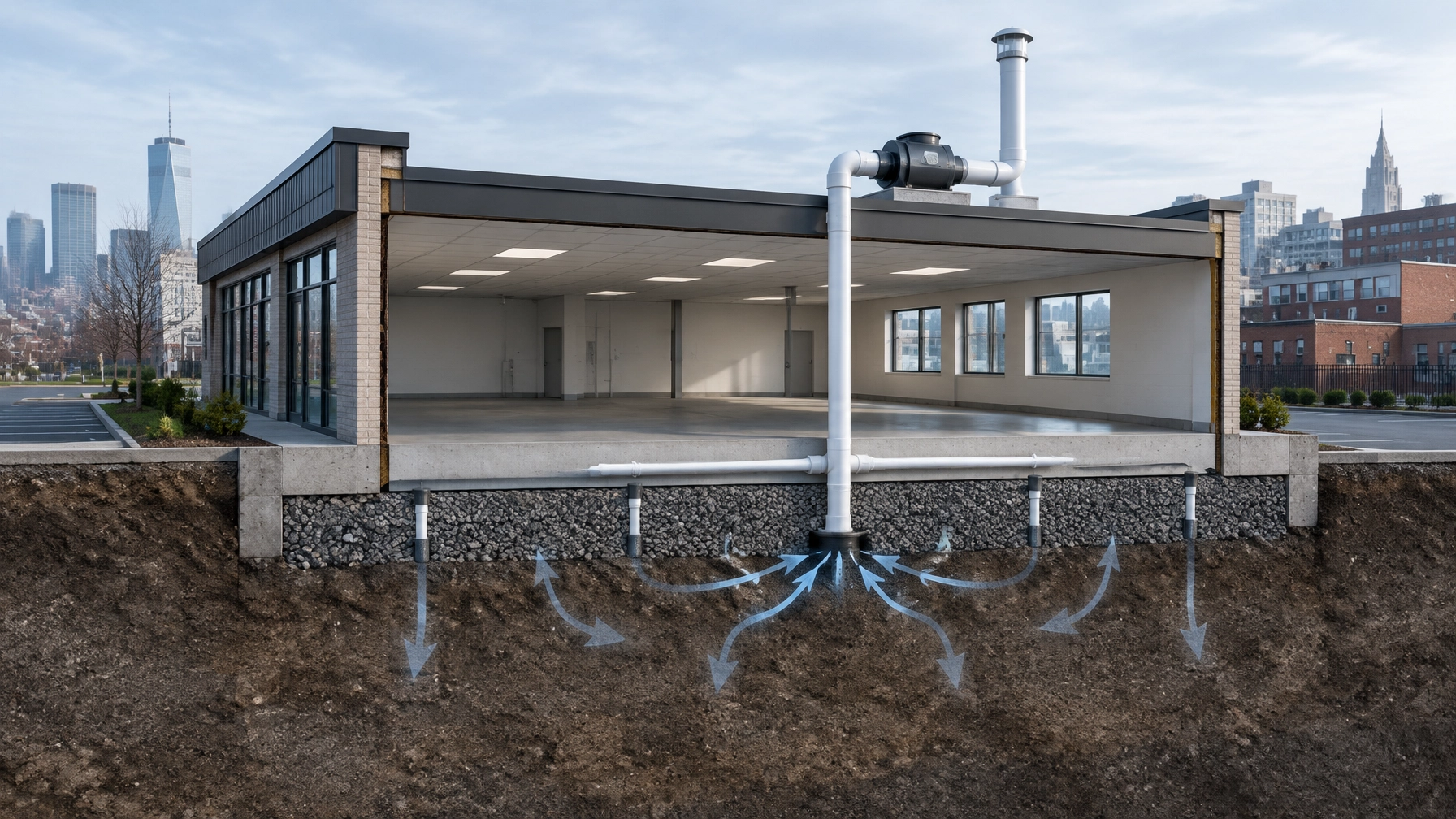
- Sub-slab depressurization systems
- Vapor barriers
- Sealing of foundation cracks and penetrations
- Active venting systems
- Building pressure controls
- Soil or groundwater remediation
- Indoor air monitoring
- Engineering controls
- Institutional controls
- Operation and maintenance requirements
Mitigation is not complete when a fan is installed. The system must be tested and verified. Post-installation sampling may include sub-slab vapor, indoor air, pressure readings, system performance checks, and confirmation that the building remains protected.
For regulated sites, engineering and institutional controls may require long-term inspection, monitoring, reporting, and documentation. Envicon supports this work through vapor intrusion mitigation services and NJ LSRP services.
Timing matters during a property transaction
A vapor intrusion assessment should begin before the closing schedule becomes fixed.
A lender or environmental attorney may request additional work after reviewing:
- A Phase I or Phase II ESA
- Historic dry-cleaning or industrial use
- Groundwater data
- UST records
- Soil vapor results
- NJDEP case files
- An existing deed notice or engineering control
- A proposed change from industrial to residential use
That additional work may involve building access, occupant coordination, sub-slab installation, laboratory scheduling, data validation, regulator review, and possibly mitigation design.
A vapor intrusion consultant New Jersey closing should understand both the technical investigation and the transaction deadline. Envicon provides a direct path from initial screening to full vapor intrusion assessment, with licensed professionals coordinating field work, laboratory requirements, regulatory interpretation, and lender-ready reporting.
Large firms often divide these tasks between separate teams. That creates handoffs and delay. Our approach keeps the engineer, field team, project manager, and regulatory lead aligned from the first call through the final recommendation.
Practical checklist for Newark and Hudson County properties
Before authorizing soil vapor testing, confirm that your consultant will:
- Review the complete environmental history
- Prepare a written CSM
- Identify VOC sources and preferential pathways
- Walk the building before selecting sample locations
- Coordinate with the laboratory before sampling
- Use current NJDEP screening tables
- Document chain of custody and field conditions
- Evaluate indoor and ambient background sources
- Distinguish screening values from remediation standards
- Explain what each result means for the transaction
- Provide a clear next step, not just a laboratory data package
The takeaway
NJDEP vapor intrusion screening levels provide a structured way to evaluate groundwater, soil vapor, sub-slab vapor, and indoor air. They do not replace a site-specific CSM, a defensible sampling plan, or professional interpretation.
For properties in Newark, Jersey City, Hoboken, Bayonne, Hudson County, Bergen County, and Essex County, the fastest path is usually the most disciplined one: define the source, map the pathway, collect representative data, verify the results, and address the risk with a practical plan.
Envicon helps turn uncertain vapor conditions into documented decisions that lenders, attorneys, regulators, developers, and communities can rely on.
Frequently asked questions
What are NJDEP vapor intrusion screening levels?
They are NJDEP values used to screen groundwater, soil gas, sub-slab vapor, and indoor air for potential vapor intrusion concerns. They include GWSL, SGSL, indoor air values, and RALs.
Is sub-slab sampling required for every New Jersey property?
No. The appropriate scope depends on the CSM, building conditions, groundwater data, soil vapor results, source location, and whether the building is occupied or proposed for future use.
What is the difference between soil gas and indoor air sampling?
Soil gas sampling measures vapor beneath or near a building. Indoor air sampling measures the air occupants may breathe. Soil gas shows potential. Indoor air provides more direct evidence of conditions inside the building, but it also requires careful evaluation of background sources.
Can a screening-level exceedance stop a real estate closing?
It can affect lender requirements, transaction documents, project budgets, and schedules. It does not automatically mean the property cannot close. A qualified team must determine whether additional investigation, mitigation, controls, or regulatory coordination are necessary.
How quickly can Envicon evaluate a vapor intrusion concern?
The schedule depends on building access, the number of samples, laboratory availability, and the complexity of the site. Envicon’s vapor intrusion assessment service describes a typical one to three week assessment range, with mitigation design taking longer when required.
Talk with a New Jersey vapor intrusion team
- Call Envicon now
- Get a free quote today
- Use our proprietary cost estimator
- Use our proprietary project risk screener