The City Planning Commission is proposing new CEQR application fees for certain project types. The public hearing is December 2, 2026. If your Manhattan project needs environmental review, the fee itself may be the smallest number to watch. The bigger question is what the proposal signals about application processing, project scope, and your schedule.
The proposal is still under review. It does not change CEQR’s substantive standards or the technical analysis an applicant owes. Before building a budget around the proposed amounts, read the proposed rule text and confirm the final rule and effective date.
What the City is proposing
The City Planning Commission, or CPC, proposes to amend Chapter 3 of Title 62 of the Rules of the City of New York. The stated purpose is to update fees for processing and reviewing certain CEQR applications. The City says current fees do not reflect recent changes to environmental review laws and have not been updated in more than 15 years.
The proposed fees are:
- Type II actions: $850, compared with the current $110 fee.
- SEQRA Qualified Actions: $2,000.
- Residential Development Type II actions, also known as Green Fast Track: $3,000.
The official rulemaking notice explains the rationale and provides the hearing and comment information. The proposal also retains an $8,000 supplemental fee for applicable CEQR applications that require a restrictive declaration to ensure environmental compliance or mitigation.
These figures are not a universal CEQR price list. The proposed schedule distinguishes among action types, and the existing schedule also includes fees based on project square footage and project category. Confirm which provision applies to your application before estimating the City’s filing charge.
The filing fee is not the environmental review budget
A City application fee pays for the agency’s processing and review. It is not the fee for the environmental consultant’s work, and it does not cover technical studies.
Those studies can include hazardous materials analysis, air quality, noise, transportation, historic resources, or other subjects identified during review. Their scope depends on the project, the site, the lead agency’s requirements, and what the environmental assessment finds.
That distinction matters for a Manhattan development budget. The proposed increase from $110 to $850 for a Type II action is clear. It does not tell you whether your project needs a Phase I ESA, subsurface investigation, a hazardous materials chapter, or additional agency coordination. Nor does it tell you how long those tasks will take.
“The current CEQR fee for Type II actions, $110, has not been updated in more than 15 years,” the CPC states in its proposed rule text.
The update is intended to bring certain agency fees closer to the staff time and resources required for review. That is a useful signal to applicants: the City is describing a review process that requires adequate time to assess an application and confirm it is complete. It does not, by itself, prove that every application will require more analysis or take longer.
Why a fee update can matter to project schedule
A small filing line can mark the start of a larger review workflow. If an application is incomplete, misclassified, or missing technical support, the practical consequence may be follow-up, revisions, and schedule pressure. The fee update does not create those risks. It makes it important to understand what the fee covers and what the application still needs to establish.
For a Manhattan project, the schedule is usually driven by the environmental record and agency review, not the check submitted with the application. Strong early scoping helps identify the studies that could affect the critical path and the information the lead agency will need.

What belongs in the technical scope
A CEQR review may identify potential hazardous materials concerns, including where past site uses or other evidence point to possible soil, groundwater, or soil vapor impacts. The CEQR hazardous materials analysis should be tied to the actual site history and proposed action, not copied from a generic checklist.
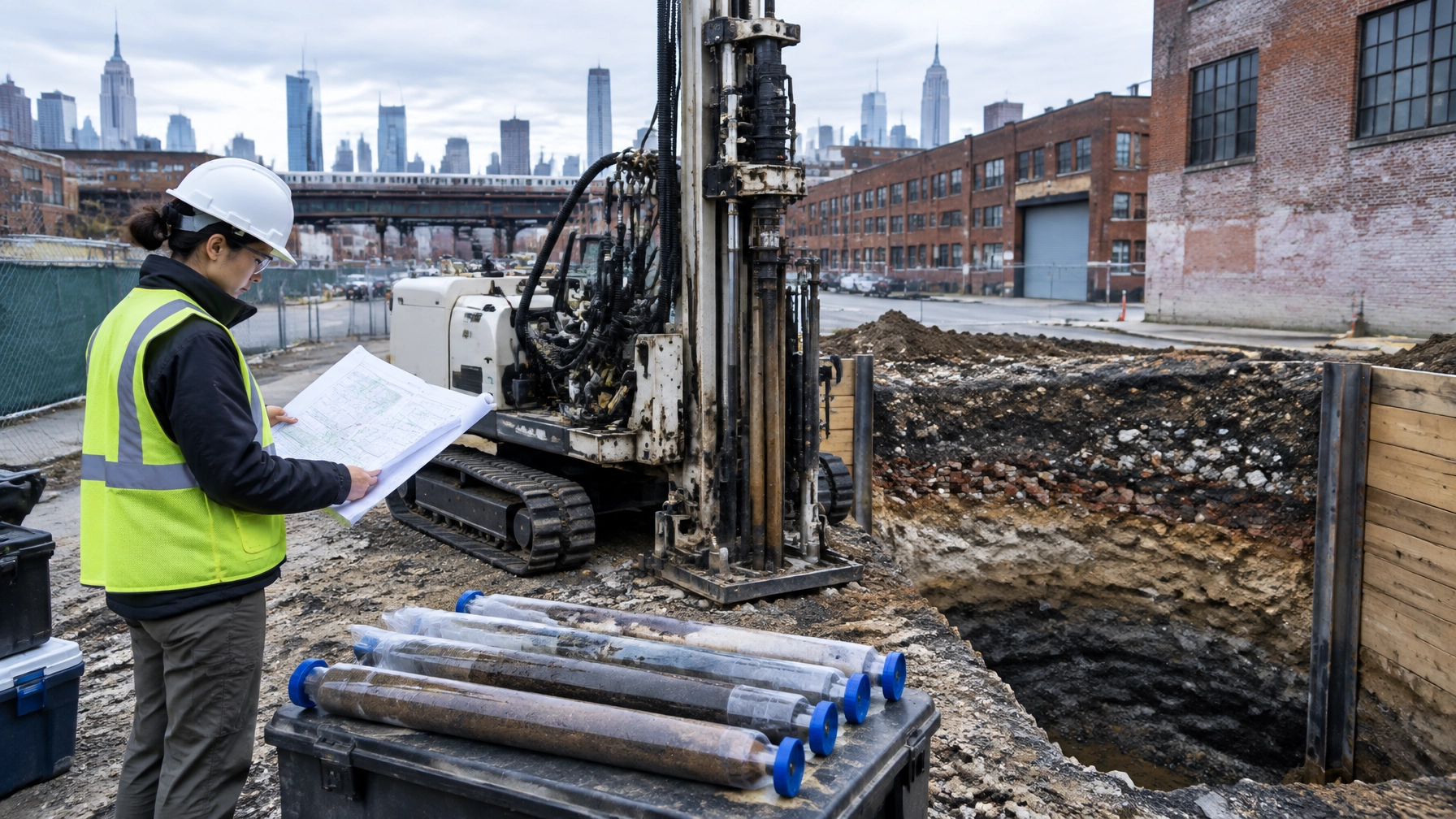
A Phase I ESA can help establish site history and identify recognized environmental conditions. A Phase II investigation may be needed to test specific concerns. The question “What is the Phase I ESA cost NYC?” does not have one answer for every property. Site size, records, access, deadline, and lender or agency needs affect the scope and price. The Phase I fee is separate from the City’s CEQR application fee.
If CEQR identifies the need for environmental controls, the project may also involve an E-designation and follow-on review through the NYC Office of Environmental Remediation, or OER. A project-specific E-designation can require additional investigation, a remedial action plan, construction health and safety planning, field oversight, and closure documentation, depending on the facts and applicable requirements. The NYC OER E-designation process is separate from the CPC’s proposed CEQR fee update.
For projects that involve cleanup or redevelopment planning, see Envicon’s remediation and brownfield support.
E-designations and restrictive declarations are not the same fee
The proposed rule concerns CPC fees for CEQR applications. It does not rewrite the technical standards for hazardous materials review or change how an E-designation is satisfied.
Keep the agency roles and costs distinct:
- CEQR application fee: A charge under the CPC’s Title 62 rules for processing and review of covered applications.
- E-designation satisfaction: A separate OER process for addressing the environmental requirements recorded for a property.
- Restrictive declaration: A recorded instrument that can bind a property owner to environmental requirements or mitigation commitments.
- Technical studies and field work: Consultant, laboratory, and contractor costs that depend on the site-specific scope.
The proposed text retains the $8,000 supplemental fee for CEQR applications that require a restrictive declaration for environmental compliance or mitigation. That fee is not the same as consultant costs or any separate agency review charges associated with satisfying environmental requirements. Check the proposed language, your project documents, and the applicable agency rules before assuming one fee replaces another.
An environmental consultant NYC project team should map these pieces before filing. That means identifying the CEQR action, confirming the applicable fee category, checking the site’s E-designation status, and coordinating any required studies with the design and permitting schedule.
One accountable team is better than a fee-and-handoff process
The application fee is easy to budget. The harder part is making sure the technical record answers the questions the lead agency and reviewer actually need addressed.
At Envicon, one licensed professional can scope the review, prepare the relevant environmental chapter, coordinate supporting technical work, and answer reviewer questions. You do not have to explain the project again at each handoff between a senior pitch team and junior staff producing the analysis. We coordinate with your architect, counsel, and development team so findings translate into a practical next step.
For broader environmental review support and due diligence, see our services and Manhattan project coverage. We also support work across the region, including Newark, New Jersey, Monmouth County, New Jersey, and Queens, New York.

Hearing dates and how to comment
The hearing is scheduled for Wednesday, December 2, 2026, from 10:00 a.m. to 11:00 a.m. at the City Planning Commission Hearing Room, 120 Broadway, Lower Concourse, New York, NY 10271. Remote participation is available. The CPC says remote testimony details will be posted on its calendar one hour before the hearing.
Written comments are due December 2, 2026. The City’s notice says speakers may testify for up to three minutes. The hearing accepts testimony and is not a question-and-answer session.
- Reasonable accommodation requests: Due November 18, 2026. Email accessibilityinfo@planning.nyc.gov or call (212) 720-3366.
- Email comments: planningrules@planning.nyc.gov
- Fax comments: (212) 720-3303
- Mail comments: City Planning Commission, c/o Calendar Information Office, 120 Broadway, 31st Floor, New York, NY 10271
- Online comments: Submit through the NYC Rules page.

Frequently asked questions
Does the proposed fee update change CEQR standards?
No. The proposal adjusts fees for certain application categories. It does not change substantive environmental standards or the technical scope the applicant owes.
Does the $850 Type II fee include environmental studies?
No. It is a proposed City processing and review fee. Consultant analysis, sampling, laboratory work, and other technical studies are separate.
Does the proposed rule change NYC OER E-designation requirements?
No. OER’s E-designation satisfaction process remains separate. The proposal does not establish or revise the technical requirements for satisfying an E-designation.
What happens to the $8,000 restrictive declaration fee?
The proposed text retains an $8,000 supplemental fee for applicable CEQR applications requiring a restrictive declaration for environmental compliance or mitigation. Read the final adopted rule and confirm applicability to your action before budgeting.
Is the new fee schedule already in effect?
The rule is proposed, not adopted. The hearing and comment deadline are December 2, 2026. Confirm the final rule and effective date before relying on the proposed amounts.
Takeaway
The proposed CEQR fee increase is a City filing cost, not a measure of your project’s environmental review scope. For a Manhattan project, confirm the correct fee category, read the amendment text, and map CEQR, hazardous materials analysis, and any E-designation or restrictive declaration process before the schedule gets tight. A clear scope and one accountable technical lead can keep a small filing question from becoming a larger project delay.