Published October 5, 2026 at 2:00 PM ET
Meta description: New Jersey condo and co-op boards can coordinate S.2760 structural inspections with 30-year reserve studies, reducing duplicate mobilizations and costly compliance gaps.
For condominium and cooperative boards across New Jersey, 2026 is not the year to treat structural inspections and reserve planning as separate administrative tasks.
New Jersey’s Structural Integrity Law, commonly associated with Senate Bill S.2760 and enacted as P.L. 2023, c.214, created inspection duties for certain residential buildings. It also expanded capital reserve study requirements for planned real estate development associations.
Those requirements overlap in the field. They do not replace each other.
A structural inspection evaluates the condition of the building’s primary load-bearing system. A Reserve Study evaluates common-area assets, future repair costs, and the association’s funding plan.
The practical answer for boards in Hudson County, Essex County, and Bergen County is straightforward: coordinate the scopes, schedule one site mobilization, and make sure the same engineering record supports both compliance deadlines.
The two requirements are related, but not identical
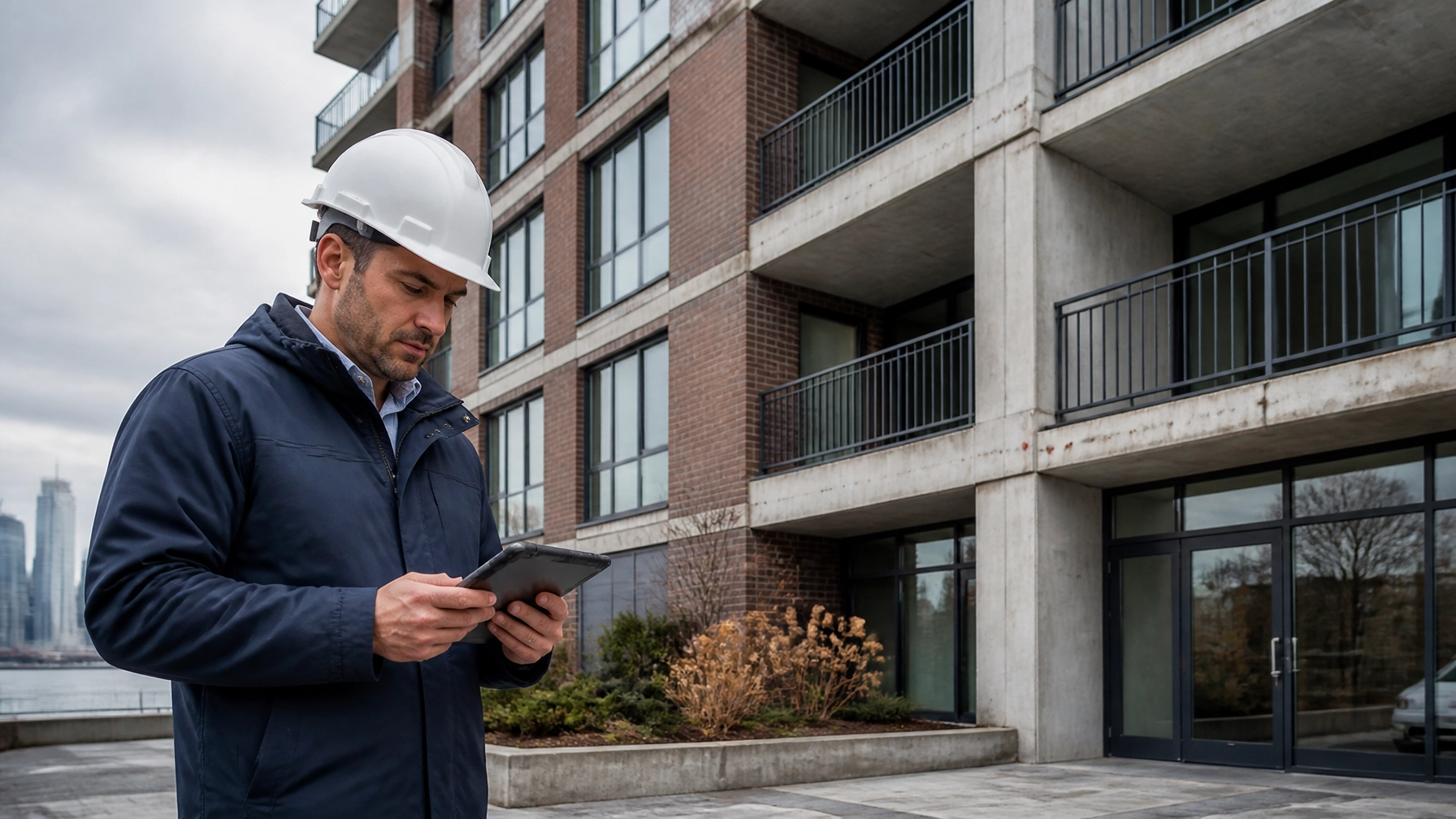
A NJ S.2760 structural inspection focuses on the building’s primary load-bearing system. That includes the connected structural components that transfer loads to the foundation, including:
- Columns and beams.
- Structural bracing.
- Foundations.
- Podium decks.
- Connected or attached balconies.
- Concrete, masonry, steel, heavy timber, or hybrid structural systems.
A Reserve Study addresses the association’s broader capital obligations. It may include:
- Roofs and waterproofing.
- Façades and masonry.
- Balconies and decks.
- Parking structures.
- Elevators.
- Major mechanical equipment.
- Paving and site walls.
- Other common-area components the association must maintain.
The distinction matters. A Reserve Study is not a substitute for a structural integrity inspection. A structural report is not a 30-year funding plan.
The strongest program connects both.
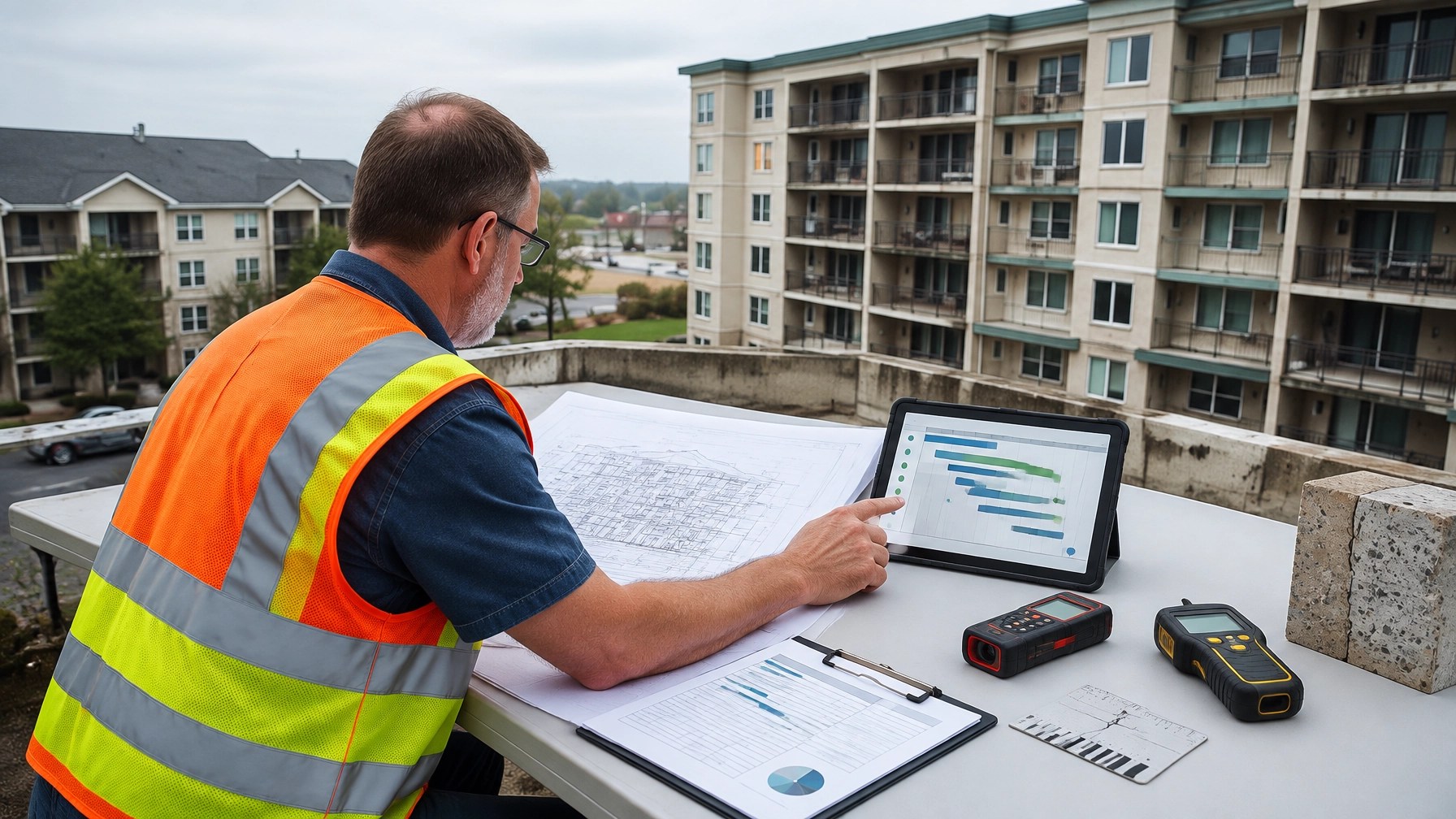
Which New Jersey buildings must receive a structural inspection?
The law applies to a covered building, defined as a residential condominium or cooperative building with a primary load-bearing system made of concrete, masonry, steel, or a hybrid structure.
Certain structures are excluded. These include conventional combustible frame-built structures, single-family homes, and buildings that are primarily rental housing rather than condominiums or cooperatives.
Building height does not determine coverage. A low-rise condominium can be covered if its primary load-bearing system meets the statutory definition.
The law also treats the building’s foundation and connected or attached balconies as part of the structural evaluation. Boards should not assume that a façade-only visual review satisfies the requirement.
The New Jersey Department of Community Affairs provides additional guidance in its Structural Integrity and Capital Reserve FAQ.
What are the 2026 inspection deadlines?
The Certificate of Occupancy date is central to the initial inspection schedule.
For buildings that received a CO before the law took effect on January 8, 2024:
- If the CO was issued 15 or more years before January 8, 2024, the initial inspection was due within two years of the effective date, or by January 8, 2026.
- If the CO was issued between one day and 14 years and 364 days before January 8, 2024, the inspection is due within one year after the building reaches its 15-year CO anniversary.
- Buildings converted to condominium or cooperative ownership after the law took effect follow the applicable schedule under the statute and registration requirements.
For newer covered buildings, the initial post-occupancy inspection generally must occur by the earlier of:
- Fifteen years after the Certificate of Occupancy date.
- Sixty days after observable damage to the primary load-bearing system.
As of October 2026, any association that had a January 8, 2026 deadline should treat the inspection as an immediate compliance priority. Boards should locate the original CO, confirm the structural system, and obtain a written schedule from a qualified New Jersey engineer.
How often must inspections occur?
The initial inspection report must establish when the next inspection will occur.
The statute limits the initial secondary inspection to the earlier of 10 years after the initial inspection or 60 days after observable damage. Later inspections cannot be scheduled more than five years after the preceding inspection.
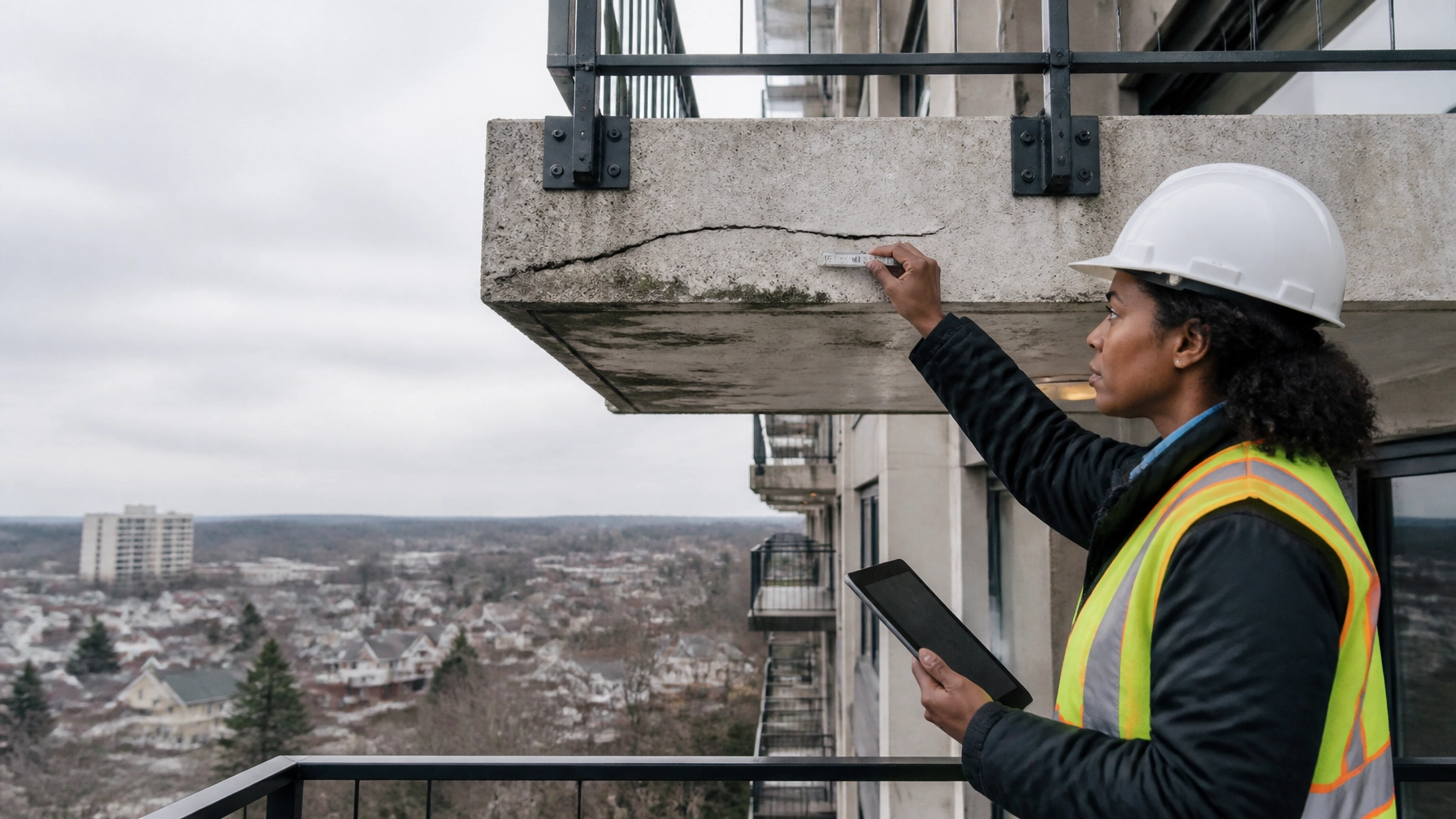
Observable damage can accelerate the schedule at any time. Cracking, spalling, exposed reinforcement, settlement, significant water intrusion, or other visible deterioration should not wait for the next routine cycle.
If repairs are required, the board should also plan for:
- Engineering repair recommendations.
- Design documents or specifications when needed.
- Municipal filing and permit coordination.
- Construction oversight.
- A follow-up review after corrective work.
The inspection schedule is not a one-time report. It is the beginning of a recurring structural condition program.
Who is qualified to perform the inspection?
The structural inspector must meet the statutory definition. In practical terms, the inspection must be performed by a New Jersey-licensed professional engineer who is qualified to inspect the covered building.
The law also identifies qualifying municipal construction officials and Bureau of Housing Inspection employees who are New Jersey-licensed engineers. A private association will generally retain a licensed New Jersey engineer directly.
Do not confuse the structural inspection credential with the credential for a Reserve Study.
Under N.J.S.A. 45:22A-44.2, a capital Reserve Study must be performed or overseen by:
- A reserve specialist credentialed through the Community Associations Institute.
- A New Jersey-licensed engineer.
- A New Jersey-licensed architect.
The Reserve Study must follow the latest edition of the Community Associations Institute National Reserve Study Standards.
The structural inspector, however, must satisfy the state’s structural inspector requirements. Boards should verify licenses, qualifications, relevant structural experience, conflicts of interest, and the professional’s ability to coordinate with municipal officials.
What must the structural report include?
The report must describe the condition of the primary load-bearing system and identify any required maintenance or repairs with reasonable specificity.
It must also:
- State when the next inspection should occur.
- Follow an American Society of Civil Engineers protocol or a similar protocol from another nationally recognized structural engineering organization.
- Provide information or guidance needed to maintain structural integrity.
- Be provided to the municipal appointing authority, construction official, and enforcing agency.
- Be provided to the covered building owner.
- Be made available to residents upon request.
The law states that the report must be prepared in accordance with the ASCE structural condition assessment protocol, or an equivalent nationally recognized protocol. A short visual letter with no documented methodology may not give the board the defensible record it needs.
“The post-occupancy structural inspection report shall set forth with specificity any required maintenance or repairs needed by the primary load bearing system.”
That requirement should shape the scope from the beginning. The board needs more than a list of observations. It needs a usable path from condition to action.
What must a New Jersey Reserve Study include?
New Jersey’s capital reserve requirements apply separately from the structural inspection requirement. The DCA states that planned real estate development associations generally must undertake and fund a Reserve Study even when the building is not a covered building, subject to the statutory exemption for associations with less than $25,000 in total common-area capital assets.
A compliant Reserve Study should evaluate:
- Current reserve fund balances.
- Anticipated income and expenses.
- The physical condition of common-area components.
- Remaining useful life.
- Repair and replacement costs.
- Structural corrective maintenance.
- Future Reserve Studies and updates.
- Periodic structural inspection costs.
- A proposed 30-year funding plan.
The study should reflect the association’s actual maintenance obligations under its declaration, master deed, bylaws, turnover documents, warranties, and prior capital work.
The law requires covered building owners to have the capital reserve study conducted and reviewed at least once every five years. Boards should confirm the exact application to their association with counsel and a qualified professional.
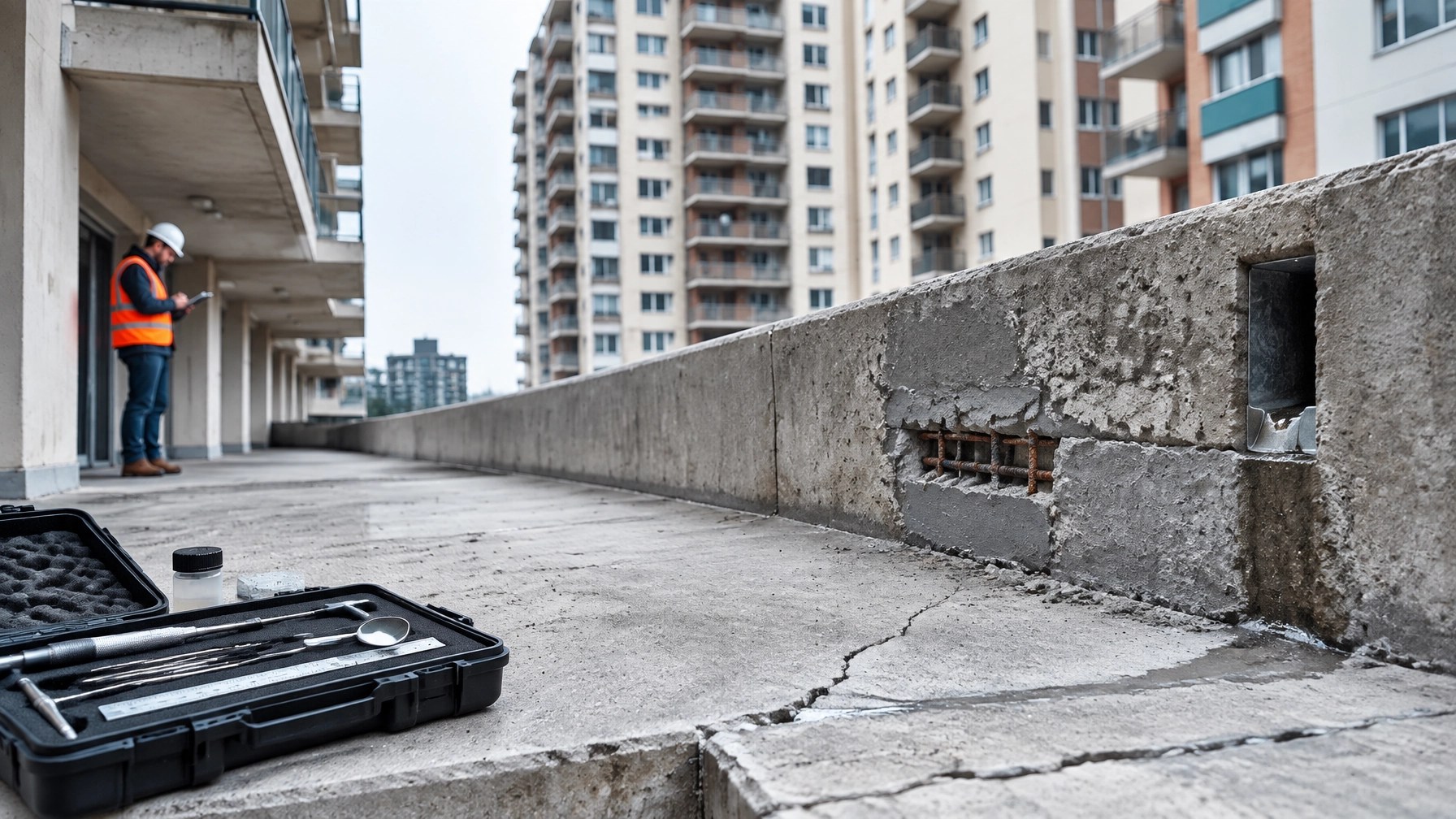
How one mobilization can cover both scopes
The most efficient approach is to build one coordinated field plan.
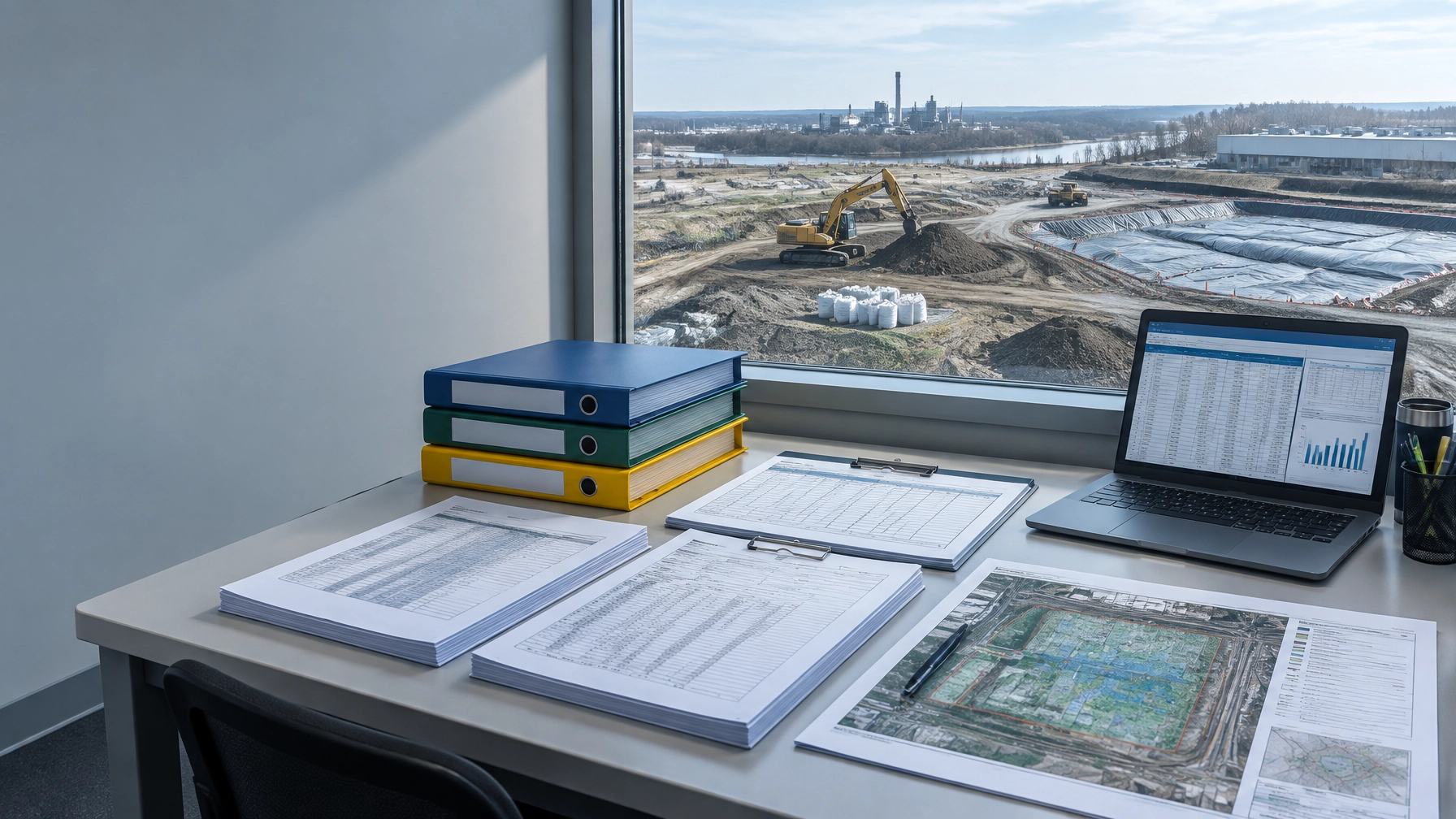
During a single site visit, the engineering team can document:
- Primary load-bearing components for the S.2760 inspection.
- Façades, balconies, roofs, decks, and other Reserve Study components.
- Visible deterioration and water-related damage.
- Prior repairs and unfinished corrective work.
- Access constraints and areas requiring additional testing.
- Component quantities and useful-life assumptions.
- Conditions that may affect repair sequencing and cost.
The scopes still require separate analysis and deliverables. The advantage comes from sharing the field record, photographs, component inventory, measurements, and repair assumptions.
That avoids three common problems:
- Paying separate firms to inspect the same building areas.
- Reconciling different condition ratings and component names.
- Receiving a structural report that identifies major repairs without updating the funding plan.
For a board in Jersey City, Hoboken, Newark, Fort Lee, Hackensack, or surrounding communities, one mobilization can create a much clearer capital planning record.
Why the engineering team matters
National firms often divide the work between departments. One team performs the Reserve Study. Another performs the structural inspection. A third team may later estimate repairs.
The board then has to reconcile the differences.
Envicon takes a coordinated approach. The same senior engineering team can connect field conditions to the report, budget assumptions, and next steps. We provide transparent fees, defined deliverables, and a coordinated scope rather than three separate change orders.
That means:
- The engineer reviewing the roof and balconies understands the report.
- Structural findings flow directly into the Reserve Study.
- Repair priorities are visible to the board.
- Cost assumptions are explained instead of buried.
- Municipal and counsel questions have a direct point of contact.
- The association receives a practical action plan, not disconnected documents.
Explore Envicon’s NJ S.2760 structural inspection services and Reserve Study services for New Jersey condominiums, co-ops, and HOAs.
Board checklist for 2026
Before authorizing work, confirm the following:
- Is the building a covered condominium or cooperative?
- What is the exact Certificate of Occupancy date?
- Was the initial structural inspection due by January 8, 2026?
- Has observable damage triggered the 60-day inspection requirement?
- Is the inspector a qualified New Jersey-licensed professional engineer?
- Does the structural scope include foundations and connected balconies?
- Does the report follow an ASCE or equivalent protocol?
- When was the last Reserve Study completed?
- Does the study include a 30-year funding plan?
- Are structural repairs and future inspections included in the funding model?
- Are the reports organized for counsel, residents, and municipal officials?
- Can the structural inspection and Reserve Study be completed during one mobilization?
Boards in Essex County can also review Envicon’s Newark, NJ engineering and advisory services, which support projects throughout the surrounding New Jersey market.
Frequently asked questions
Is a Reserve Study the same as an NJ S.2760 structural inspection?
No. A Reserve Study evaluates common-area assets and long-term funding. A structural inspection evaluates the primary load-bearing system and identifies required structural maintenance or repairs.
Does every HOA in New Jersey need a structural inspection?
No. The structural inspection requirement applies to covered residential condominium and cooperative buildings. Capital Reserve Study requirements apply separately to planned real estate development associations, subject to the statutory exemption for associations with less than $25,000 in common-area capital assets.
How often should a New Jersey Reserve Study be updated?
The law requires covered building owners to have a capital Reserve Study conducted and reviewed at least once every five years. Boards should confirm the applicable requirements for their association with counsel and a qualified professional.
Can one engineer perform both scopes?
A New Jersey-licensed engineer may perform or oversee a Reserve Study and may perform the structural inspection if properly qualified. If the Reserve Study uses a separate CAI-credentialed reserve specialist, the professionals should coordinate their component inventory, condition ratings, repair costs, and funding assumptions.
What happens if the structural report identifies a serious defect?
The report should identify the required corrective maintenance and provide a reasonable level of detail. The association should then coordinate with counsel, the engineer, contractors, and the local enforcing agency regarding repair design, permits, funding, resident communication, and follow-up inspection.
The takeaway
S.2760 created a structural inspection obligation. New Jersey’s capital reserve requirements created a separate financial planning obligation.
The smart response is not to order two disconnected reports.
Confirm the building’s coverage. Verify the CO date. Schedule the field work. Build the component inventory. Connect structural findings to the 30-year funding plan. Then carry the work through repair and closeout.
One mobilization does not eliminate the need for professional judgment. It gives the board a cleaner record, a more efficient process, and a better basis for decisions.
Clear findings. Coordinated planning. Fewer surprises.
Official sources
- New Jersey DCA Structural Integrity and Capital Reserve FAQ
- P.L. 2023, c.214, New Jersey Structural Integrity Law
- New Jersey DCA Construction Code Communicator
This article is for general informational purposes and is not legal advice. Association boards should confirm current statutory requirements, municipal procedures, filing obligations, and funding decisions with association counsel and qualified New Jersey-licensed professionals.
Start your coordinated compliance review
- Call Envicon now
- Get a free quote today
- Use Envicon’s project risk screener
- View Envicon’s complete list of services
- Connect with Envicon on LinkedIn