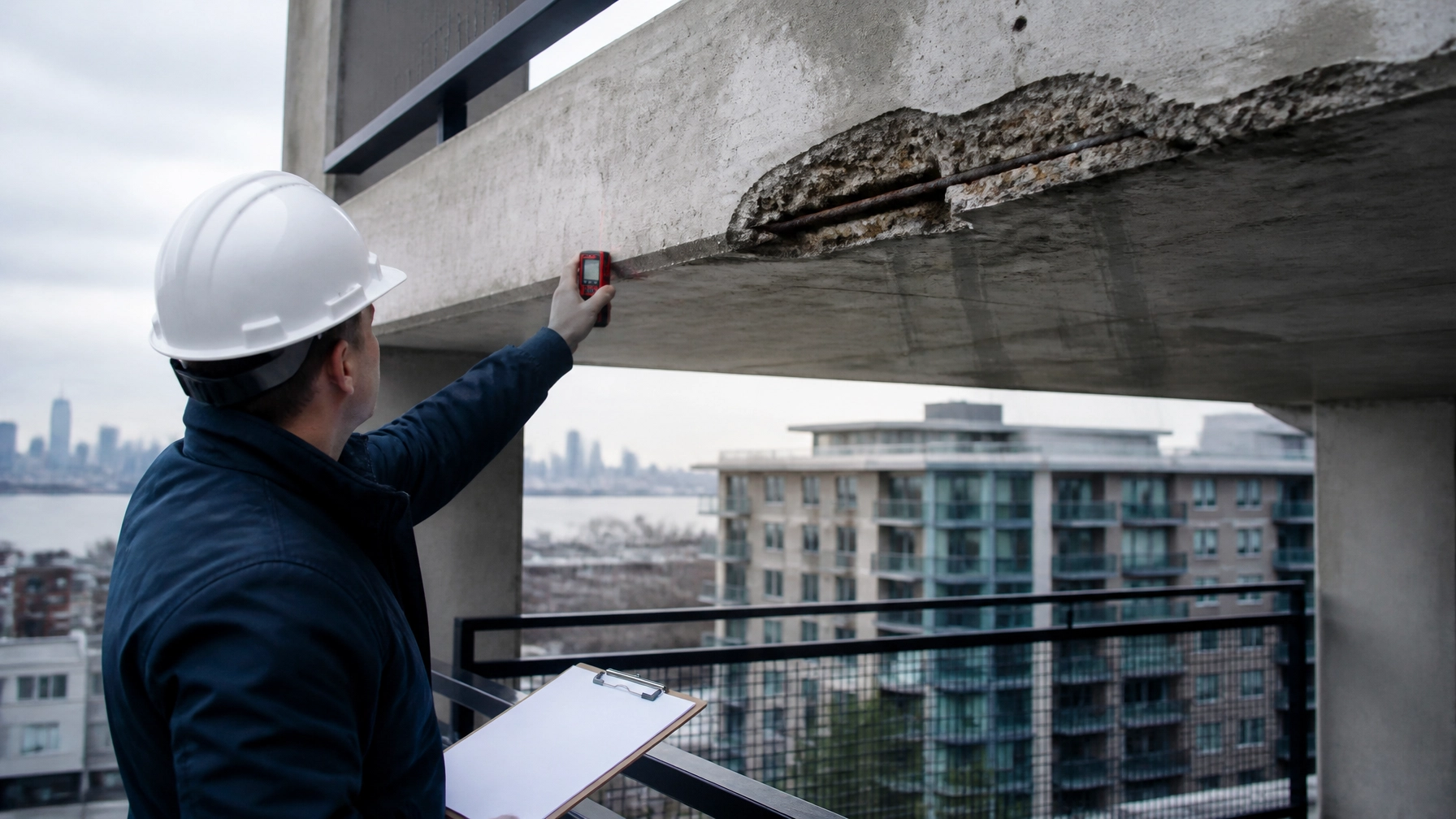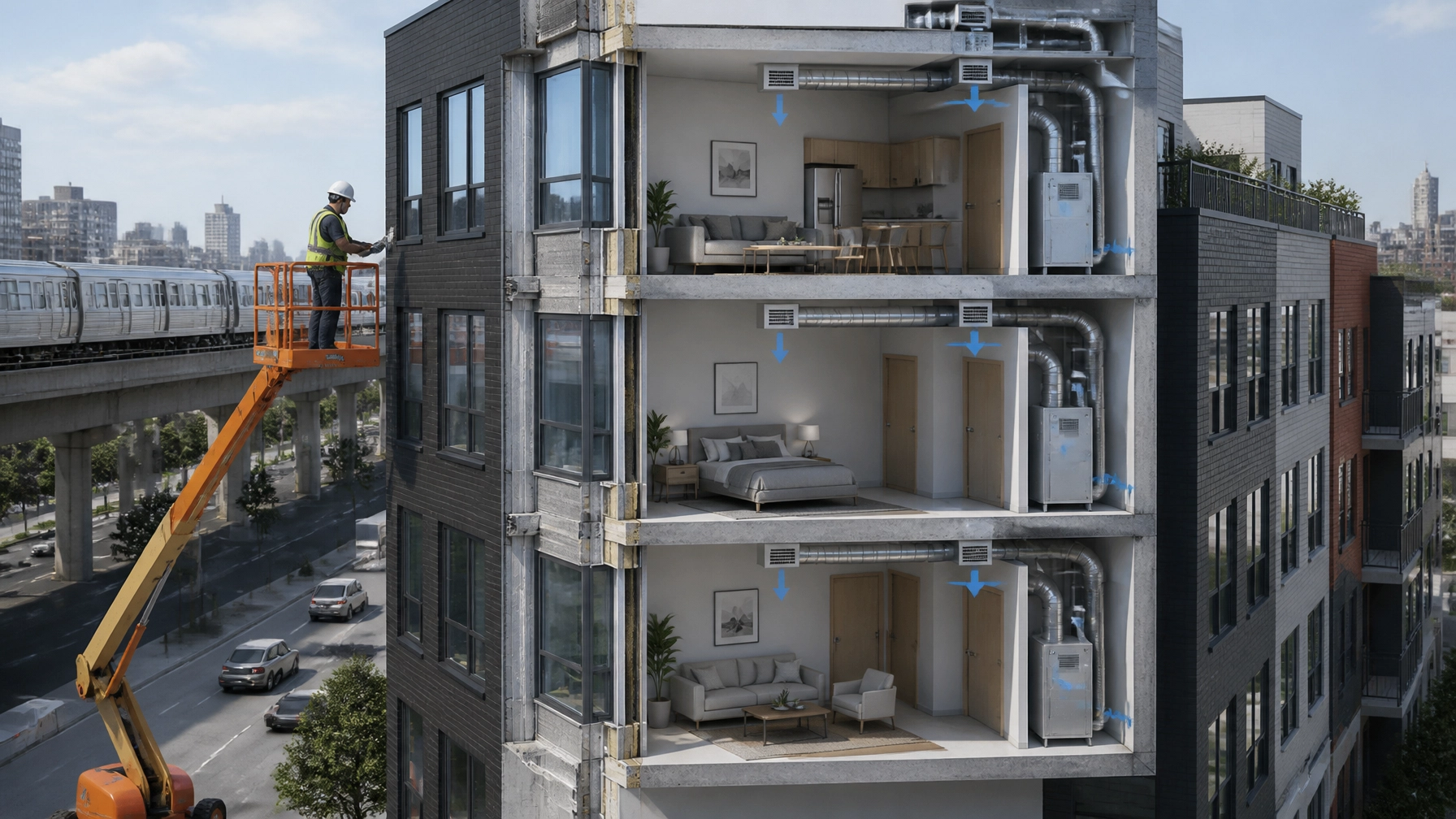
New Jersey condo and co-op boards now have two related responsibilities to manage: understand the condition of the building’s shared capital assets and verify the condition of its primary load-bearing system.
Those responsibilities overlap, but they are not the same.
A reserve study answers a financial and lifecycle question: What will the association need to repair or replace over the next 30 years, and how should it fund that work?
A structural integrity inspection answers an engineering and safety question: Is the building’s primary load-bearing system showing deterioration that requires corrective maintenance?
For boards in Jersey City, Hoboken, Newark, Bayonne, Hudson County, Bergen County, and Essex County, coordinating both scopes creates a more defensible capital plan. It also gives unit owners, lenders, insurers, counsel, and municipal officials a clearer record of what the association knows and what it plans to do next.
What P.L. 2023, c.214 and S2760 changed
New Jersey enacted P.L. 2023, c.214, commonly associated with Senate Bill S2760, on January 8, 2024. The law addresses structural inspections for certain residential condominium and cooperative buildings and adds capital reserve study requirements for planned real estate development associations.
The law defines a covered building as a residential condominium or cooperative building with a primary load-bearing system made of concrete, masonry, steel, or a hybrid structure. The evaluation includes the foundation and connected or attached balconies.
The primary load-bearing system generally includes the connected columns, beams, bracing, and other structural components that transfer building loads to the foundation.
The law does not make a reserve study optional simply because a building is not a covered building. The New Jersey Department of Community Affairs states that reserve study requirements apply separately to planned real estate development associations, subject to the statutory exemption for associations with less than $25,000 in total common-area capital assets.
“A capital reserve study conducted pursuant to this section shall be performed or overseen by a reserve specialist who is credentialed through the Community Associations Institute or an engineer or architect who is licensed by the State.”
Source: N.J.S.A. 45:22A-44.2
Boards should ask counsel and their licensed engineer to verify how the current statute, later amendments, municipal procedures, and association documents apply to the specific property.
Reserve study versus structural integrity inspection
The easiest way to avoid confusion is to separate the two scopes before combining their results.
| Scope | Primary purpose | Main subject | Typical output | Planning horizon |
|---|---|---|---|---|
| Reserve study | Determine whether funding is adequate for future common-area repairs and replacements | Roofs, façades, balconies, decks, paving, elevators, site systems, mechanical equipment, and other capital assets | Component inventory, condition and useful-life analysis, cost projections, and funding plan | At least 30 years |
| Structural integrity inspection | Evaluate the condition of the primary load-bearing system | Columns, beams, bracing, foundations, podium decks, and connected balconies | Licensed engineer’s structural condition report with corrective maintenance recommendations | Current condition and required inspection interval |
| Coordinated compliance program | Connect physical findings to budget and execution | Structural components plus all reserve-funded assets | Prioritized repair plan, funding strategy, records, and municipal coordination | Immediate repairs through long-term capital planning |
A reserve study is not a substitute for the structural integrity inspection required for a covered building.
A structural inspection is not a complete reserve study. It may identify urgent repairs, but it does not by itself establish a 30-year funding plan for every common-area asset.
How CO dates affect structural inspection deadlines
The building’s Certificate of Occupancy date is central to determining the initial structural inspection schedule.
For a covered building that receives a CO after the law’s effective date, the initial inspection is generally required by the earlier of:
- Fifteen years after the CO date.
- Sixty days after observable damage to the primary load-bearing system.
Existing buildings follow transitional rules based on how long before January 8, 2024, the CO was issued:
- If the CO was issued one day to 14 years and 364 days before January 8, 2024, the inspection is due within one year after the building reaches its 15-year CO anniversary.
- If the CO was issued 15 or more years before January 8, 2024, the initial inspection was due within two years after the law’s effective date.
- Buildings converted to condominium or cooperative ownership after the effective date follow the applicable schedule described in the law and related registration requirements.
After the initial inspection, the engineer’s report establishes the next inspection period. Subsequent inspections cannot be delayed beyond the statutory maximum interval, and observable damage can accelerate the required response.
For a Jersey City or Hoboken board, the practical first step is simple: locate the original CO, amended COs, conversion documents, and prior structural reports. Do not rely on the construction year alone.
The CO date, building type, structural system, prior inspection findings, and observable conditions all matter.
What a defensible reserve study should contain
A useful reserve study does more than list aging components. It connects field conditions to costs, timing, and decisions.
The study should address:
- Current reserve fund balances.
- Anticipated association income and expenses.
- A complete inventory of common-area capital components.
- Current physical condition.
- Remaining useful life.
- Estimated repair or replacement cost.
- Expected inflation and investment assumptions.
- Costs for future reserve studies and updates.
- Costs for periodic structural inspections.
- Corrective maintenance identified by the structural inspector.
- A proposed 30-year funding plan.
- Funding scenarios that show the effect of regular contributions, special assessments, or loans.
Common components for a Hudson County condominium may include the roof membrane, façade and masonry, balconies, parking deck, waterproofing, garage drainage, elevators, domestic water systems, fire protection systems, paving, site walls, retaining walls, stormwater facilities, and major mechanical equipment.
The component inventory must reflect the association’s actual maintenance obligations. That means reviewing the declaration, master deed, bylaws, maintenance schedules, warranties, prior capital work, and developer turnover records.
Why the physical and financial analyses must connect
A reserve study that ignores visible deterioration is not useful. A structural report that identifies major corrective work without connecting it to funding is incomplete from a board-management perspective.
For example, suppose an inspection finds corrosion at balcony reinforcement and moisture intrusion at a parking podium. The board needs more than a statement that repairs are required.
The board needs to know:
- Which areas require immediate protection?
- Is the condition isolated or progressive?
- Does the work require design, permits, probes, or temporary access restrictions?
- What repair sequence reduces risk and cost?
- What is the current construction budget?
- Can existing reserves cover the work?
- Will a special assessment or loan be necessary?
- How will the work affect the next five years of reserve contributions?
This is where coordinated engineering matters. The physical condition assessment informs the financial model. The funding plan then informs repair timing and board communication.

Repair prioritization and special assessments
Not every capital item has the same urgency.
A practical board action plan should separate work into categories such as:
-
Immediate safety or water-intrusion concerns
Conditions that may affect occupants, structural integrity, or active deterioration. -
Near-term corrective maintenance
Work that should be designed, priced, permitted, or completed within the next budget cycle. -
Planned capital replacement
Components approaching the end of their useful life but not presenting an immediate safety concern. -
Routine preventive maintenance
Work that extends service life and protects the reserve plan.
New Jersey law also addresses assessments or loans needed for corrective maintenance of the primary load-bearing system. Before taking action under the applicable statute, the board should coordinate with association counsel and obtain the required written engineering support.
The board should not treat a special assessment as a substitute for planning. A reserve study should show when a funding gap may occur and how different contribution strategies affect owners.
If the board elects to fund reserves below the recommended plan, the notice, disclosure, timing, and statutory requirements must be reviewed carefully. The current law includes specific provisions regarding an 85 percent funding option for certain existing associations, including owner notice and disclosure requirements. Because these provisions have changed, counsel should verify the current rules before the board adopts a budget.
Records, disclosures, and municipal coordination
A compliance file should be organized before an engineer arrives.
Gather:
- Original and amended certificates of occupancy.
- Master deed, declaration, bylaws, and amendments.
- Prior reserve studies.
- Prior structural inspection reports.
- Preventive maintenance documents.
- Capital project plans and specifications.
- Repair contracts, warranties, and closeout records.
- Reserve account statements and approved budgets.
- Open permits, violations, and municipal correspondence.
- Resident reports involving cracks, leaks, balcony distress, or settlement.
- Insurance engineering reports and lender requests.
Structural inspection reports may need to be provided to the municipal appointing authority, construction official, and enforcing agency. Reports also must be retained and made available to residents as required by law.
Municipal coordination varies across Jersey City, Hoboken, Newark, Bayonne, and surrounding municipalities. The engineer’s report does not replace legal advice, building department direction, permit review, or counsel’s interpretation of the association’s governing documents.
Why boards use one coordinated engineering team
A large consultant may deliver a reserve study through one department and a structural report through another. The board then has to reconcile different component names, condition ratings, cost assumptions, and schedules.
Envicon coordinates the physical and financial sides under one project structure. Our team can perform the reserve study, complete the structural integrity inspection, and bring in civil and geotechnical engineering when repair conditions require broader design or site analysis.
That means:
- One component inventory.
- One field record.
- One prioritized repair list.
- One funding conversation.
- Direct access to the engineer leading the work.
- Clear documentation for the board, counsel, owners, and municipal reviewers.
We do not hand you two disconnected reports and leave the board to interpret the gaps. We help turn findings into an executable capital plan.

Board checklist for Jersey City and Hoboken
Before your next board meeting, confirm:
- Is the property a covered building under the structural integrity law?
- What is the exact CO date?
- When was the last qualifying reserve study completed?
- Has the study been reviewed or updated within the required period?
- Does the reserve study include a 30-year funding plan?
- Are primary load-bearing components clearly separated from general common-area assets?
- Are balcony, façade, podium, garage, and foundation conditions documented?
- Are corrective maintenance costs included in the reserve plan?
- Are reports and supporting records available for owners and counsel?
- Has the local construction official or enforcing agency provided property-specific direction?
- Has association counsel verified current statutory requirements and disclosures?
Frequently asked questions
Is a reserve study the same as an NJ primary load-bearing inspection?
No. A reserve study evaluates common-area assets and long-term funding. A structural inspection evaluates the primary load-bearing system and identifies structural maintenance or repair needs.
Does every New Jersey HOA need a structural integrity inspection?
Not necessarily. The structural inspection requirement applies to covered residential condominium and cooperative buildings. Reserve study requirements apply separately to planned real estate development associations, subject to the statutory common-area asset exemption.
How often should a New Jersey reserve study be updated?
The statute requires a reserve study to be conducted and reviewed at least once every five years for covered building owners. Boards should confirm the applicable requirement for their association with counsel and a qualified reserve specialist or licensed engineer.
Can a reserve study prevent a special assessment?
A well-built reserve study can reduce surprises by identifying future costs and showing funding gaps early. It cannot eliminate a special assessment when a component fails earlier than predicted, a major deficiency is discovered, or the association has historically underfunded reserves.
Does a Newark condo board follow the same state requirements as a Hoboken board?
The state requirements are generally applicable across New Jersey, but local filing, permit, and enforcing-agency procedures may differ. Boards should verify municipal coordination requirements for the specific building.
The takeaway
A structural inspection tells you what the building is saying now. A reserve study tells you what the association needs to do over time.
For condo boards in Jersey City, Hoboken, Newark, Bayonne, Hudson County, Bergen County, and Essex County, the strongest compliance strategy connects both.
Do not wait until a visible defect, lender request, insurance renewal, or owner dispute forces the issue. Build the record. Confirm the CO date. Inventory the assets. Prioritize the repairs. Fund the work.
Clear findings. Defensible funding. A safer path forward.
Start your coordinated compliance review
- Call Envicon now
- Get a free quote
- Estimate your reserve study or inspection cost
- View Envicon’s complete service list
This article is for general informational purposes and is not legal advice. Boards should verify current requirements with association counsel, the New Jersey Department of Community Affairs, and a qualified New Jersey-licensed professional engineer.
Official sources
- New Jersey DCA Structural Integrity and Capital Reserve FAQ
- P.L. 2023, c.214, Senate Bill S2760
- New Jersey DCA Construction Code Communicator