A reserve study HOA boards can defend is more than a spreadsheet. It is an engineering and financial plan that connects the condition of your common property to the money needed to maintain it.
For suburban multifamily communities across New York and New Jersey, that connection matters in 2026. Roofs, façades, paving, drainage, elevators, mechanical equipment, balconies, and building systems all have different useful lives. Lenders and insurers want evidence that the board understands those obligations. Owners want to know whether today’s dues will prevent tomorrow’s special assessment.
The legal framework differs by state. New Jersey has mandatory capital reserve study requirements for qualifying planned real estate developments. New York does not currently have a statewide reserve-study mandate for existing communities, but lender standards, fiduciary duties, building laws, and pending legislation make professional capital planning increasingly important.
New Jersey: Reserve studies are a statutory obligation
Under New Jersey’s Planned Real Estate Development Full Disclosure Act, qualifying associations must undertake and fund a capital reserve study. The requirement generally applies to planned real estate developments with at least $25,000 in total common-area capital assets.
The study must follow the latest Community Associations Institute National Reserve Study Standards or comparable national standards. It must be performed or overseen by a CAI-credentialed Reserve Specialist, a New Jersey-licensed professional engineer, or a New Jersey-licensed architect.
The New Jersey Department of Community Affairs FAQ makes an important point: an association may be exempt from certain structural inspection requirements and still be required to complete a capital reserve study.
New Jersey law requires the study to address:
- Existing reserve fund balances
- Anticipated association income and expenses
- The physical condition of common-area components
- Repair and replacement costs
- Costs of future reserve studies and updates
- Costs of required structural inspections
- Corrective maintenance costs
- A proposed 30-year funding plan
The purpose is direct. The association should have adequate reserves to repair or replace the assets it must maintain without relying on a special assessment or loan, except where the law permits otherwise.
The 2026 New Jersey funding issue
P.L. 2025, c.132 gives certain existing associations a temporary option to fund reserves at 85% of one of the funding plans in the most recent reserve study. That option comes with strict conditions:
- The board must provide owners with a 20-point bold notice.
- The notice must identify the expected year and amount of a future special assessment or loan caused by the reduced funding.
- The 85% option cannot be used for more than five fiscal years after the law’s effective date.
- Associations created after January 8, 2024, must fund according to a funding plan in the most recent study.
That is not a permanent discount. It is a short-term funding choice with a documented future cost.
Structural inspections are separate from reserve studies
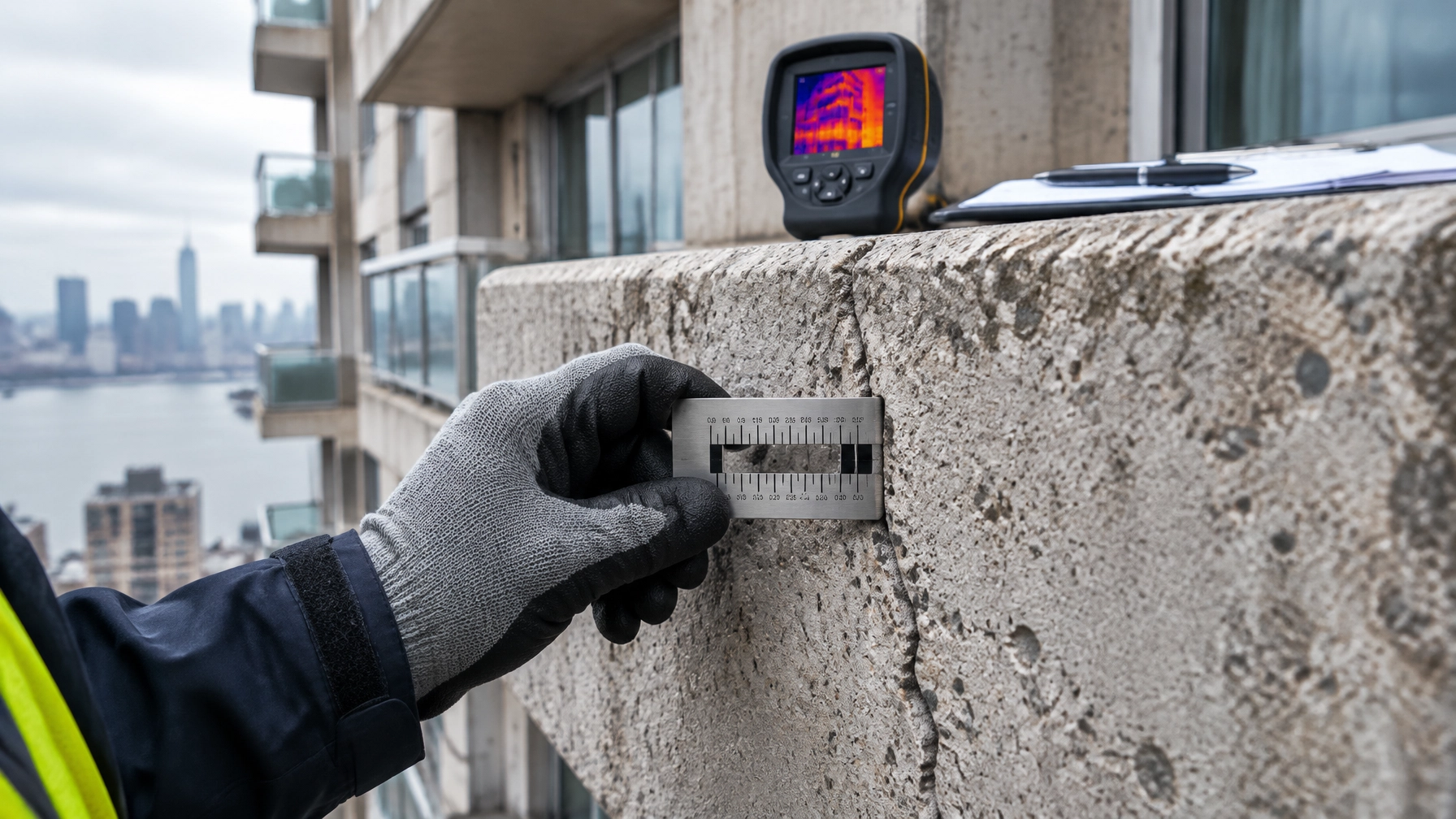
New Jersey’s Structural Integrity Law creates another obligation for certain condominium and cooperative buildings. A covered building generally has a primary load-bearing system made of concrete, masonry, steel, or a hybrid structure. Podium buildings and attached balconies may also fall within the inspection scope.
For covered buildings that were at least 15 years old as of January 8, 2024, the initial structural inspection was generally due within two years of the law’s effective date, by January 8, 2026. Newer covered buildings must be inspected within the statutory time period tied to the certificate of occupancy.
A structural inspection evaluates the primary load-bearing system. A reserve study evaluates the association’s broader capital obligations. The two should work together.
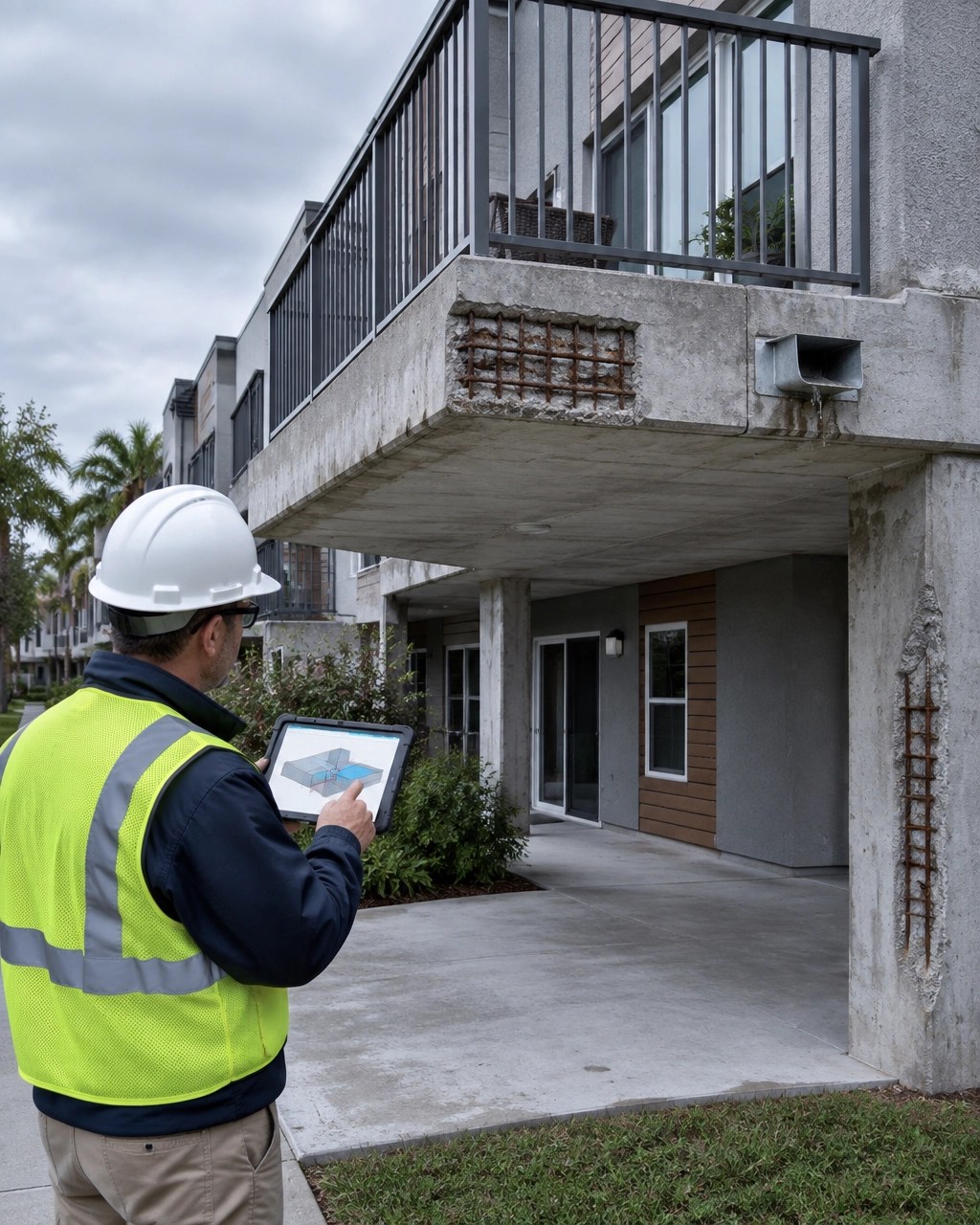
If a structural inspection identifies balcony repairs, concrete deterioration, façade work, or other corrective maintenance, those costs should be incorporated into the reserve funding plan. A board should not receive a structural report and then leave the financial consequences outside the budget.
New York: No statewide mandate, but no reason to wait
As of September 2026, New York does not have a statewide law requiring existing condominiums, cooperatives, or HOAs to complete reserve studies on a fixed schedule.
That does not remove the board’s responsibility to plan for the property. Governing documents, offering plans, bylaws, proprietary leases, lender requirements, insurance underwriting, and fiduciary duties may all create practical obligations.
New York boards should also track Assembly Bill A8945. The bill remains in committee according to the New York State Senate bill record. If enacted, it would require covered condominium and cooperative associations to complete capital reserve studies with 30-year funding plans, maintain annual oversight, and file studies with the State Comptroller.
The bill is not current law. But its proposed structure shows where capital planning expectations may be heading.
For boards in Westchester, Nassau, Rockland, Bergen, Morris, and other suburban markets, the practical standard is already clear. A professional study every three to five years, with financial updates between full site inspections, gives the board a defensible basis for budgeting.
See how this applies locally with Envicon’s reserve study coverage in Westchester County.
What a complete reserve study must include
A credible reserve study should be specific enough that a board can use it during budget adoption, lender review, owner meetings, and capital project planning.
1. A complete component inventory
The study should identify every major common-area component the association is responsible for maintaining. Typical components include:
- Roof membranes, shingles, flashing, and roof drainage
- Exterior façades, masonry, sealants, and painting
- Windows, doors, balconies, and railings
- Elevators and elevator modernization
- Boilers, chillers, pumps, and domestic water systems
- Electrical distribution and emergency generators
- Parking lots, garages, sidewalks, and curbs
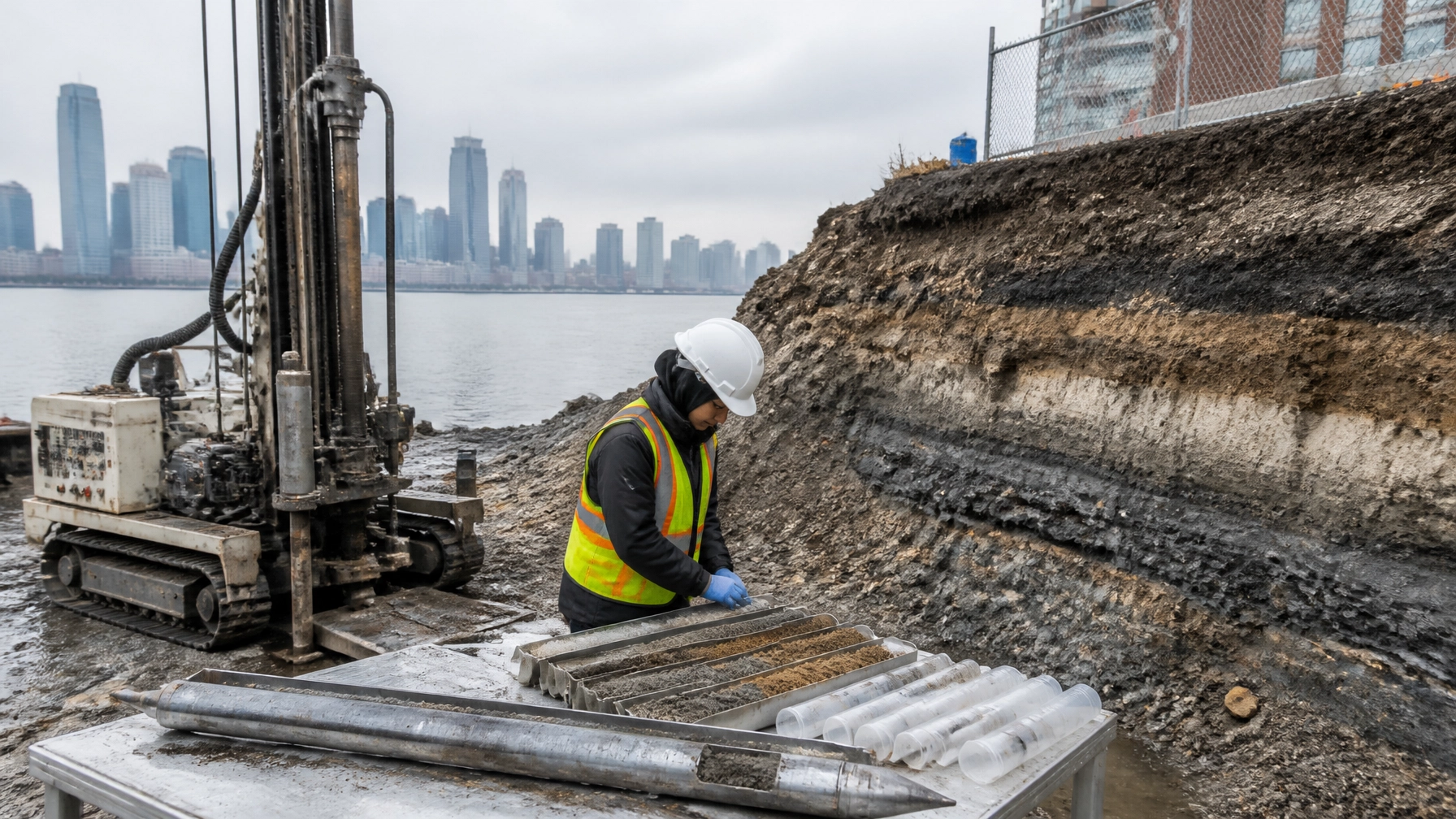
- Stormwater systems, drainage structures, and retaining walls
- Pools, clubhouses, fencing, and recreational facilities
- Site lighting, landscaping infrastructure, and irrigation
The inventory should reflect the actual property. Generic component lists do not help a board make a real decision.
2. Condition and useful-life analysis
For each component, the engineer should document current condition, estimated total useful life, and remaining useful life.
Useful life is not a promise. A roof may have a 20-year design life but only eight years remaining because of installation quality, weather exposure, drainage problems, or deferred maintenance.
A strong study explains the basis for its assumptions. It should identify components that require near-term investigation, repair, or replacement rather than hiding uncertainty inside a broad estimate.
3. Current and future replacement costs
Costs should reflect local labor, materials, access conditions, inflation, and project complexity. A Hudson County parking deck and a suburban Westchester parking lot will not have the same replacement cost.
The study should also account for soft costs where appropriate, including design, permitting, testing, inspection, construction administration, and contingency.
4. A 30-year funding plan
The funding plan should show:
- Current reserve balance
- Annual reserve contributions
- Interest or investment assumptions
- Inflation assumptions
- Scheduled capital expenditures
- Projected year-end balances
- The effect of different contribution levels
- The timing and effect of major projects
The point is not to produce one attractive number. The point is to show the board what each funding choice means.

Funding models boards should understand
Most reserve studies compare several funding approaches.
Baseline or threshold funding aims to keep the reserve balance from falling below a defined floor. It may produce lower contributions in the short term, but it can create sharper increases when several projects arrive together. Boards should review whether the model aligns with current lender requirements.
Full funding builds reserves toward the calculated deterioration and replacement needs of each component. It usually requires higher annual contributions, but it reduces dependence on special assessments and emergency borrowing.
Stair-step funding increases contributions over time. This can help a board phase in higher dues, but it must be tested against inflation and project timing. A contribution schedule that rises too slowly may still leave the association underfunded when a roof, elevator, or façade project arrives.
For 2026 planning, boards should ask for clear comparisons. Do not approve a funding model simply because it produces the lowest current assessment increase.
How reserve studies affect lending and insurance
Reserve studies increasingly affect whether units remain easy to finance.
Fannie Mae’s 2026 updates raise the replacement-reserve allocation standard for applicable Full Review condominium loans to 15% of annual budgeted assessment income for loan applications dated on or after January 4, 2027. The updated guidance also places greater emphasis on a current reserve study and the highest recommended funding level when an association relies on a study instead of the percentage threshold.
The study should be recent. Fannie Mae guidance summarized in this community-association lending update identifies a 36-month window for qualifying reserve studies.
That means a board may face problems if its study is old, its component inventory is incomplete, or its budget funds a lower scenario than the study recommends.
Insurance carriers may also ask about roof age, façade condition, balconies, structural inspections, deferred maintenance, and capital plans. A reserve study does not guarantee coverage or lower premiums. It gives the board a documented way to answer underwriting questions with facts instead of estimates.
A practical 2026 checklist for your board
Before adopting your next budget, confirm that you can answer these questions:
- When was our last full reserve study completed?
- Has the study been updated for current construction costs?
- Does the component inventory match the property we own today?
- Which components have less than five years of remaining useful life?
- Does the plan include structural inspection and corrective maintenance costs?
- What funding scenario are we adopting, and why?
- Does our budget match the study’s recommended contribution?
- Will our funding level satisfy lender questionnaires in 2026 and 2027?
- Are insurance renewal documents consistent with the property’s actual condition?
- Do our bylaws, offering plan, or governing documents impose additional requirements?
A reserve study should make these answers easier, not harder.
The board-ready takeaway
New Jersey boards should treat reserve studies as a statutory capital-planning requirement, not an optional financial exercise. New York boards should not wait for a mandate before building a defensible plan.
The right study combines field inspection, component-level useful-life analysis, realistic local costs, and a 30-year funding model. It gives owners visibility, gives lenders documentation, and gives the board a practical path forward.
Envicon prepares reserve studies for New York and New Jersey condos, co-ops, and HOAs with licensed Professional Engineer oversight, on-site component inventory, useful-life analysis, funding scenarios, and board-ready deliverables. We do not just deliver a report. We help your board make decisions before the next major repair makes them for you.
Request a Reserve Study Consultation
- Read more insights on the Envicon blog
- Request a free consultation
- Call Envicon Group at (917) 764-2171