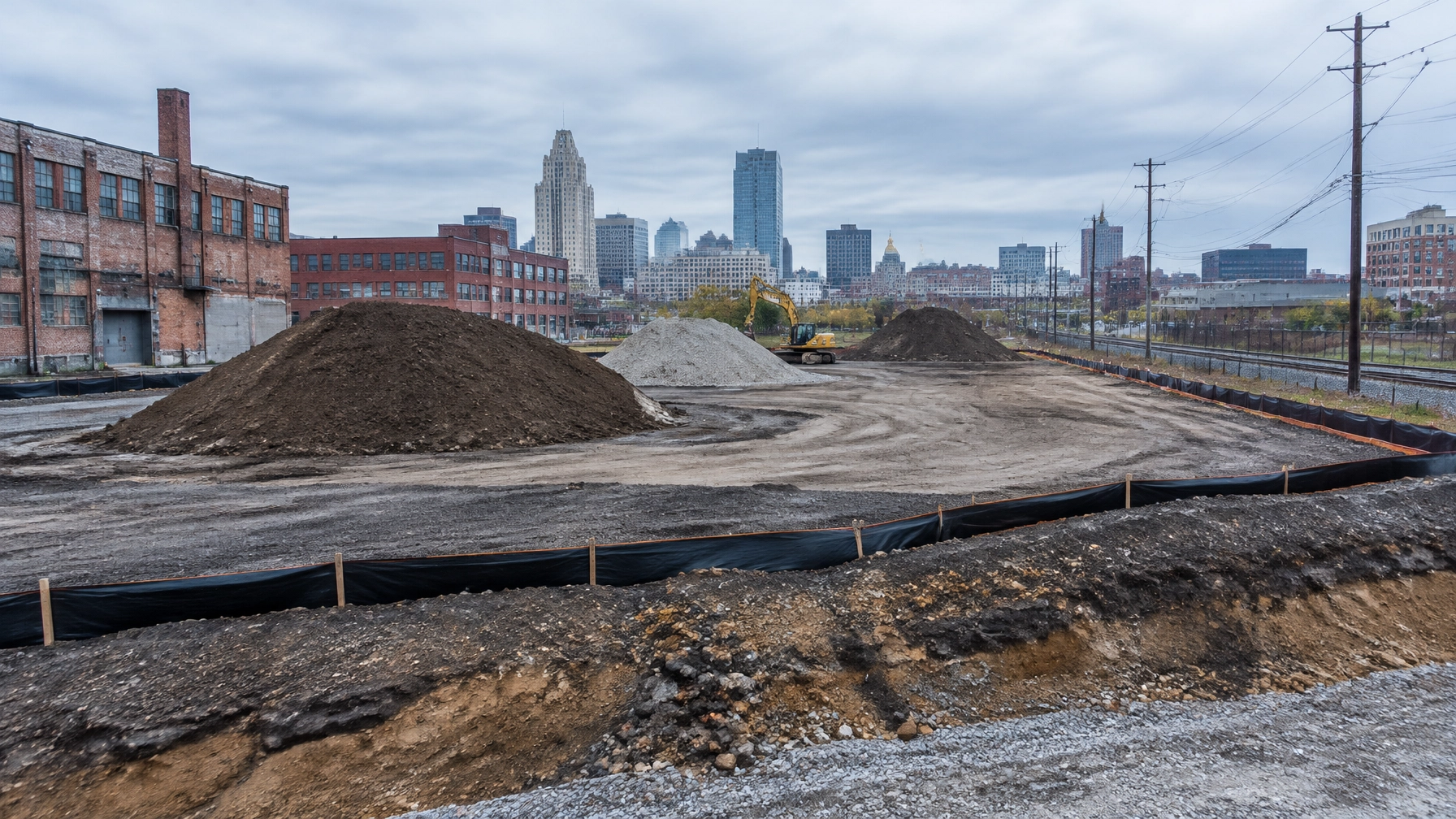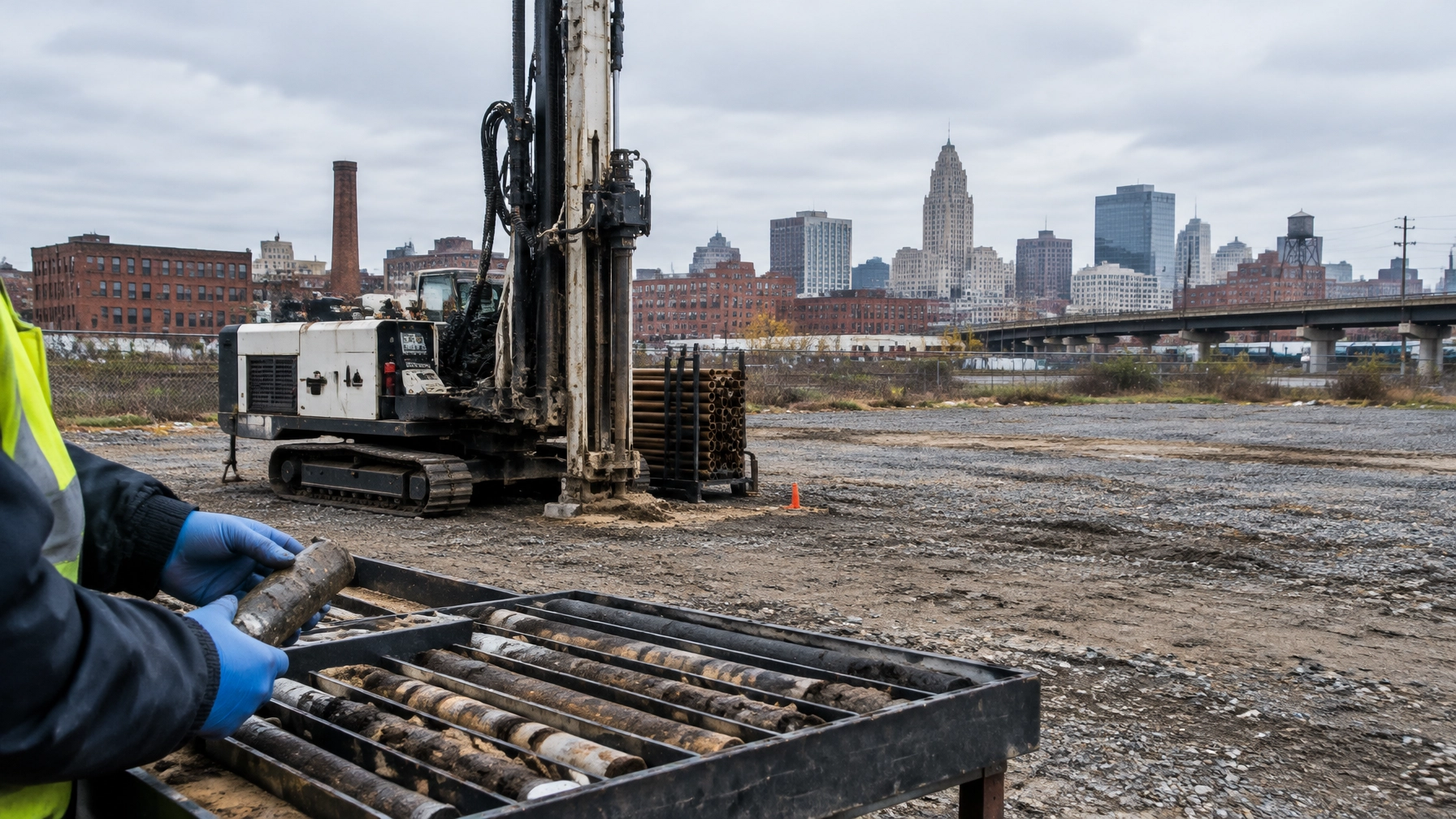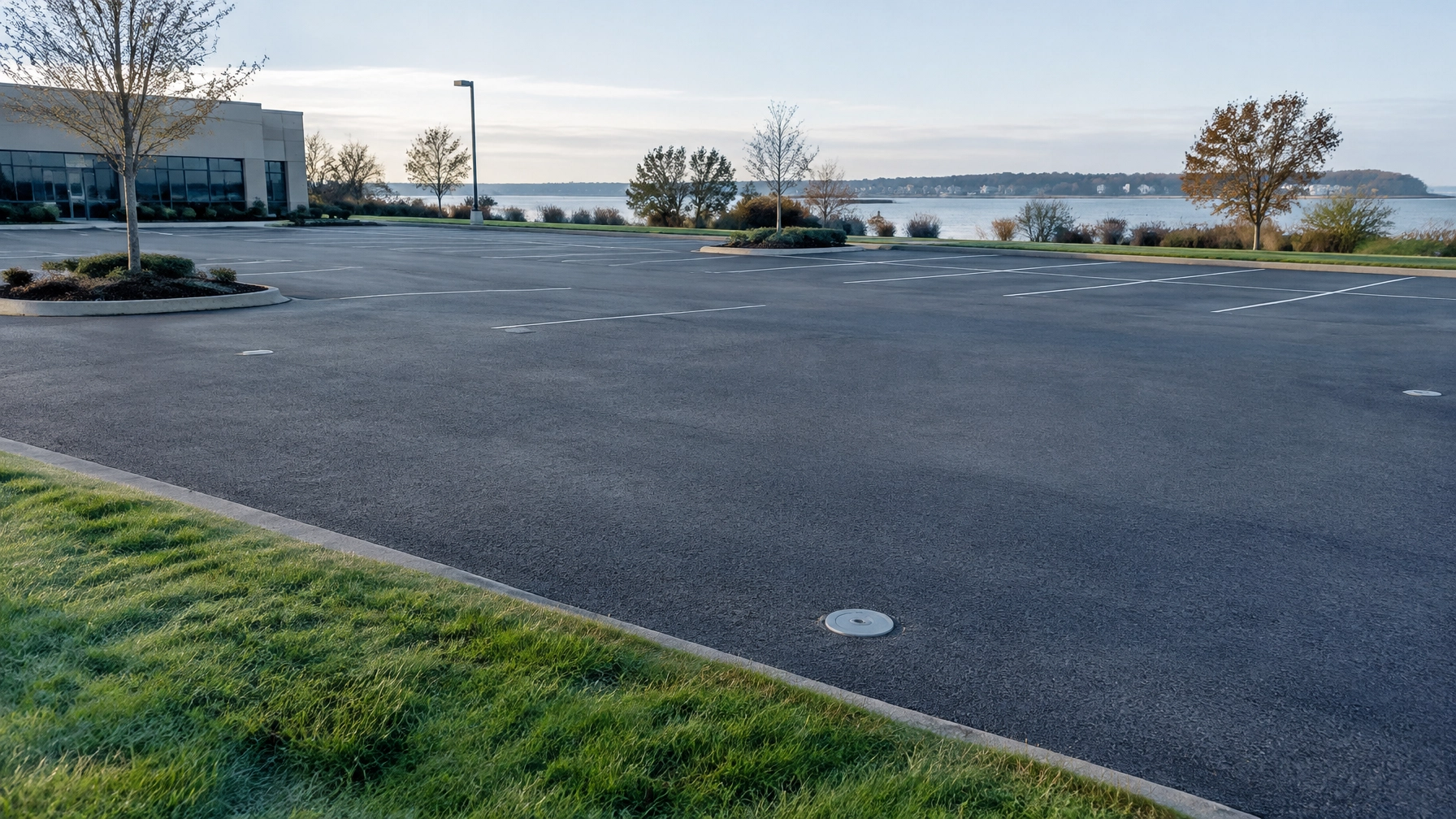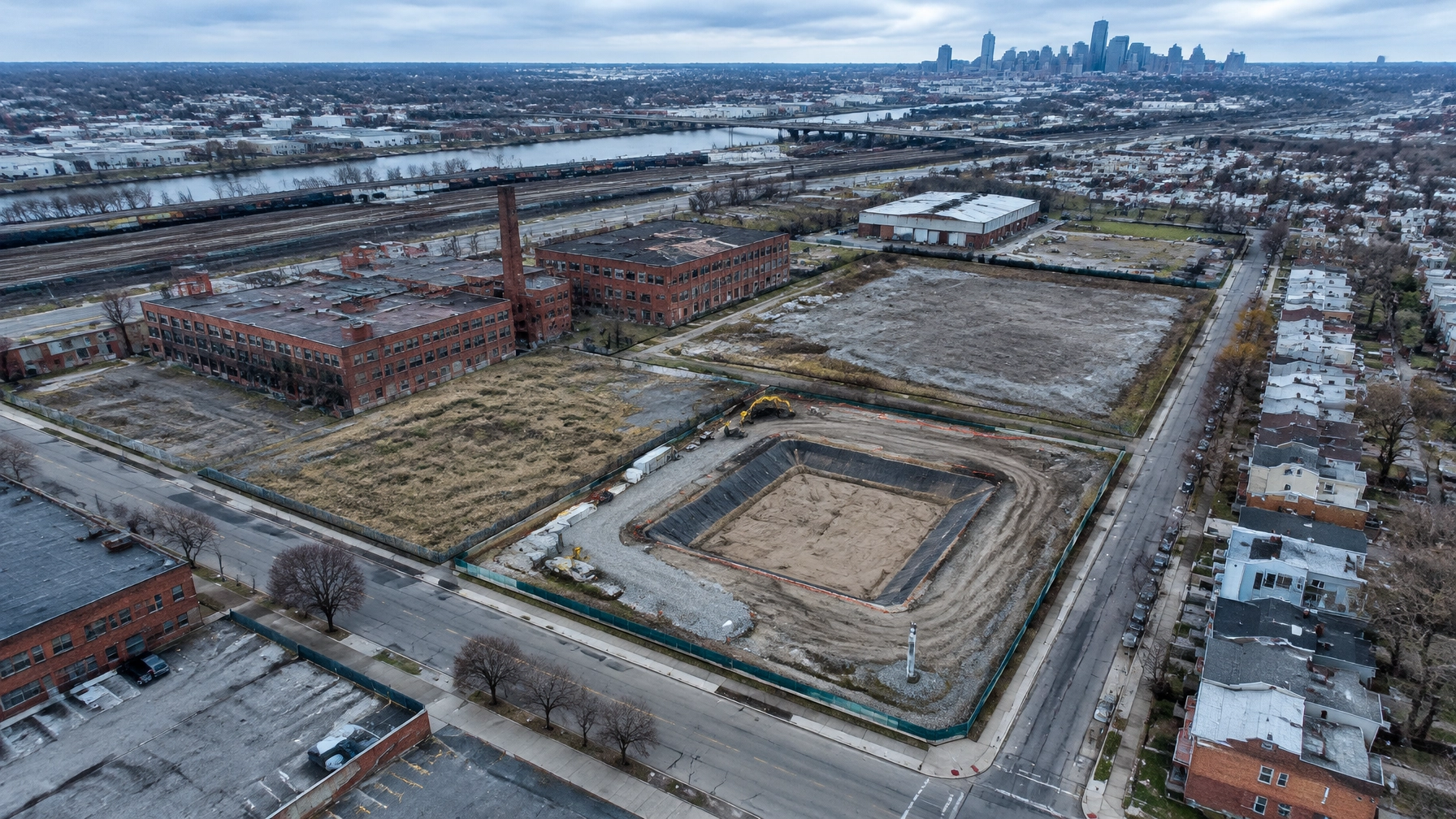
A Brownfield Development Area can make redevelopment more coordinated. It does not make environmental obligations disappear.
If you’re buying one parcel in a New Jersey community with multiple brownfields, the key question is not just whether your lot is contaminated. You also need to understand how its cleanup, access, infrastructure, and long-term controls fit into the wider redevelopment effort.
That matters in Newark, where parcel-specific status and remediation records need to be checked, not assumed. BDA designation is a coordination framework. It does not automatically make a buyer liable for every nearby property’s cleanup. But site obligations can continue after a sale, and a buyer may face permit responsibilities that weren’t reflected in the purchase price.
What a BDA designation changes
NJDEP’s Brownfield Development Area program works with selected communities affected by multiple brownfields. The agency coordinates planning, resource acquisition, remediation, and reuse efforts across multiple nearby properties, with participation from municipalities, property owners, potentially responsible parties, developers, community groups, technical experts, and residents. NJDEP describes the BDA approach here.
The BDA Memorandum of Understanding sets out a collaborative structure among NJDEP, the municipality, and the steering committee. It supports coordinated work. It does not replace parcel-specific investigation, remediation, or regulatory responsibilities. (BDA MOU)
In practical terms, a BDA can affect how your project interacts with the community-wide plan. A planned utility route, road improvement, public access agreement, or adjacent site investigation may influence your schedule or construction logistics. Those are project coordination issues. They are not proof that you have assumed another owner’s remediation liability.
NJDEP also states that BDA designation does not add regulatory or approval requirements to properties simply because they are within a BDA. The requirements applicable to your parcel still depend on its conditions, regulatory history, and intended use.

The core rule: remediation timeframes follow the site
Under New Jersey’s Site Remediation Reform Act (SRRA) and implementing rules, applicable remediation timeframes do not reset when a property changes hands. NJDEP’s rule states that regulatory, mandatory, and expedited site-specific timeframes “run with a site,” regardless of who owns it or whether ownership is transferred. See N.J.A.C. 7:26C-3.1(b).
That distinction is critical during acquisition. A sale does not, by itself, erase an outstanding investigation, missed deadline, or other remediation requirement. The buyer needs to understand what remains open and which parties have responsibility under the applicable law, orders, and permits.
In most cases, remediation proceeds under the supervision of a Licensed Site Remediation Professional (LSRP). The LSRP directs or supervises the work and may issue a Response Action Outcome (RAO) when the applicable requirements are met. Some cases have different oversight arrangements, so confirm the actual status with the case record and an LSRP.
The label “RAO issued” is not enough on its own. Confirm the RAO’s scope. It may cover specified areas of concern rather than the entire property, and it may leave long-term permit requirements in place.
A RAP can carry ongoing duties after closing
A Remedial Action Permit (RAP) may apply when contamination remains in place under a remedy that relies on controls or ongoing monitoring. Depending on the permit, obligations can include maintaining a cap, inspecting engineering controls, submitting certifications, maintaining financial assurance, and following use restrictions.
NJDEP’s Soil Remedial Action Permit guidance explains that permittees must comply with permit conditions. It also describes transfer procedures when a property changes ownership. For a soil RAP, the permittee must submit the RAP transfer or change-of-ownership application with the applicable fee within 60 days after the sale or transfer. The new owner must sign on as a co-permittee before the former owner is removed. Confirm the applicable permit type and current requirements for your transaction.
That is where “secondary liability” needs careful handling. A purchase contract can allocate costs and duties between buyer and seller. It does not bind NJDEP or erase obligations imposed by statute or permit. Under the Soil RAP guidance, co-permittees may be jointly and severally responsible for permit compliance, including fees, penalties, and financial assurance. That is specific to permit obligations. It is not a blanket rule that every buyer automatically becomes responsible for every cleanup in a BDA.
Buyers also need to distinguish the site’s remediation obligations from the broader question of statutory liability. NJDEP explains that responsibility can depend on the facts and applicable law. Its brownfield liability guidance describes state liability protections and the importance of conducting diligent inquiry before acquisition. Have environmental counsel assess legal protections and liability allocation.
Newark buyers: verify the parcel, not the headline
A property in Newark should not be treated as part of a BDA just because the neighborhood has industrial history or multiple brownfields. NJDEP’s current BDA designation page lists approved areas and links to program resources. Newark is not among the 12 communities on that page’s list of newly approved BDAs. That does not settle the status of every past or current designation. Check the NJDEP BDA information and NJDEP GIS layers against the parcel’s block and lot, then confirm the status with the municipality and applicable NJDEP records.
For any Newark acquisition, review the site’s NJDEP Program Interest number and available case file. Check current and historic reports, RAOs, RAPs, deed notices, institutional and engineering controls, open violations, fees, and required monitoring. If the property is an industrial establishment, ask environmental counsel and the LSRP whether the transaction or a planned cessation of operations triggers requirements under the Industrial Site Recovery Act (ISRA). BDA status alone does not determine ISRA applicability.

What to address in the purchase and sale agreement
Before you sign, align the PSA with the actual environmental record. Ask for clear, parcel-specific terms covering:
- Regulatory status: Identify the NJDEP Program Interest number, the current LSRP, the remediation scope, and all applicable deadlines.
- Permits and controls: Attach or specifically identify each RAP, deed notice, use restriction, engineering control, inspection schedule, and financial-assurance requirement.
- Responsibility for open work: State who will complete investigation, remediation, reporting, permit compliance, monitoring, fees, and any required RAP transfer.
- Construction coordination: Establish procedures for access, soil handling, excavation, utility work, cap protection, and coordination with the LSRP before ground disturbance.
- Information and cooperation: Require delivery of the full environmental file and cooperation with NJDEP, the LSRP, and any BDA steering committee where relevant.
- Risk allocation: Have counsel negotiate representations, indemnities, escrow, and survival periods. These terms allocate risk between the parties. They do not replace regulatory compliance or establish a defense against NJDEP.
If investigation shows a shared plume, off-site source, or cross-parcel remedy, treat that as a technical and legal issue requiring project-specific analysis. A BDA can help bring stakeholders together. It does not decide who pays or transfer another parcel’s obligations to you.

Buy the parcel with a clear path forward
A BDA can create a stronger framework for coordinated investigation and redevelopment. The buyer still needs to underwrite the parcel in front of them: its regulatory status, cleanup history, permits, controls, deadlines, and construction constraints.
For Newark and other New Jersey acquisitions, diligence should connect the environmental record to the PSA, design, schedule, and budget before closing. Envicon provides brownfield redevelopment support and strategic advisory, including environmental review and remediation planning. Our Newark location team works across the local regulatory and redevelopment landscape.
Takeaway: A BDA coordinates work across a community. SRRA obligations and RAP conditions still require parcel-level review, and a change in ownership does not automatically reset them. Know what follows the property before you price the deal.
Frequently asked questions
Does buying a parcel in a BDA make me liable for every brownfield in the area?
No. BDA designation coordinates planning and redevelopment across multiple sites. It does not, by itself, impose liability for every other property’s cleanup. Your exposure depends on the parcel, applicable law, site history, permits, and transaction facts. Have environmental counsel review liability questions.
Does a property sale restart NJDEP remediation deadlines?
No. Applicable remediation timeframes run with the site under N.J.A.C. 7:26C-3.1(b). A buyer should confirm every open deadline and obligation before closing.
What happens to a soil RAP when ownership changes?
NJDEP’s soil RAP guidance requires a transfer or change-of-ownership application with the applicable fee within 60 days after sale or transfer. The new owner must sign on as a co-permittee before the former owner is removed. Confirm the current requirements and permit conditions for the specific site.
Does a BDA designation mean ISRA applies?
No. BDA designation alone does not determine whether ISRA applies. Applicability depends on the industrial establishment and transaction or operational circumstances. Review the facts with environmental counsel and an LSRP.
Take the next step
Buying or redeveloping a New Jersey brownfield? Get a clear view of the site obligations before they become schedule and budget surprises.