New Jersey’s Remedial Action Permit program changed on February 17, 2026. The changes affect contaminated property owners, developers, lenders, attorneys, LSRPs, and anyone preparing a Newark or Hudson County property for sale.
NJDEP now treats indoor air as a third RAP media component alongside soil and groundwater. The Department also introduced consolidated applications, five Focused RAP categories, new Indoor Air Notification Area controls, updated certification requirements, and expanded electronic submission procedures.
For a Newark property with vapor intrusion, a restricted-use NFA, or an active groundwater remedy, the issue is not simply whether the application is complete. The issue is whether the entire file is ready for continued regulatory compliance and a defensible Response Action Outcome.
What changed on February 17, 2026?
The 2026 RAP modernization created a more integrated permit structure. NJDEP now uses a consolidated framework for:
- Soil
- Groundwater
- Indoor air
The current NJDEP CSRR Forms Library includes the RAP Initial or New Media Component Application for soil, groundwater, and indoor air. The same application supports initial RAPs, Focused RAPs I through V, and the addition of a new media component to an existing permit.
NJDEP has also posted forms for:
- RAP technical modifications
- Administrative changes
- Combining existing RAPs
- Terminating a RAP or removing a media component
- Indoor air monitoring
- Protectiveness and biennial certifications
- Indoor Air Notification Area fact sheets
The forms have been revised since the initial February release. As of September 2026, the CSRR Forms Library lists a July 27, 2026 revision for the RAP Initial or New Media Component Application. Always download the current form and instructions before preparing a submission.
“The Department may update this form periodically. Please ensure you are using the latest version of this form.”
Source: NJDEP Remedial Action Protectiveness and Biennial Certification Instructions
Focused RAP Newark NJ: five permit categories
The 2026 framework includes five Focused RAP categories. These are condition-based permits. That distinction matters. A Focused RAP can streamline a qualifying case, but it does not create flexibility to ignore the conditions that support the permit.
| Focused RAP | General application |
|---|---|
| Focused RAP I | Restricted-use soil remediation without engineering controls where contamination remains above residential standards but meets the applicable non-residential and migration-to-groundwater requirements. |
| Focused RAP II | Voluntary use of a presumptive soil remedy at a non-sensitive site. Schools, child care centers, and residences require separate analysis. |
| Focused RAP III | Use of a presumptive or alternative presumptive remedy that NJDEP has already approved for the site or remedy type. |
| Focused RAP IV | Historic-fill-only sites. This category can apply without a Person Responsible for Conducting the Remediation for the stand-alone permit. |
| Focused RAP V | Groundwater monitored natural attenuation where the Classification Exception Area remains within the property boundaries and there are no off-site receptor impacts. |
The eligibility question should be answered early. A Focused RAP is not a shortcut for incomplete investigation, unclear delineation, missing receptor evaluation, or unresolved vapor intrusion.
The applicable rules and current forms control. Review the NJDEP administrative and technical remediation rules with the LSRP before selecting a permit category.
Indoor air is now a formal RAP media component
Before 2026, many sites managed vapor intrusion through separate investigation, mitigation, and monitoring documents tied to soil or groundwater conditions. The updated framework brings indoor air into the RAP itself.
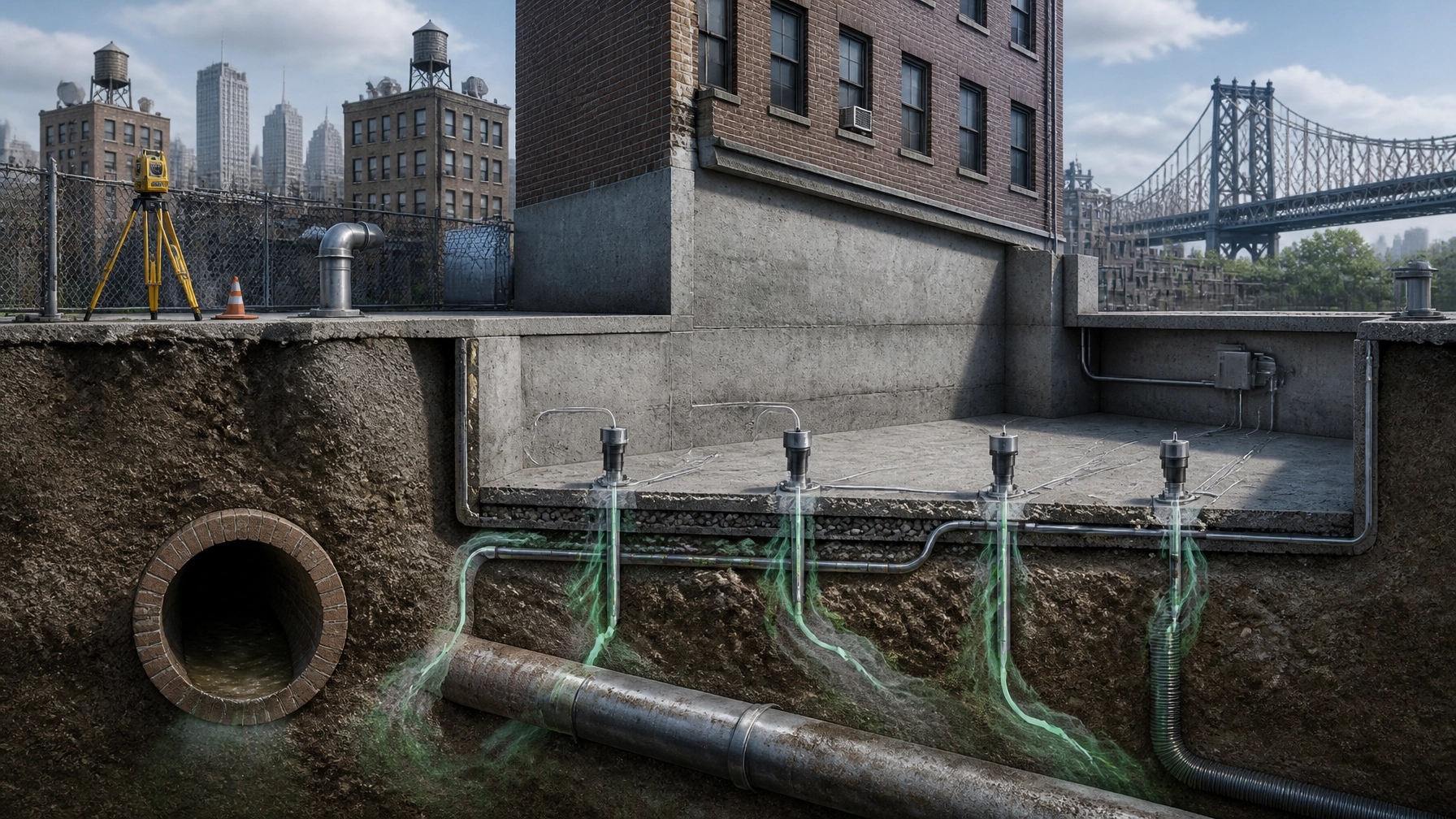
That means a Newark or Jersey City property with a sub-slab depressurization system, vapor barrier, long-term monitoring plan, or indoor air restriction may require a consolidated RAP that clearly documents:
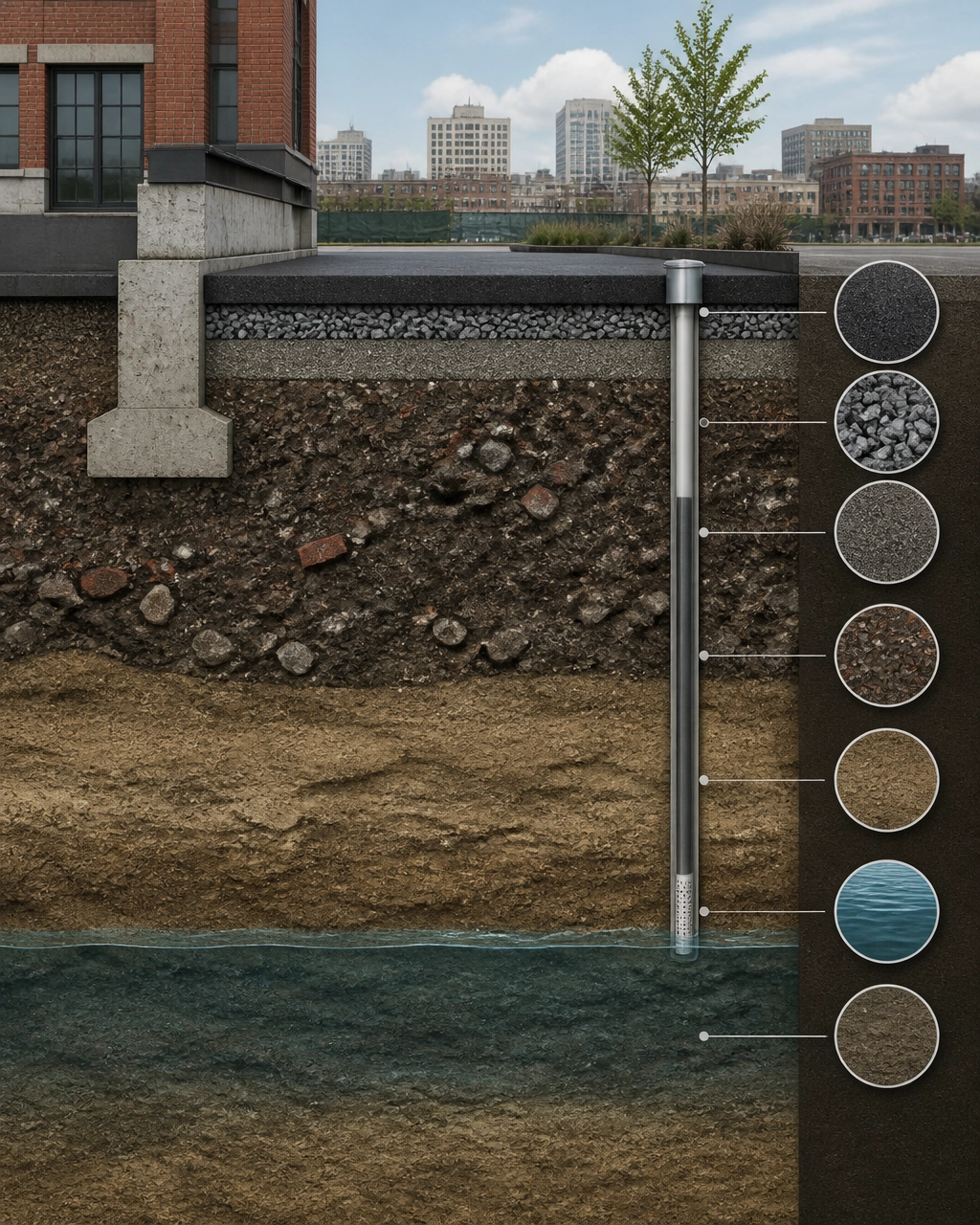
- The vapor intrusion pathway
- Buildings and units evaluated
- Soil gas and indoor air results
- Engineering controls
- Operation, maintenance, and monitoring requirements
- Building use restrictions
- Institutional controls
- Reporting and certification obligations
NJDEP’s indoor air requirements can include annual system diagnostics, annual monitoring and maintenance checklists, building surveys, historical sampling tables, updated vapor intrusion spreadsheets, and scaled maps.
For a project involving active construction or a change in building use, the existing RAP may not be enough. A technical modification may be required before the work begins.
Envicon supports these investigations through NJ vapor intrusion assessment services, including sub-slab sampling, indoor air testing, mitigation review, and regulatory documentation.

IANA controls and vapor intrusion obligations
The 2026 changes introduced the Indoor Air Notification Area, or IANA. The IANA functions as an institutional control for a defined area where vapor intrusion or indoor air obligations remain relevant.
An IANA may require:
- A mapped boundary
- Indoor air and vapor intrusion data
- GIS deliverables
- Notification to affected municipalities and counties
- Notification to building occupants within the area
- Identification of monitoring points
- Continued operation and maintenance of mitigation systems
- Integration with the RAP and future certifications
The NJDEP IANA guidance page and the current IANA Fact Sheet Form should be reviewed together. A map without the required notification and supporting documentation is not a complete control strategy.
The protectiveness and biennial certification instructions also ask whether IANA monitoring points were damaged, repaired, replaced, or became inaccessible. A building envelope change, new sump, slab penetration, renovation, or change in occupancy may affect the vapor intrusion pathway.
For property owners in Newark, Bayonne, Hoboken, Jersey City, and surrounding Hudson, Bergen, and Essex County communities, this creates an ongoing obligation. The IANA is not simply a closing document. It is part of the site’s long-term compliance record.

NJDEP RAP electronic submission 2026: what to prepare
Electronic submission does not mean sending one PDF and waiting for an approval. The submission must be organized so NJDEP can connect the application, RAR, maps, spreadsheets, certifications, fees, and supporting documents to the correct site.
Use the current instructions for the specific form. NJDEP Online is used for designated services, and the Department provides online payment instructions for RAP fees. The NJDEP Online Services portal should be used where the form instructions require it.
For forms that permit email submission without an online service or payment, the CSRR Forms Library identifies:
Do not assume that every RAP document follows the same delivery method. The current form instructions control.
Electronic submission checklist
Before transmitting a RAP application, modification, or certification, confirm that the file includes:
- Current NJDEP form and instruction version
- Correct site name, physical address, municipality, county, block, and lot
- Program Interest number and RAP Activity number
- Correct PRCR, permittee, property owner, and LSRP information
- Required signatures and certifications
- Applicable fee and online payment confirmation
- Remedial Action Report submitted at or near the RAP application
- Deed Notice or other institutional control documents
- Engineering control description and maintenance requirements
- Financial Assurance documentation, when required
- Soil tables, cap inspection records, and current site photographs
- Groundwater monitoring tables and contour maps
- Updated well search, where applicable
- Indoor air sampling results and building survey forms
- Vapor intrusion monitoring and maintenance checklists
- Annual system diagnostic measurements
- IANA map, fact sheet, notification documentation, and GIS files
- Indeterminate Vapor Intrusion Pathway information, if applicable
- Contaminants of emerging concern evaluation
- Clear explanation of variances, deviations, or data gaps
- PDF attachments and required spreadsheets in the formats specified by NJDEP
The NJDEP RAP and RAR FAQs remain useful because they identify recurring administrative and technical deficiencies.
Protectiveness and biennial certifications are not routine paperwork
A RAP creates continuing obligations. The permittee must demonstrate that the remedy remains protective. The LSRP must evaluate the information and certify the submission.
For indoor air cases, the current instructions require detailed supporting information, including:
- Annual mitigation system diagnostic measurements
- Annual vapor intrusion monitoring and maintenance checklists
- Indoor Air Building Survey and Sampling Forms
- Updated vapor intrusion spreadsheets
- Scaled maps showing sample and monitoring locations
- Documentation of repairs or replacement monitoring points
- Building use and pathway changes
- IANA boundary or notification changes
For soil and groundwater components, the certification may require cap inspection logs, groundwater trend information, well searches, contour maps, financial assurance records, and updated land-use information.
A property sale does not pause these duties. A buyer should review the latest certification, permit conditions, annual RAP fees, financial assurance, deed notice, monitoring data, and outstanding NJDEP comments before closing.
Post-NFA obligations in New Jersey
A No Further Action letter does not always mean that the regulatory file is finished.
Properties with restricted-use or limited-restricted-use NFA letters may still require a RAP. NJDEP’s current protectiveness certification instructions state that certain pre-May 7, 2012 restricted-use and limited-restricted-use NFA cases must apply for and obtain the required RAP.
Post-NFA files can also carry:
- Deed notice obligations
- Engineering control maintenance
- Groundwater classification controls
- Indoor air restrictions
- IANA requirements
- Financial assurance
- Biennial certification duties
- Property owner notification requirements
Failing to identify these obligations during a transaction can create delay, enforcement exposure, and unexpected post-closing costs.
RAP compliance is different from private transaction due diligence
A Phase I ESA, Phase II ESA, lender review, or private environmental report does not replace a NJDEP RAP application. These documents serve different purposes.
NJDEP regulatory forms establish compliance with the Site Remediation Reform Act framework and applicable NJDEP rules.
Private transaction due diligence helps a buyer, lender, attorney, or investor understand environmental risk, cost, schedule, and liability before closing.
A transaction review should compare the regulatory file against the physical property. That means checking whether:
- The current site use matches the RAP
- Construction disturbed a cap or engineering control
- New buildings fall within a vapor pathway
- Monitoring points remain accessible
- The deed notice matches the current block and lot
- Indoor air obligations were carried into the purchase agreement
- A technical modification is needed before redevelopment
- The site is ready for an RAO or still has unresolved permit work

RAO readiness New Jersey property sale
NJDEP’s RAP and RAR FAQs state that the RAP application should be submitted at or close to the same time as the RAR when the remedial action includes an institutional or engineering control. A delay in the RAP can delay the RAO because the LSRP cannot issue the RAO until required RAPs are obtained.
For a Newark property sale, RAO readiness should include:
- A current site status review.
- Confirmation that all contamination is delineated or addressed.
- Review of soil, groundwater, and indoor air data.
- Verification of deed notice and GIS boundaries.
- Confirmation of IANA requirements, if applicable.
- Review of mitigation system operation and maintenance.
- Completion of required certifications and inspections.
- Resolution of NJDEP notices of administrative or technical deficiency.
- Alignment between the RAR, RAP, deed notice, maps, and field conditions.
- A written transaction strategy for remaining obligations.
This is where a senior, field-first team makes a difference. Envicon coordinates the LSRP file, field conditions, GIS, engineering controls, counsel, contractors, and transaction timeline through one accountable process. We do not just deliver a report. We create a clear path to closure.
The takeaway for Newark and Hudson County owners
The 2026 NJDEP RAP changes make indoor air, electronic documentation, IANA controls, and ongoing certifications central to remediation compliance.
If you own or are acquiring a property in Newark, Jersey City, Hoboken, Bayonne, Hudson County, Bergen County, or Essex County, review the RAP file before the closing schedule depends on it.
The right first step is a file review that compares the permit, field conditions, current forms, data, engineering controls, and transaction requirements. That review can identify whether the property needs a new RAP, Focused RAP, technical modification, IANA update, biennial certification, or RAO readiness plan.
Request an NJDEP RAP and RAO file review
Envicon Group helps property owners, developers, attorneys, lenders, and investors move complex New Jersey remediation files forward with precision, speed, and trust.
- Request a RAP or RAO file review
- Call Envicon now at (917) 764-2171
- Use the proprietary project risk screener
- Review NJ LSRP services
- See Envicon’s Jersey City and Hudson County coverage
A compliant file is useful. A file that keeps the property moving is better.