A Remedial Investigation Report (RIR) has one central job: show that the nature and extent of contamination are understood well enough to evaluate receptors and decide what happens next. If the investigation leaves gaps, a report can return with comments that require new analysis, more fieldwork, or both.
For developers and property owners in Monmouth County, those requests can disrupt construction planning, financing, and transaction schedules. The risk is not just a report that needs edits. It is a field program that has to start again when access, weather, groundwater conditions, or the construction schedule have changed.
The 2026 NJDEP rules did not replace the technical framework for remedial investigations. NJDEP readopted N.J.A.C. 7:26E, effective February 12, 2026. The current Technical Requirements for Site Remediation set the standard for the RIR. The practical test is whether the report connects its data, interpretation, and conclusions.
What NJDEP reviewers need from the CSM
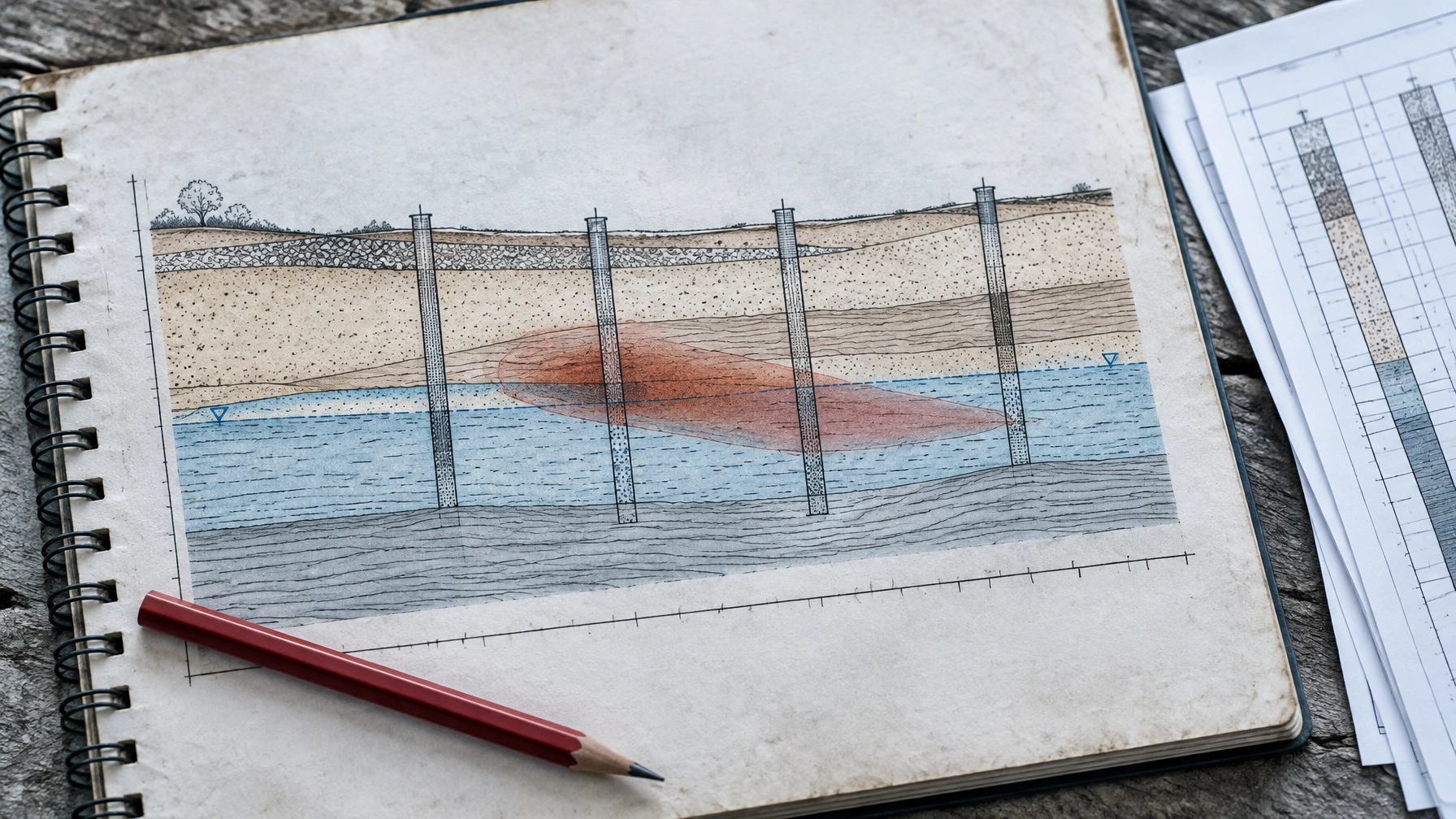
A Conceptual Site Model, or CSM, is the working explanation of how contamination may move from a source through soil, groundwater, soil vapor, surface water, or sediment to a receptor. It connects site history and field data to the investigation boundaries and the conclusions in the report.
NJDEP’s CSM technical guidance describes the CSM as an iterative tool that should change as information develops. It also clarifies an important point: a CSM is not a required standalone deliverable, and it does not replace required reporting. But a clear written and/or graphical model can make the logic of an RIR easier to follow.
A reviewer should be able to trace:
- Each area of concern (AOC) to a suspected source and its operational history.
- Each contaminant of concern to the media where it was detected.
- Soil and groundwater data to the geology, water-bearing zones, flow direction, and potential preferential pathways.
- Potential migration routes to current and future human or ecological receptors.
- Data gaps and uncertainties to a reasoned next step.

Five comment categories that can reopen an investigation
1. Incomplete horizontal or vertical delineation
Under N.J.A.C. 7:26E-4.1 and 4.2, the remedial investigation must delineate contamination to applicable standards and evaluate receptors. A few clean samples at the edge of a plume do not automatically prove the boundary. The evidence must support the boundary in both directions and at relevant depths.
A defensible delineation shows the source area, step-out locations, sample depths, results, and applicable standard on maps, tables, and cross-sections. It also explains how soil heterogeneity, groundwater conditions, or a preferential pathway may affect the apparent limit of contamination.
If access, utilities, refusal, or another site condition prevented sampling at a boundary, document the limitation and explain how it affects the conclusion. Don’t present an untested edge as a confirmed clean boundary.
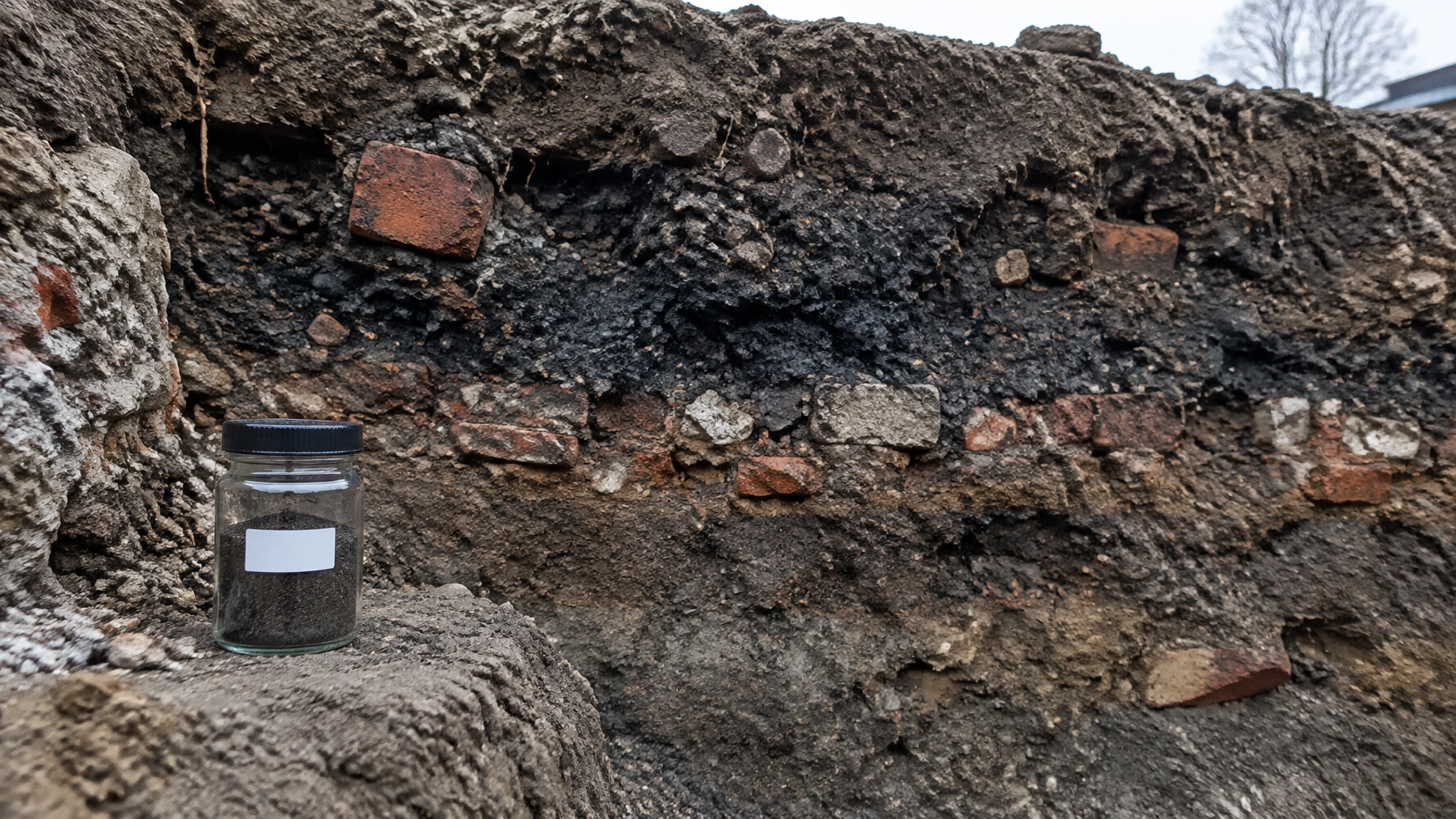
Historic fill needs specific attention. The rule calls for a remedial investigation of historic fill under N.J.A.C. 7:26E-4.7. The report should distinguish the fill investigation from the investigation of separate site-related AOCs within or on top of that fill.
2. Unsupported lines of evidence
A conclusion such as “the plume is stable” or “contamination is not site-related” needs evidence behind it. For groundwater, that may mean data from the relevant water-bearing zone, a supported flow direction, and an explanation of how the sampling locations characterize the plume.
If the report relies on older or third-party data, explain whether those data are comparable and usable for the current decision. If it relies on modeling or professional judgment to define a boundary, show the basis for that method and how it fits the site conditions. A conclusion should not depend on an assumption that the report never tests.
3. Missing receptor evaluation
The RIR requirements include an updated receptor evaluation. Reviewers need to understand who or what could encounter contamination, now or under a proposed future use.
Depending on the site, that may include nearby residences, schools, parks, surface water, wells, wetlands, buildings, or subsurface utilities. Groundwater exceedances can trigger well-search and sampling requirements. Volatile contaminants may require evaluation of vapor intrusion pathways. Check the applicable requirements in N.J.A.C. 7:26E-1.12 through 1.16, rather than relying on a general statement that no receptors are present.
4. Inadequate QA/QC or unclear data usability
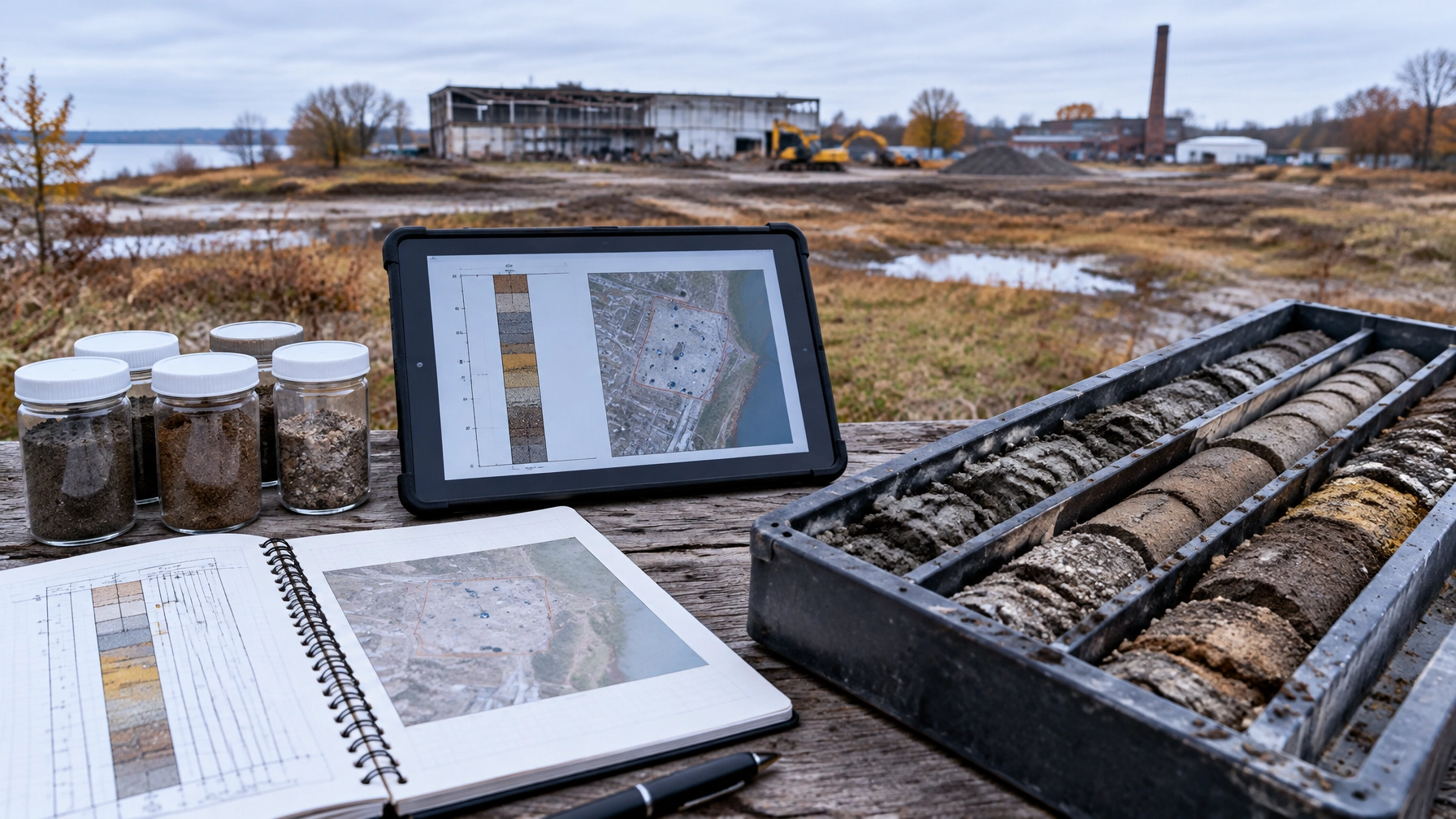
The report must explain whether the data support its conclusions. A statement that samples went to a certified lab is not enough by itself. Address field and laboratory procedures, quality-control results, data qualifiers, and any limitations that affect the investigation.
NJDEP’s Quality Assurance Project Plan guidance links data quality objectives to the intended use of the data. If a result is qualified, rejected, or reported at a limit that affects comparison with a standard, explain whether it can still support delineation. If it cannot, identify what additional information is needed.

5. Inconsistent standards lookup
A table can contain accurate lab results and still invite comments if it compares them to the wrong criterion, uses inconsistent units, or leaves the selected standard unexplained.
For each AOC and medium, verify the applicable remediation standard or criterion, the land-use assumption, the exposure pathway, the comparison date, and the reporting limit. Check that maps, tables, and narrative use the same comparison values. N.J.A.C. 7:26E-1.6 sets general reporting requirements for results, comparisons, units, maps, and data usability.
What a second round can cost the project
The rules set regulatory timeframes for completing and submitting an RIR. They do not promise a fixed NJDEP review turnaround or a standard duration for a second review. The schedule depends on the comments, whether new field data are required, site access, laboratory work, agency review, and any seasonal constraints.
The project cost is similarly scope-dependent. A report-only clarification is different from another mobilization, additional borings or wells, new laboratory analyses, or a revised receptor evaluation. A useful planning estimate separates those potential costs instead of treating all comments as simple edits.
The carrying-cost impact can be framed plainly:
Added delay cost = monthly site and financing costs × months added
That does not include possible remobilization, consultant and laboratory fees, contractor resequencing, or a missed construction window. If a comment requires field sampling that cannot happen until the next suitable season, the schedule can move beyond the time needed to revise and resubmit a report.
Walk the CSM before submitting
Before an RIR goes in, hold a focused CSM review with the LSRP, field team, and project stakeholders. Follow each AOC from source to data to boundary to receptor to recommendation. Ask what a reviewer would need to see to verify each conclusion.
Use this pre-submittal check:
- Can the report show horizontal and vertical delineation to the applicable standards?
- Do the maps, cross-sections, sample tables, and narrative tell the same story?
- Are groundwater flow, soil conditions, and potential preferential pathways supported by site data?
- Does the receptor evaluation address current and future land use and applicable pathways?
- Are data limitations and qualified results tied to their effect on conclusions?
- Are standards, units, reporting limits, and comparison values consistent throughout?
- Are the required report forms, supporting documents, and applicable regulatory timeframe included?
For a Monmouth County site, the same technical questions apply, but local property conditions and project context still matter. Envicon’s NJ LSRP services support remedial investigations and regulatory coordination. See our Monmouth County environmental consulting page and the New Jersey environmental consulting hub. For transaction-driven projects, also review our ISRA compliance services.
The takeaway
A strong RIR is more than a collection of analytical results. It is a defensible account of what the data show, what remains uncertain, and why the proposed next step follows from the evidence. Walk the CSM before submittal, test every boundary and receptor conclusion, and make the data limitations visible. That is how you reduce avoidable comment cycles and keep a site’s path forward clear.
Frequently asked questions
Did NJDEP change the RIR technical requirements in 2026?
The March 2026 notice readopted N.J.A.C. 7:26E. It did not replace the remedial investigation framework. Check the readoption notice and the current chapter text for applicable requirements.
Is a standalone CSM required with every RIR?
NJDEP’s CSM guidance says a CSM is a useful tool, not a required standalone deliverable. The RIR still must include the required investigation results, analysis, and receptor evaluation.
Is there a fixed NJDEP review time for a second RIR submittal?
The reviewed rule sets deadlines for completing and submitting the remedial investigation. It does not set a guaranteed agency review time for a second round. Follow the notice or correspondence for the specific case and confirm whether new fieldwork or an addendum is needed.
Talk with Envicon
If you’re preparing an RIR or responding to NJDEP comments, contact our team to discuss the site conditions, review issues, and next steps.