Updated October 6, 2026
Queens remains one of New York City's most active development markets. Long Island City continues to absorb high-density residential and commercial growth. Jamaica and Flushing are seeing transit-oriented and mixed-use proposals. The Queens Boulevard corridor is moving through repeated rezoning activity. Astoria, Sunnyside, and the Rockaway peninsula each present different land use, infrastructure, and environmental constraints.
For developers, the central question is not simply whether a site can be rezoned. It is whether the environmental review, zoning conditions, agency approvals, and construction obligations can be sequenced without creating avoidable delay.
That is where CEQR, SEQRA, ULURP, and NYC E-designation compliance intersect.
Queens development context: one borough, several risk profiles
Queens is not environmentally uniform. Site history and location matter.
- Long Island City: Former industrial, manufacturing, warehouse, rail, and waterfront uses can create concerns involving petroleum, metals, volatile organic compounds, PCBs, and historic fill.
- Astoria: Former industrial parcels, utility infrastructure, transportation uses, and waterfront conditions can affect environmental due diligence and redevelopment design.
- Maspeth: Industrial operations, truck-intensive uses, rail corridors, and legacy manufacturing require careful review of soil, groundwater, vapor, and adjacent property conditions.
- Jamaica: Historic fill, former commercial uses, dry cleaners, auto repair facilities, and dense redevelopment patterns can create subsurface uncertainty.
- Flushing: Historic fill, former industrial and commercial properties, auto uses, and groundwater concerns may affect excavation and foundation planning.
- Queens Boulevard and Sunnyside: Rezoning activity along established transit and commercial corridors can trigger CEQR review, E-designations, traffic analysis, air quality review, noise analysis, and public review.
- Rockaway and Jamaica Bay: Coastal location, wetlands, tidal influence, flood exposure, shoreline infrastructure, and regulated natural resources can affect site planning and agency coordination.
A Queens project needs a location-specific strategy. A generic Phase I report or template environmental checklist is not enough.
CEQR and SEQRA: the environmental review pathway
The City Environmental Quality Review process, or CEQR, applies when a proposed discretionary action may affect the environment. Typical triggers include:
- Zoning map amendments
- Zoning text amendments
- Special permits
- City land acquisition or disposition
- Major infrastructure and public projects
- Large developments requiring city approvals
- Actions requiring City Planning Commission or City Council review
The NYC Office of Environmental Coordination maintains CEQR resources, the CEQR calendar, technical guidance, and access to environmental review documents.
CEQR commonly begins with an Environmental Assessment Statement. Depending on the potential impacts, the lead agency may issue:
- A Negative Declaration
- A Conditional Negative Declaration
- A Positive Declaration requiring an Environmental Impact Statement
- A Notice of Completion for a Draft or Final EIS
- A Statement of Findings
CEQR is a disclosure and decision-support process. It does not replace the land use approval itself.
SEQRA, the State Environmental Quality Review Act, applies when a state or local agency action may affect the environment. In Queens land use cases, CEQR and SEQRA are often conducted together. The lead agency identifies the review pathway, coordinates involved agencies, evaluates potential impacts, and determines whether mitigation is required.
The CEQR Technical Manual provides the technical framework. Developers should use it early, before the project team commits to a site plan that later creates avoidable impacts.
E-designations and NYC OER compliance
An NYC E-designation is a zoning-related environmental control placed on a tax lot or group of lots. It signals that a prior environmental review identified potential concerns involving hazardous materials, air quality, or noise.
Many Queens properties received E-designations through 2009 and later zoning actions. The current designation and requirements must be checked against the applicable zoning records and the NYC Zoning Resolution environmental requirements.
An E-designation may require work such as:
- Phase I and Phase II environmental assessment
- Soil, groundwater, or soil vapor sampling
- A hazardous materials investigation
- Remedial measures before or during construction
- Air quality controls for fuel-burning equipment
- Noise attenuation measures
- Construction health and safety planning
- NYC Office of Environmental Remediation coordination
- Documentation before DOB permits or certificates of occupancy

The exact requirements depend on the designation. Some sites carry one environmental category. Others combine hazardous materials, air quality, and noise obligations.
“An E-designation is not a mystery. It is a site-specific compliance path.”
The problem is usually sequencing. If the developer waits until the DOB filing stage to investigate the designation, the project may need to pause while the environmental scope is developed, reviewed, and implemented.
Our NYC E-designation compliance process starts with confirming the lot, reviewing the environmental restriction, opening the appropriate regulatory pathway, and building the field program around the actual construction plan.
ULURP, the Queens Borough President, and community boards
The Uniform Land Use Review Procedure, or ULURP, governs formal review of many zoning and land use applications.
The standard sequence includes:
- Pre-certification: The applicant, design team, environmental consultant, and Department of City Planning resolve application issues before certification.
- Certification: DCP certifies the application and refers it for public review.
- Queens Community Board review: The relevant community board has 60 days to hold a public hearing and issue a recommendation.
- Queens Borough President review: The Borough President has 30 days to review the application and issue an advisory recommendation.
- City Planning Commission review: CPC generally has 60 days to hold a public hearing and act.
- City Council review: For applications requiring Council action, the Council generally has 50 days.
- Mayor review: The Mayor has five days after Council action to approve or veto the application.
The formal timeline is approximately seven months after certification. It does not include pre-certification work, environmental technical studies, agency comments, applicant responses, or delays caused by an incomplete record.
Community boards and the Queens Borough President do not issue the final CEQR determination. Their recommendations still matter. They shape the public record and can influence conditions, design changes, community benefits, infrastructure commitments, and political support.
A developer should not treat the public review period as a presentation exercise. The environmental documentation must be understandable, complete, and connected to the neighborhood's real concerns.
Common environmental conditions on Queens sites
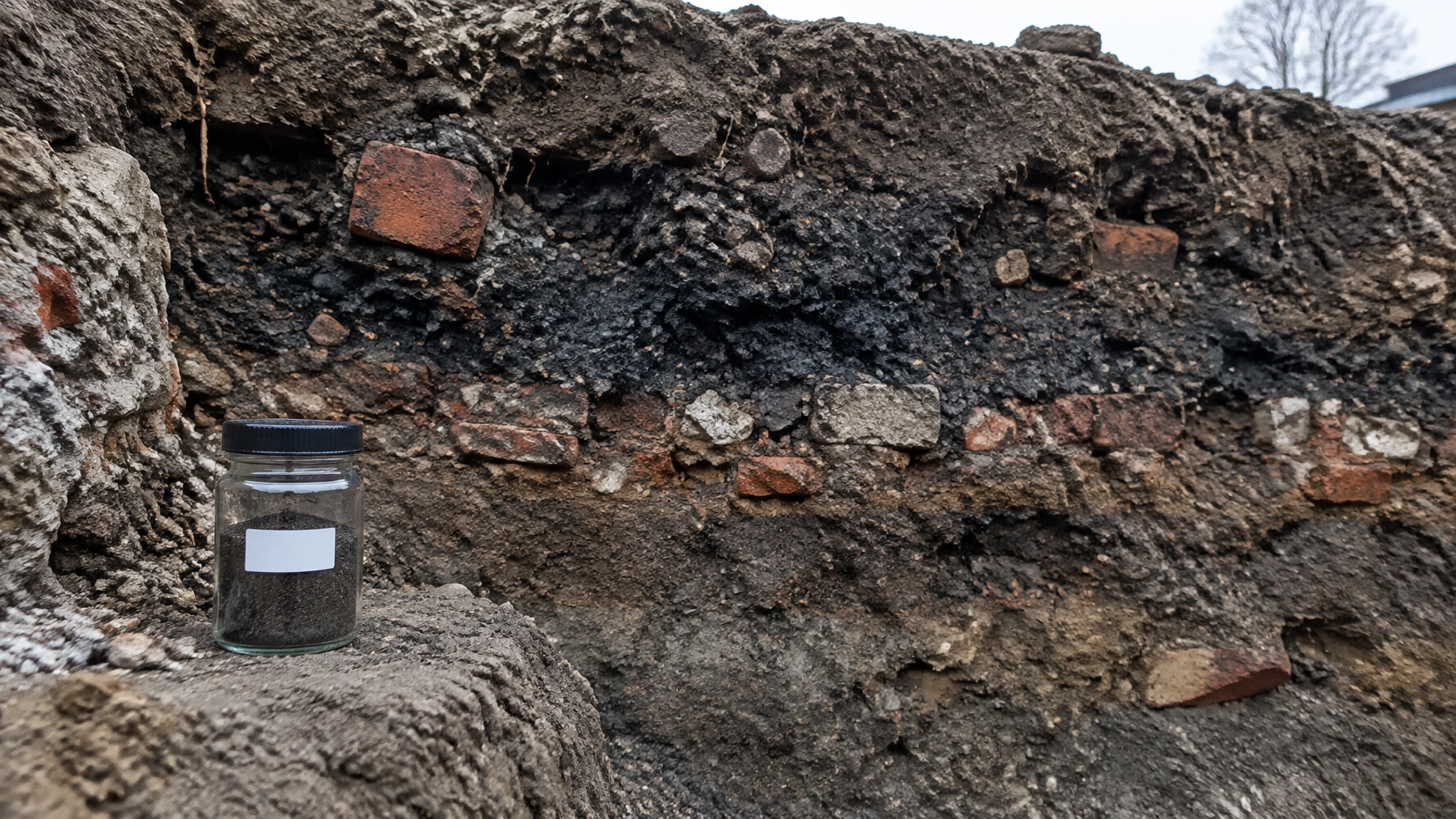
Historic fill
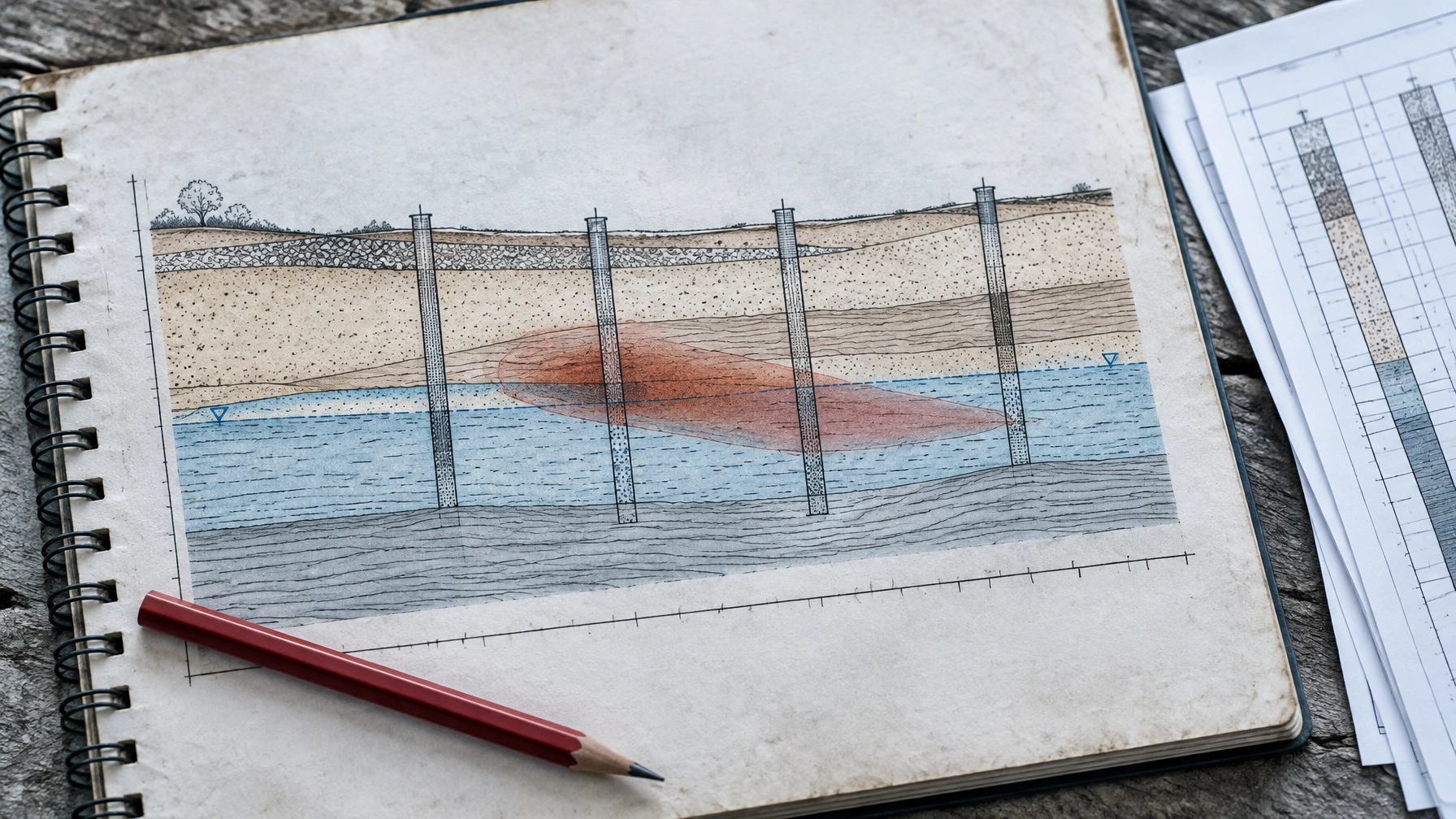
Historic fill appears across much of the New York metropolitan region. In Jamaica, Flushing, Long Island City, and other developed areas, fill may contain ash, brick, cinders, metals, petroleum residues, and other materials.
Historic fill affects more than laboratory results. It can change:
- Excavation and disposal costs
- Soil reuse options
- Worker protection requirements
- Groundwater sampling plans
- Foundation and utility trench planning
- Remedial design
- Construction scheduling
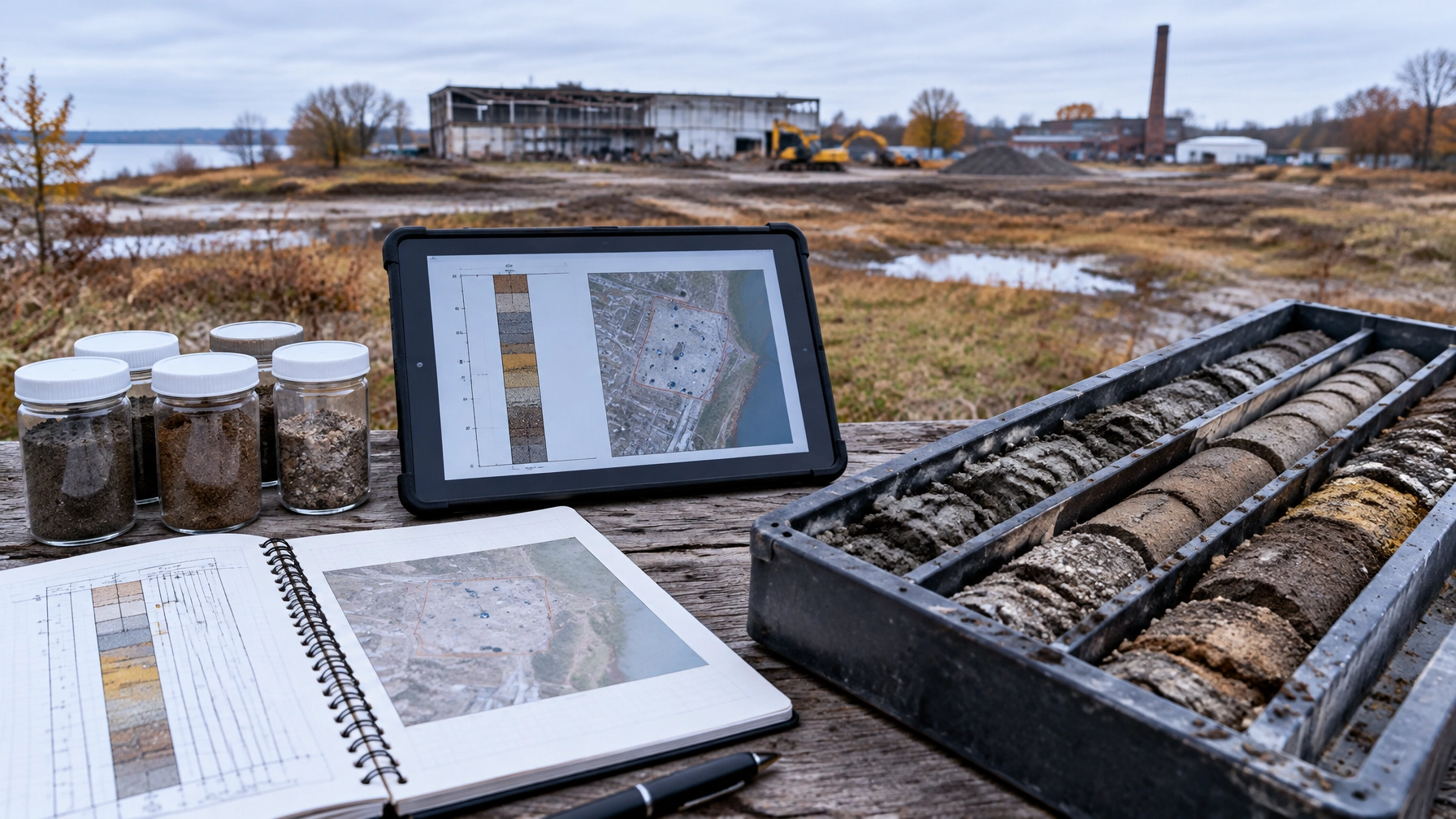
A Phase II ESA should be designed around the site's history and proposed disturbance, not a fixed number of borings.
Dry cleaners and auto uses
Former dry cleaners can raise concerns involving chlorinated solvents such as PCE and TCE. Auto repair facilities, gas stations, parking areas, and vehicle maintenance operations can create petroleum, metals, and solvent concerns.
These uses may affect soil vapor and indoor air risk even when visible site conditions appear clean. A Phase I ESA should identify the historical use. A Phase II investigation should then determine whether soil, groundwater, or vapor testing is necessary.
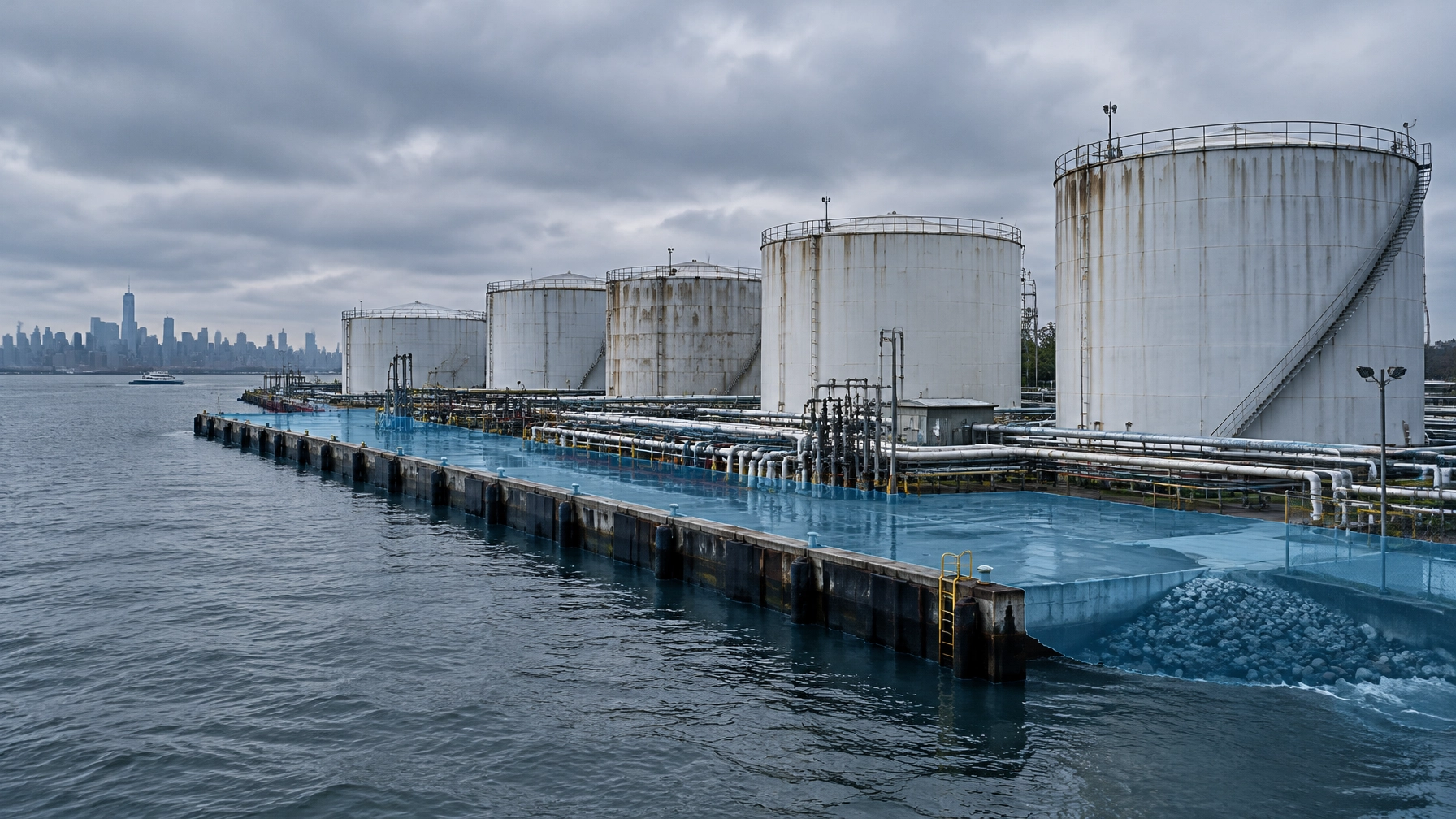
Industrial legacy
Long Island City and Maspeth contain properties with industrial histories that may include manufacturing, bulk storage, metalworking, printing, transportation, and waste handling. Adjacent properties can also matter. Contamination does not stop at the tax lot line.
Wetlands and coastal conditions

Rockaway and Jamaica Bay sites require early review of wetlands, tidal resources, shoreline conditions, flood exposure, and applicable state or federal jurisdiction. The development team may need to coordinate with agencies including NYC Parks, NYSDEC, and other involved agencies depending on the site and proposed work.
Coastal constraints can affect site access, excavation, foundation design, construction sequencing, and environmental review. Do not wait until final design to identify them.
How a Queens brownfield redevelopment should be sequenced
A practical sequence usually looks like this:
1. Complete transaction due diligence
Start with an ASTM-compliant Phase I ESA, title and zoning review, environmental database research, historical mapping, and an E-designation check.
The Phase I ESA cost in NYC depends on property size, historical uses, building complexity, records availability, and the delivery schedule. A site with a former dry cleaner or industrial operation needs a different scope than a clean residential parcel.
2. Confirm the regulatory pathway
Determine whether the project involves NYC OER, NYSDEC, a city environmental restrictive declaration, a Brownfield Cleanup Program pathway, or another agency process.
3. Design targeted investigation
Use the Phase I findings, zoning conditions, proposed excavation, and future building footprint to design the Phase II. Sampling should answer a development question. It should not create data without a decision attached to it.
4. Resolve E-designation requirements
Prepare the required work plans, sampling, remedial measures, air or noise controls, and regulatory submissions. Coordinate the environmental work with DOB, design, financing, and construction schedules.
5. Advance CEQR and ULURP together
Environmental review should inform the land use application. Do not treat CEQR as a report that gets added after the zoning package is complete.
6. Implement remediation and document closure

Remediation may include excavation, soil management, vapor mitigation, engineering controls, groundwater treatment, or a combination of measures. Field oversight and documentation must support the final regulatory submission and the project's permit and occupancy requirements.
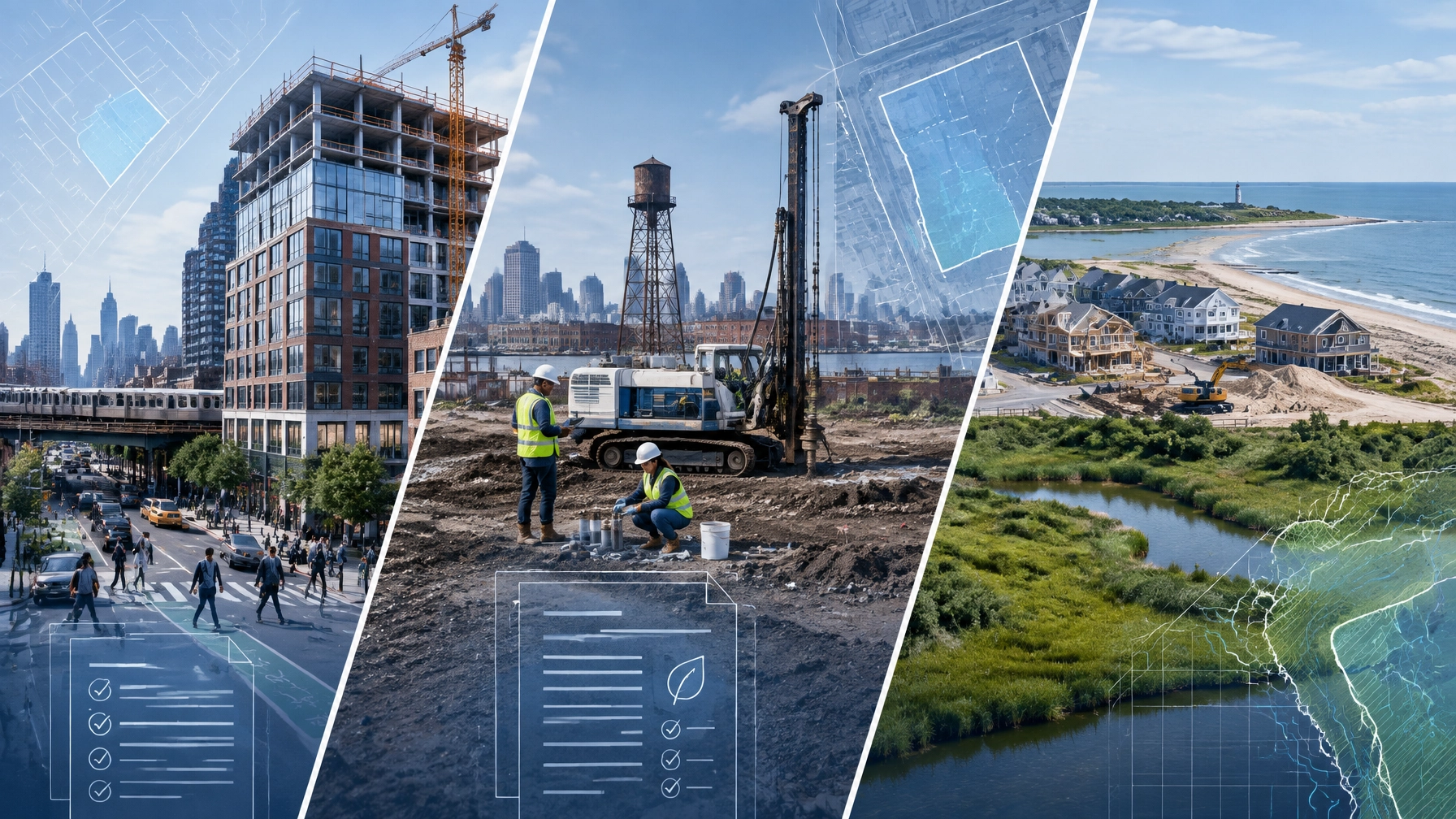
What this means for Newark and Monmouth County portfolios
Developers with regional acquisitions should not apply the Queens process directly to New Jersey.
Newark, New Jersey projects typically require a separate NJDEP analysis and may involve an LSRP, historic industrial use, urban fill, petroleum, dry cleaning, or Passaic River-related concerns. See Envicon's Newark environmental consulting services.
Monmouth County, New Jersey properties can present different conditions, including former commercial uses, coastal constraints, wetlands, agricultural history, and changing redevelopment patterns. The applicable NJDEP pathway and local approvals must be confirmed before relying on a Queens-style schedule.
The principle is the same in all three markets. Start with the actual site. Confirm the agency. Build the environmental work into the land use and construction schedule.
The takeaway for Queens developers
Queens development is active, but approval is not automatic. Long Island City, Astoria, Jamaica, Flushing, Queens Boulevard, Sunnyside, and Rockaway each carry different environmental and land use conditions.
Your project needs:
- A site-specific Phase I ESA
- Early E-designation research
- A targeted Phase II investigation when warranted
- CEQR and SEQRA coordination
- A realistic ULURP schedule
- Direct communication with community boards, the Queens Borough President, DCP, OER, and other agencies
- Field documentation that supports permits, financing, and closeout
Envicon Group helps developers solve environmental and engineering challenges with precision, speed, and trust. We do not just deliver reports. We help turn complicated Queens sites into buildable, compliant assets.