
Published October 26, 2026, at 2:00 p.m. ET
October 2026 NJDEP reminders have put an important vapor intrusion obligation back in focus: when a result meets the criteria for an immediate environmental concern, reporting and response move on an emergency track.
For industrial facility owners and remediating parties in Newark, that distinction matters. A vapor sample can lead to more than a Phase II follow-up. It can trigger immediate hotline calls, occupant communications, interim protection, mitigation planning, and deadlines measured in days.
The framework below reflects the current NJDEP Technical Requirements for Site Remediation, N.J.A.C. 7:26E, amended June 15, 2026, together with NJDEP’s Vapor Intrusion Technical Guidance and vapor intrusion guidance and current screening tables. Always check the latest NJDEP tables and forms for a specific site.
When does vapor intrusion become an IEC?
An indoor-air result above a Rapid Action Level (RAL) is a serious trigger. But the reading alone does not, by itself, establish a vapor intrusion IEC.
NJDEP’s guidance describes an IEC when all three conditions are met:
- Indoor-air concentrations related to vapor intrusion exceed the applicable RAL.
- The contaminant source is a discharge.
- A completed vapor intrusion exposure pathway is confirmed.
The applicable RAL depends on the contaminant and the relevant exposure scenario. Check the current NJDEP table rather than relying on an old report or a value copied from another project. NJDEP distinguishes an IEC from a vapor concern. A vapor concern generally involves a completed pathway and indoor-air results above the applicable Indoor Air Remediation Standard, but at or below the RAL.
“An IEC is present when VI related IA concentrations exceed the RAL, the source of the exceedance is due to a discharge, and a completed exposure pathway for VI has been confirmed.”
NJDEP Vapor Intrusion Technical Guidance
That distinction matters in Newark’s industrial buildings. Operational chemicals, stored products, HVAC conditions, and outdoor air can affect indoor-air results. An experienced evaluation considers multiple lines of evidence to determine whether a discharge is driving the result and whether occupants have a completed exposure pathway.
The hotline duty requires two calls
When a vapor intrusion IEC is identified, the current rule requires the person responsible for conducting the remediation to immediately call NJDEP’s hotline at 1-877-WARNDEP (1-877-927-6337) and notify the assigned case manager, if there is one.
NJDEP’s notification clarification makes the practical requirement explicit: both the LSRP and the person responsible for conducting the remediation must make an immediate hotline call. The LSRP also has a professional duty to notify the responsible party of the reporting obligation. Do not assume that one call covers both parties.
The hotline call does not replace the written filing. It starts a response that includes required notices, action forms, supporting data, and follow-up with NJDEP.
The 14-day filing package: know which document is Version 1.3
Within 14 days after identifying an IEC, the responsible party must submit the required IEC information to NJDEP. The package includes the completed IEC Response Action Form, applicable spreadsheet, maps showing the site and affected receptors, and documentation of required communications.
There is an important version detail. NJDEP’s current forms library lists the IEC Response Action Form as Version 1.8, dated January 6, 2023. The separate IEC/VC Vapor Intrusion Spreadsheet is Version 1.3. The form and spreadsheet are different documents. The “Version 1.3” reference belongs to the spreadsheet, not the current IEC Response Action Form.
Use the current IEC Response Action Form and the NJDEP vapor intrusion guidance to confirm the appropriate submission materials. In addition, full laboratory data deliverables and the required form are due within 14 days after receipt of IEC analytical data from the laboratory.
The responsible party must also provide the vapor intrusion analytical results, with an explanation, to the property owner, occupant when applicable, and designated local health department. NJDEP expects clear communication, not just a laboratory package forwarded without context.
Interim response, engineered mitigation, and confirmatory sampling
An IEC does not mean every site has to install a fully designed system the day results arrive. It does mean the team must act promptly and meet the rule’s specific deadlines.
For a vapor intrusion IEC, the rule requires an interim response action within 14 days to address each building where indoor-air results exceed the applicable RAL. The interim measure should address exposure while the longer-term engineered response is designed and implemented. The appropriate action depends on actual building conditions, occupancy, and the technical findings. Where interim controls cannot adequately protect occupants, temporary relocation may need to be considered with the property owner and relevant health officials. Relocation is not an automatic consequence of every IEC finding.
Within 60 days after identifying the IEC, the rule calls for an engineered response action that includes a vapor remedial-action system for each building with indoor-air results above the RAL. Post-installation sampling is required, with results reported to the property owner, occupant when applicable, and designated local health department. The responsible party must also identify and sample buildings within 100 feet of the impacted building, identify other buildings whose air may be affected, and conduct additional investigation as needed.

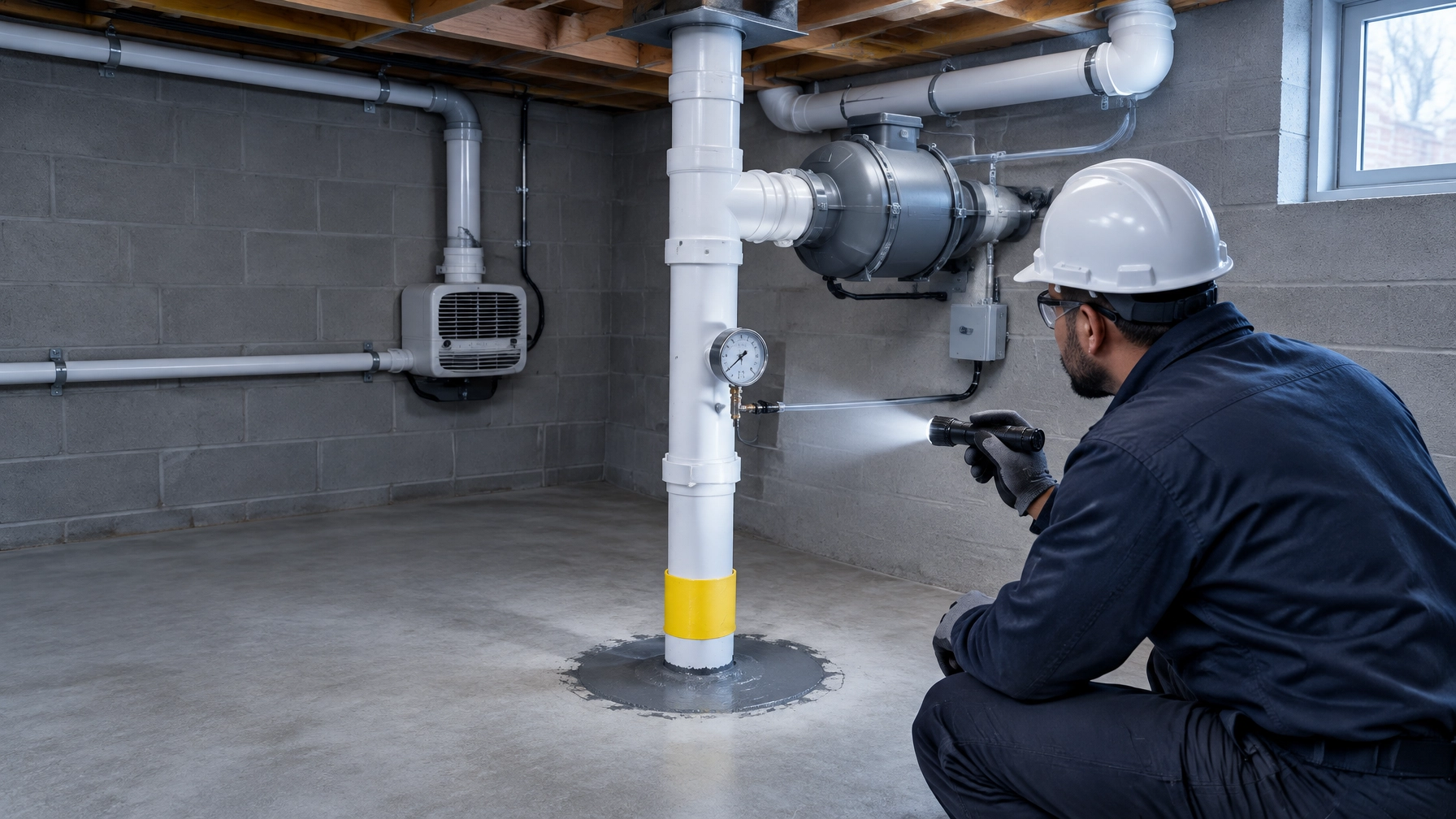
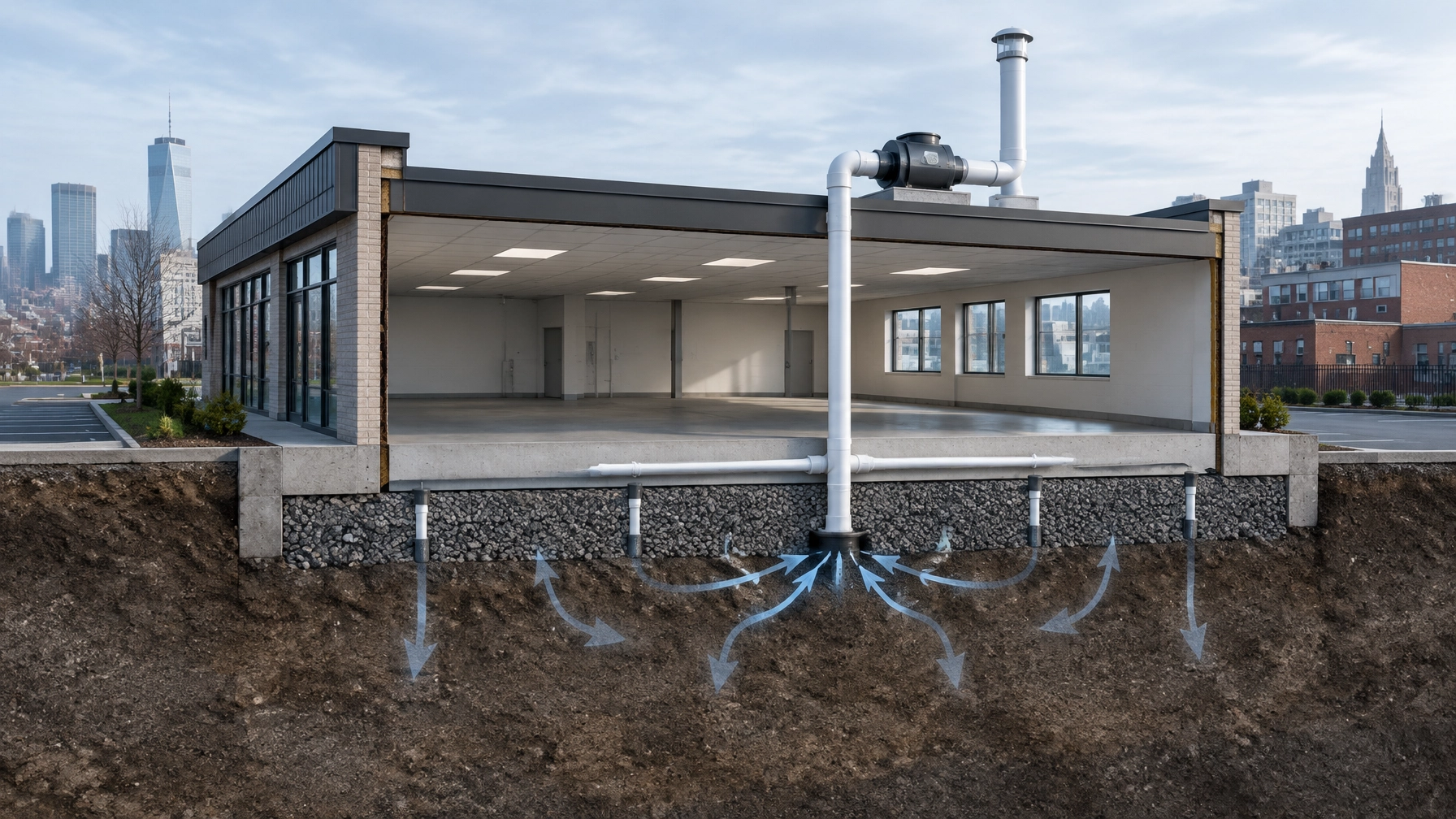
Sub-slab depressurization is a common active mitigation approach. A suction point and riser draw soil gas from beneath the slab and discharge it outside, while the system creates a pressure field that limits vapor entry. A vapor intrusion mitigation system (VIMS) must fit the building and subsurface, not a generic drawing. Slab configuration, soil permeability, utilities, foundation penetrations, HVAC pressure, and the extent of impacts all matter.
NJDEP’s technical guidance calls for post-mitigation verification sampling after system startup. For active systems, the guidance specifies verification sampling at least 30 days after startup and no later than 60 days after startup. The system must also be commissioned and monitored. For larger or more complex industrial facilities, the design and monitoring plan should reflect the system’s actual layout and operating conditions.
The response continues beyond installation
Installing a system is not the end of the IEC process. Within 120 days after identifying the IEC, the responsible party must submit an engineered response action report describing actions taken, supporting data, maps, and the status of the receptor investigation. Within one year, the rule calls for an IEC source control report addressing contributing contaminant sources and actions to control them. Annual monitoring and maintenance reporting continues until the applicable remedial action permit includes the IEC.
The clock matters because a rejected or incomplete filing can create extra work just when the site team needs to focus on protecting occupants and keeping operations moving. The case manager may also request routine progress updates.
Why vapor pathway evaluation belongs in Newark due diligence
A confirmed IEC can turn a routine Phase II environmental site assessment in New Jersey into an emergency response. The owner may have to address building access, occupant communication, interim protection, system installation, and possible tenant relocation questions while continuing the source investigation.
That is why environmental due diligence for developers in NJ should consider the vapor pathway early when a property’s history, groundwater data, soil gas, or nearby conditions warrant it. Finding the issue before closing or before a construction schedule is fixed gives the team more time to plan. It also helps buyers and facility owners understand potential costs and occupancy implications before those decisions become urgent.
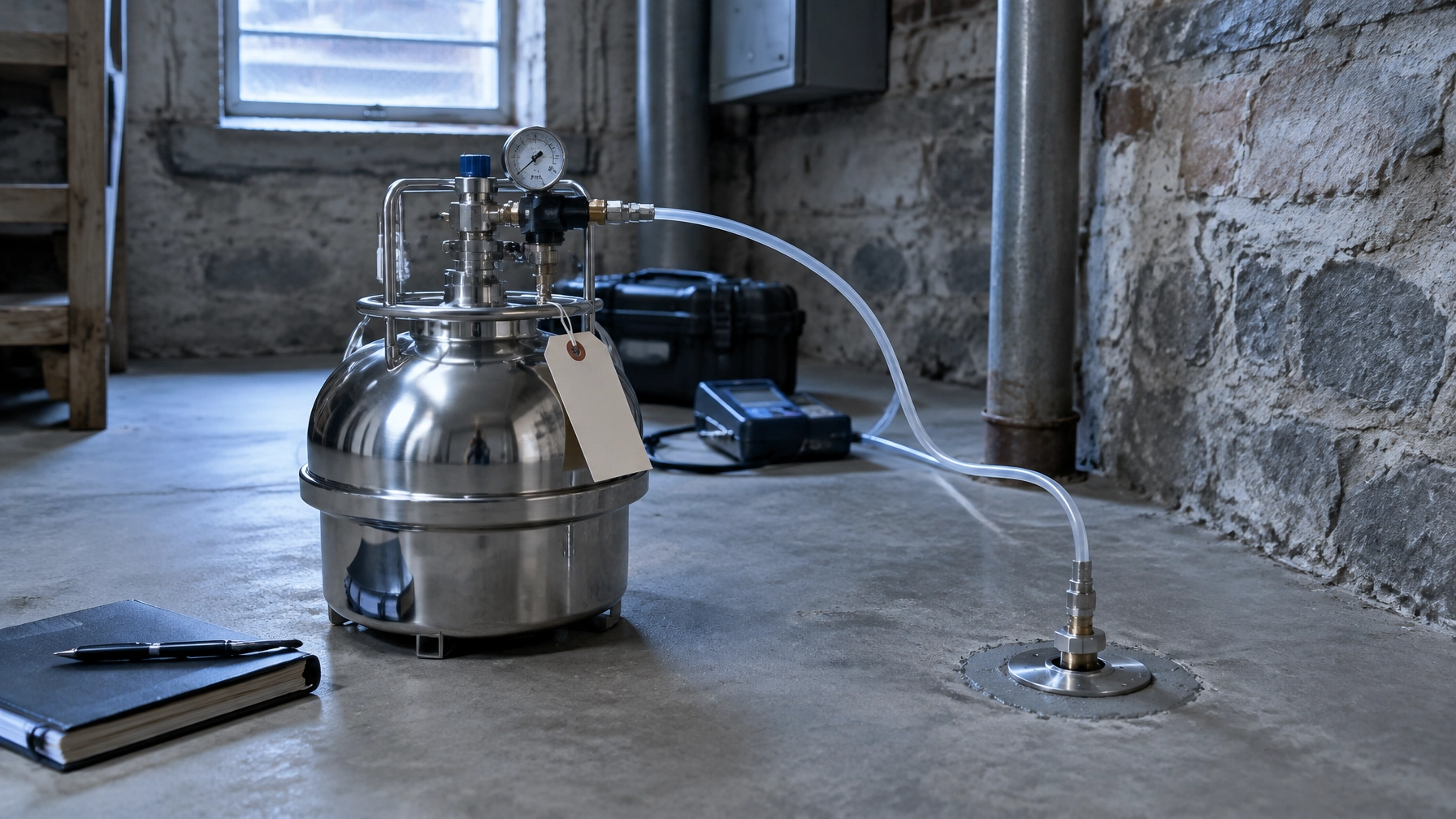
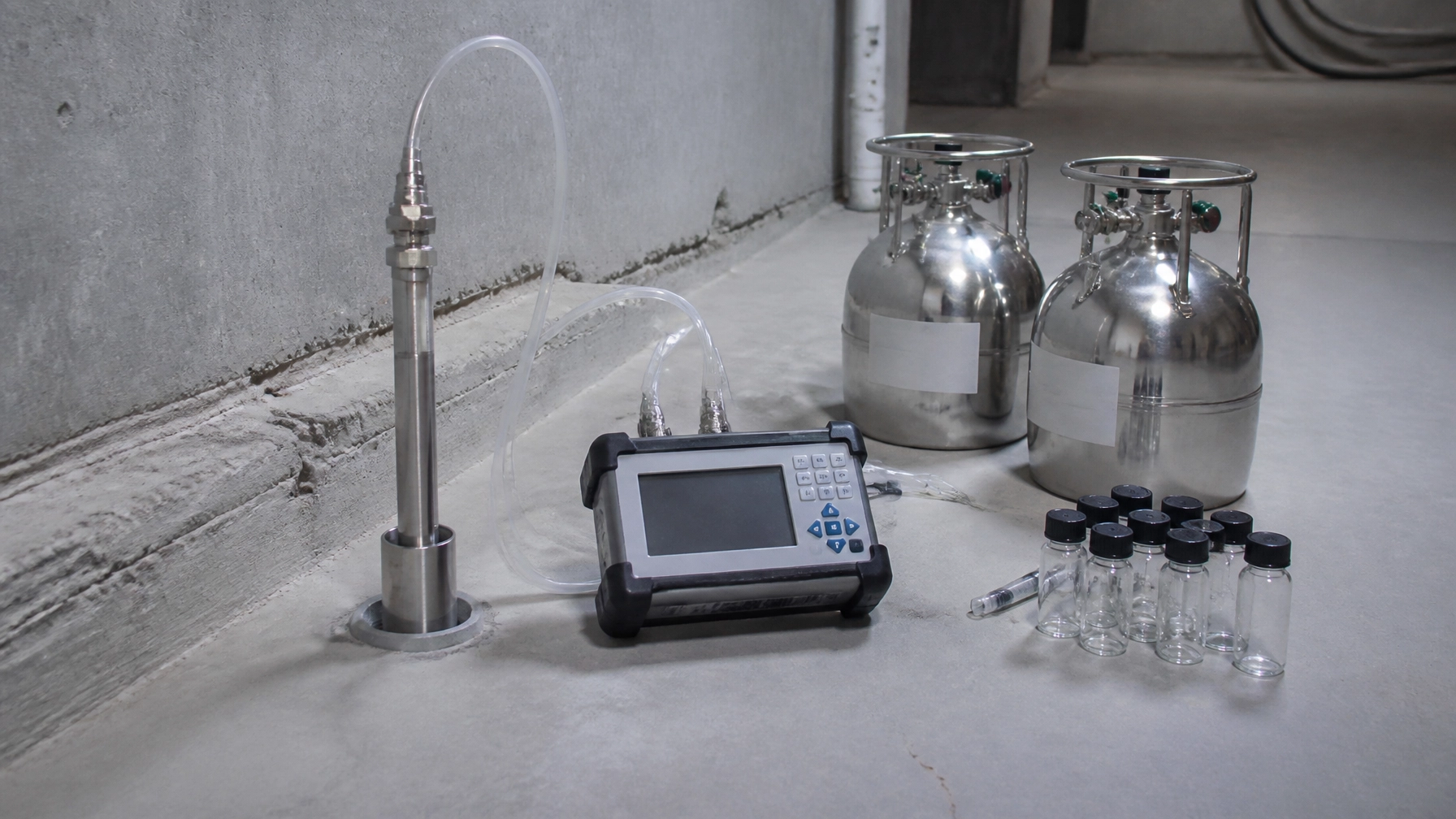
For Newark-area industrial properties, Envicon evaluates site history and discharge sources, groundwater and soil gas data, building construction, utility pathways, ventilation, and potential indoor sources. We plan sampling around site conditions and NJDEP requirements, then interpret the results in context rather than treating one number as the whole story.
When mitigation is needed, we design VIMS around the building and the pressure field required to control vapor entry. We coordinate with the LSRP, owner, contractors, and agency team, then support installation, commissioning, confirmatory sampling, and monitoring. A clear schedule and visible project status help the owner know what has happened, what comes next, and who owns each action.

Our vapor intrusion mitigation system design service supports investigation through verification. See our full list of services and our Newark, NJ environmental consulting location. We work across New Jersey, including Monmouth County, and in New York, including Queens.
Practical steps when indoor air approaches or exceeds a RAL
- Confirm the applicable contaminant-specific RAL using NJDEP’s current tables.
- Review whether the source is a discharge and whether a completed vapor intrusion pathway is confirmed.
- If an IEC is identified, have both the LSRP and responsible party call the NJDEP hotline immediately.
- Start the interim response, occupant communication, and 14-day filing work without waiting for the longer-term system design.
- Track the 60-day engineered response, nearby-building investigation, post-installation sampling, 120-day report, source-control report, and ongoing monitoring requirements.
The best time to understand a vapor pathway is before it threatens occupancy or a closing date. When an IEC is identified, clear ownership and prompt technical decisions protect people and help keep the project moving.
Frequently asked questions
What makes a vapor intrusion result an NJDEP IEC?
A vapor intrusion IEC requires indoor-air concentrations related to vapor intrusion above the applicable RAL, a source associated with a discharge, and confirmation of a completed exposure pathway. The current NJDEP tables and site-specific evidence determine how those criteria apply.
Who calls NJDEP when a vapor intrusion IEC is identified?
Both the LSRP and the person responsible for conducting the remediation must immediately call the NJDEP hotline at 1-877-927-6337. The LSRP should also notify the responsible party of its reporting duty. One call does not replace the other.
Is IEC Response Action Form Version 1.3 the current form?
No. NJDEP’s forms library lists the IEC Response Action Form as Version 1.8. Version 1.3 applies to the separate IEC/VC Vapor Intrusion Spreadsheet. Check the NJDEP forms library before filing.
Does an IEC automatically require tenant relocation?
No. The IEC requires prompt action to address exposure, but relocation is not an automatic outcome for every case. The response should account for actual conditions, occupancy, interim protections, and coordination with the owner and appropriate officials.
Take the next step
If your Newark property has indoor-air results near or above an NJDEP RAL, get the results reviewed against the current rule and guidance before making assumptions about the response. Envicon works on vapor intrusion evaluation and mitigation system design with direct technical coordination from investigation through post-mitigation verification.