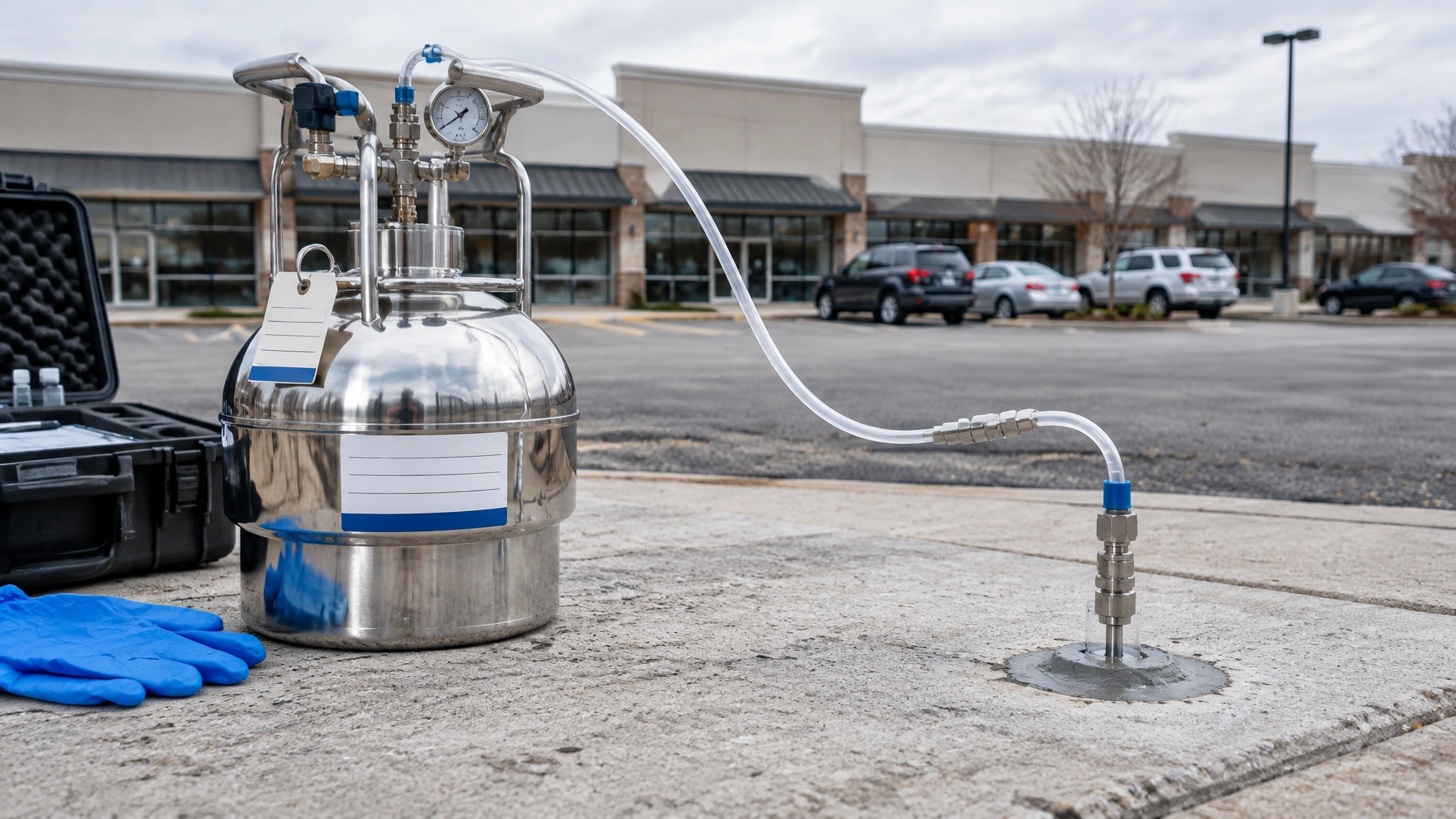
A fan running is not proof that a vapor intrusion mitigation system works. The proof comes from commissioning: field testing that shows the system creates the required pressure conditions, operates safely, and reduces indoor air contamination.
In Newark, that distinction can affect a building’s path to occupancy, a lender’s comfort with a transaction, and the schedule for closing out environmental requirements. NJDEP’s Vapor Intrusion Technical Guidance sets out the commissioning and verification process. The core test for an active sub-slab depressurization system is whether a pressure differential of at least 0.004 inches of water column reaches the entire slab area being mitigated.
That’s a small pressure difference. It’s also a real performance test, not a box to check after installation.
What NJDEP commissioning is meant to prove
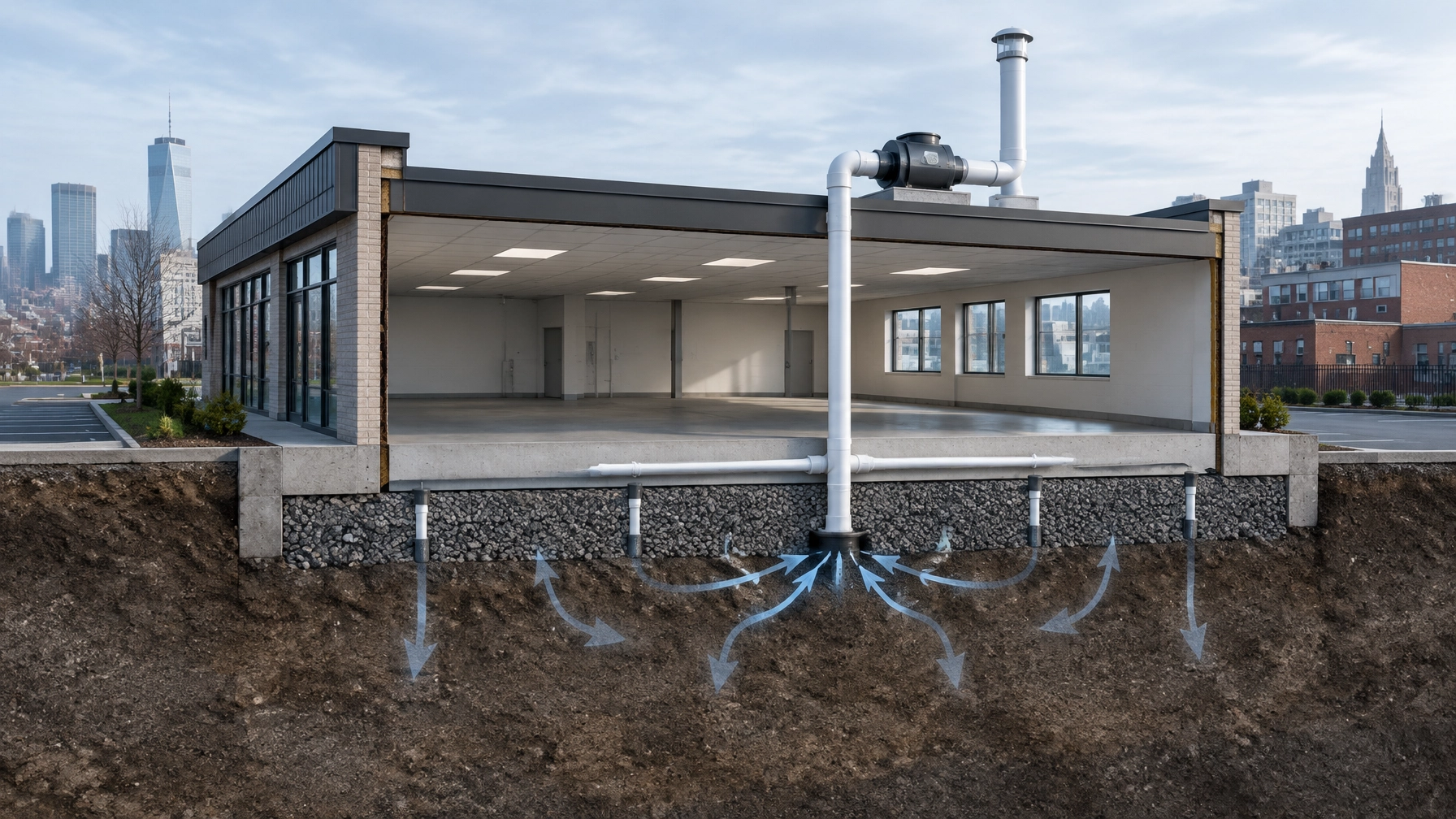
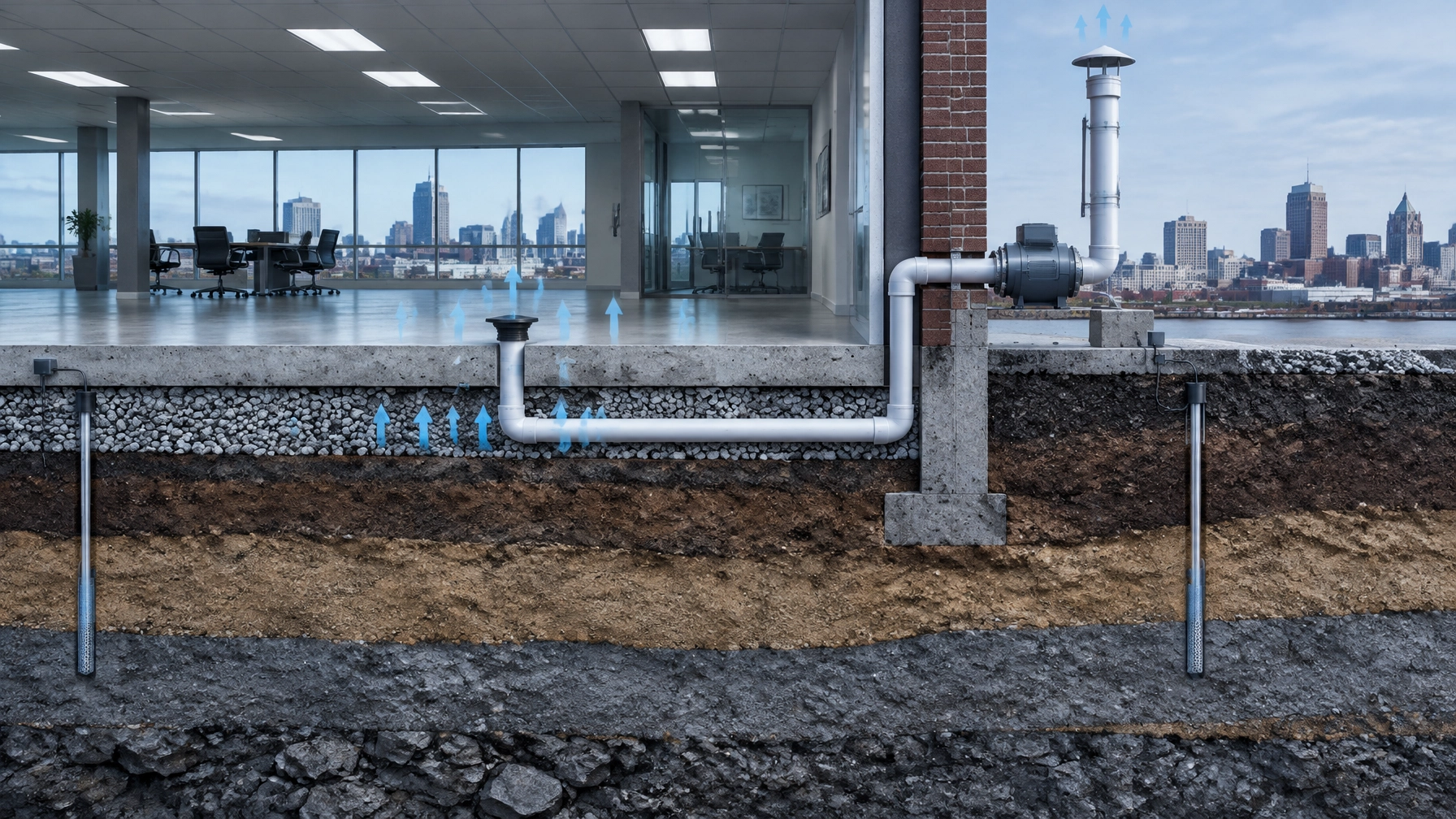
An active vapor intrusion mitigation system, or VIMS, typically uses a fan to draw soil gas from beneath a building slab and vent it outdoors. Commissioning checks whether the system’s influence reaches the areas it is designed to protect. It also establishes baseline measurements for future inspections and monitoring.
In practical terms, commissioning asks:
- Does the system create the required negative pressure across the slab?
- Are the pressure and airflow readings recorded at the right locations?
- Does the system operate without causing combustion appliances to back-draft?
- Do post-mitigation indoor air results support the conclusion that mitigation is effective?
The guidance schedules commissioning 30 to 45 days after system startup. NJDEP’s summary table also describes the overall timing as a minimum of 30 days after startup, not to exceed 60 days. Confirm the applicable schedule with the project’s NJDEP Licensed Site Remediation Professional (LSRP) and follow the current case requirements. Commissioning is not simply a fan startup check.
Why the 0.004-inch reading matters
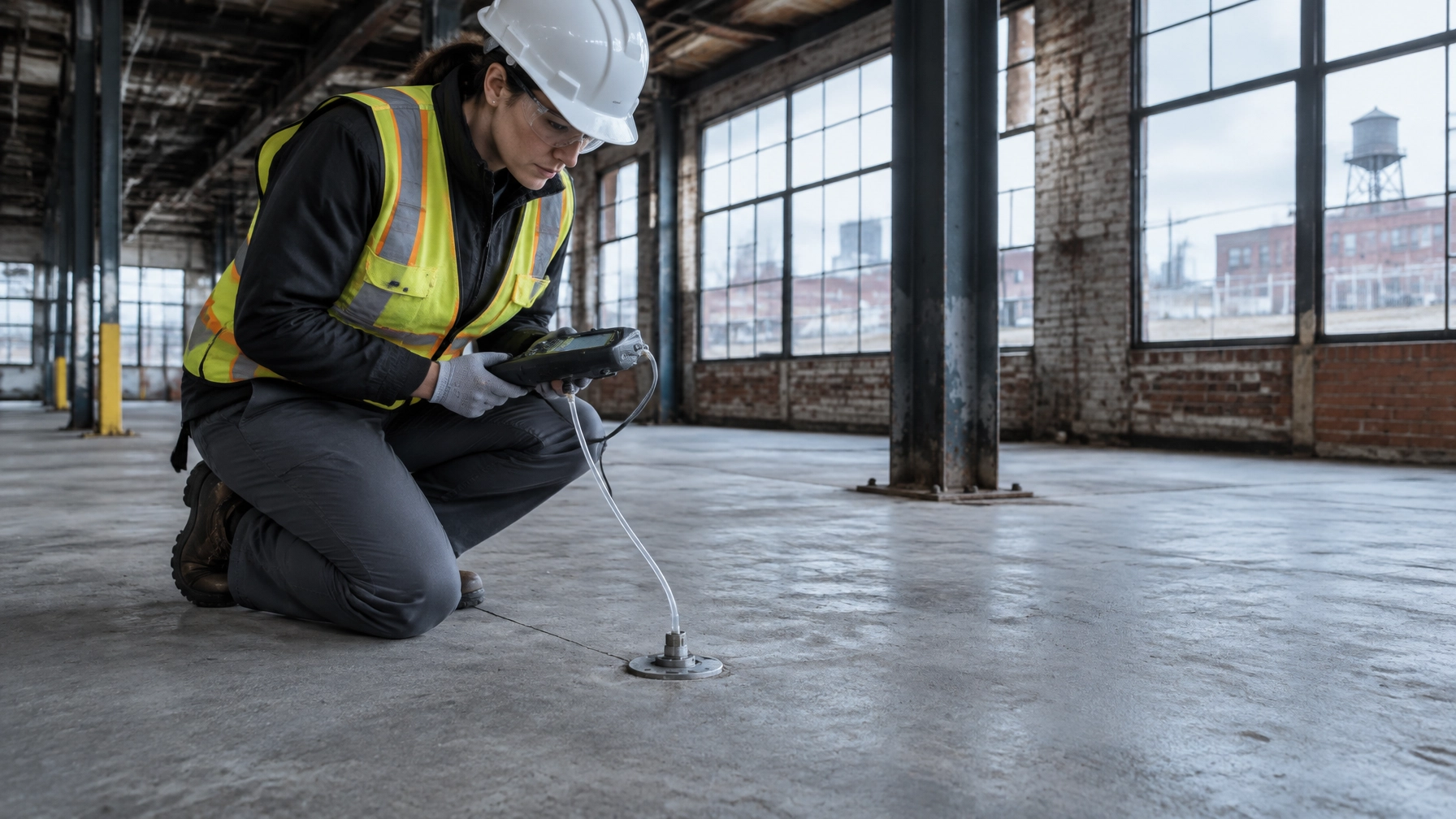
Pressure-field communication testing measures whether the suction created at the system’s extraction point reaches across the subsurface beneath the slab. Permanent sub-slab points let the field team check pressure at different locations, including areas far from a suction point or in separate slab sections.
For active subsurface depressurization systems, NJDEP’s guidance calls for at least 0.004 inches of water column of pressure differential across the entire slab area being mitigated. It also makes clear that pressure readings should not be averaged to claim compliance. Each measurement needs to support the conclusion that the area is under adequate pressure influence. The guidance recommends a digital micromanometer with a resolution of 0.0001 inches of water column for these low-pressure measurements. See NJDEP’s technical guidance, Section 6.4.2.

If one point falls short, a strong reading near the fan does not make up for it. The system may need a fan adjustment, added or relocated suction points, changes to the piping, or further sealing. The team then repeats the relevant testing to confirm the correction.
The 0.004-inch criterion is a technical performance benchmark, not a substitute for site-specific judgment. NJDEP discusses system-specific conditions, including highly permeable sub-slab materials where measurable vacuum may not be obtainable. In those cases, the guidance describes other diagnostic approaches. The LSRP should document the basis for the selected method and the evidence that supports the performance conclusion.
The readings and records your project should have
Commissioning should leave the project team with a clear record of what was tested and what the measurements showed. The system’s readings also become a baseline for future monitoring and maintenance.
For active systems, that record should include:
- Pressure differential readings from permanent sub-slab measurement points across the area being mitigated.
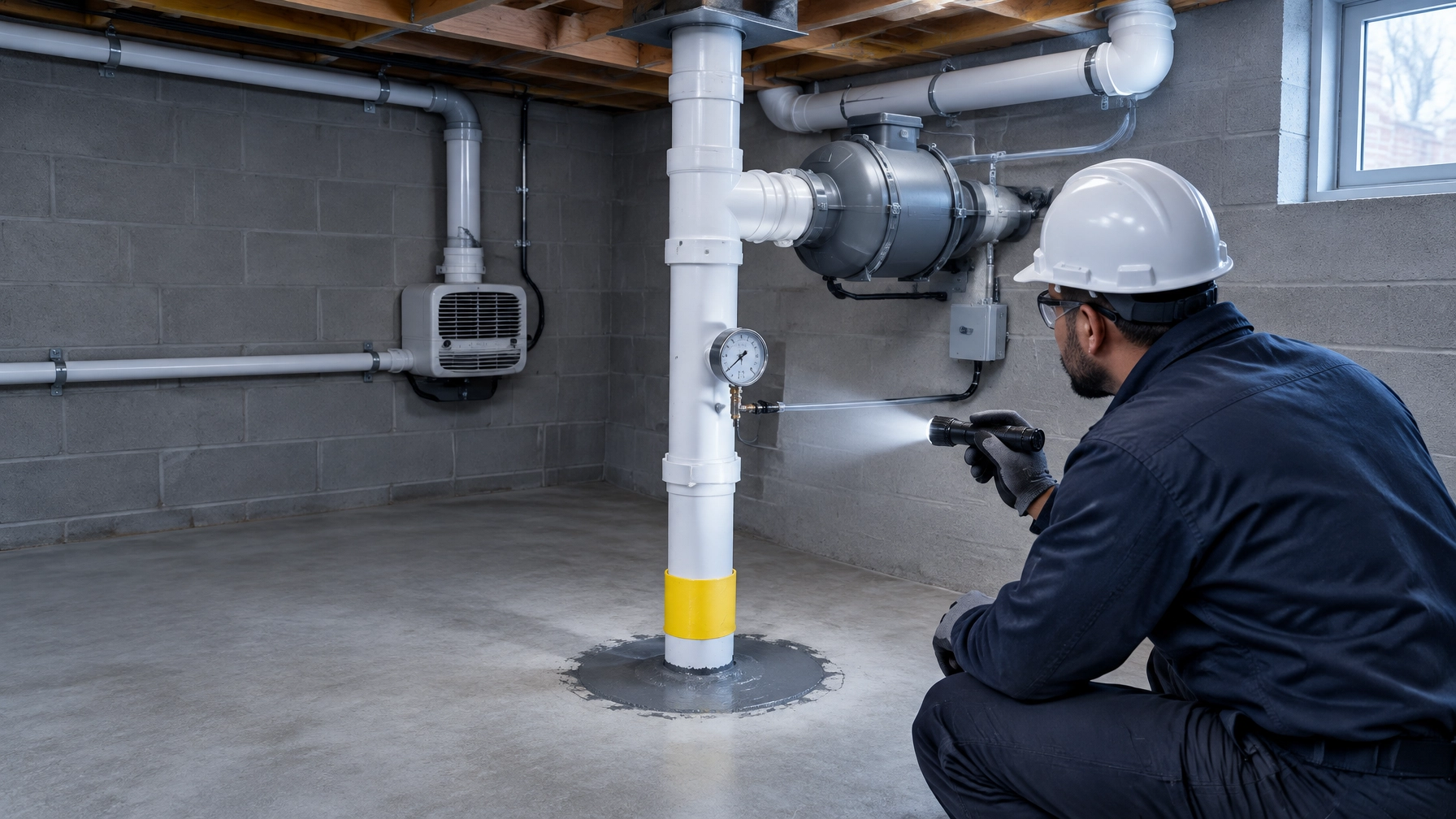
- Static pressure measurements at system suction points and fan inlets.
- System flow measurements and other applicable diagnostic readings.
- Back-drafting test results for combustion appliances.
- The commissioning date, system operating conditions, instruments used, and locations tested.
- Relevant as-built drawings and a record of field changes.
- Post-mitigation indoor air verification results.
NJDEP’s Vapor Intrusion Technical Guidance Appendices include checklists that can help organize system installation and monitoring records. The final report should tell a reviewer what was installed, what was changed in the field, what was measured, and whether the results support the performance conclusion. A clean, traceable record helps prevent a second round of questions when the case manager, lender, attorney, or owner reviews the project.

Back-drafting is a safety check, not an afterthought
An active mitigation system can change building pressure. In a building with natural-draft combustion appliances, that change can affect how exhaust moves through a flue. NJDEP guidance requires a back-drafting test after system installation to check whether the mitigation system is drawing combustion products into the building.
If testing shows back-drafting, the guidance says to turn off the mitigation system, determine the cause, and correct the issue before operating it. This is why commissioning needs to account for the building, not just the fan and pipe. Record the appliance conditions and test results, and bring in qualified mechanical support where needed.

Verification sampling completes the picture
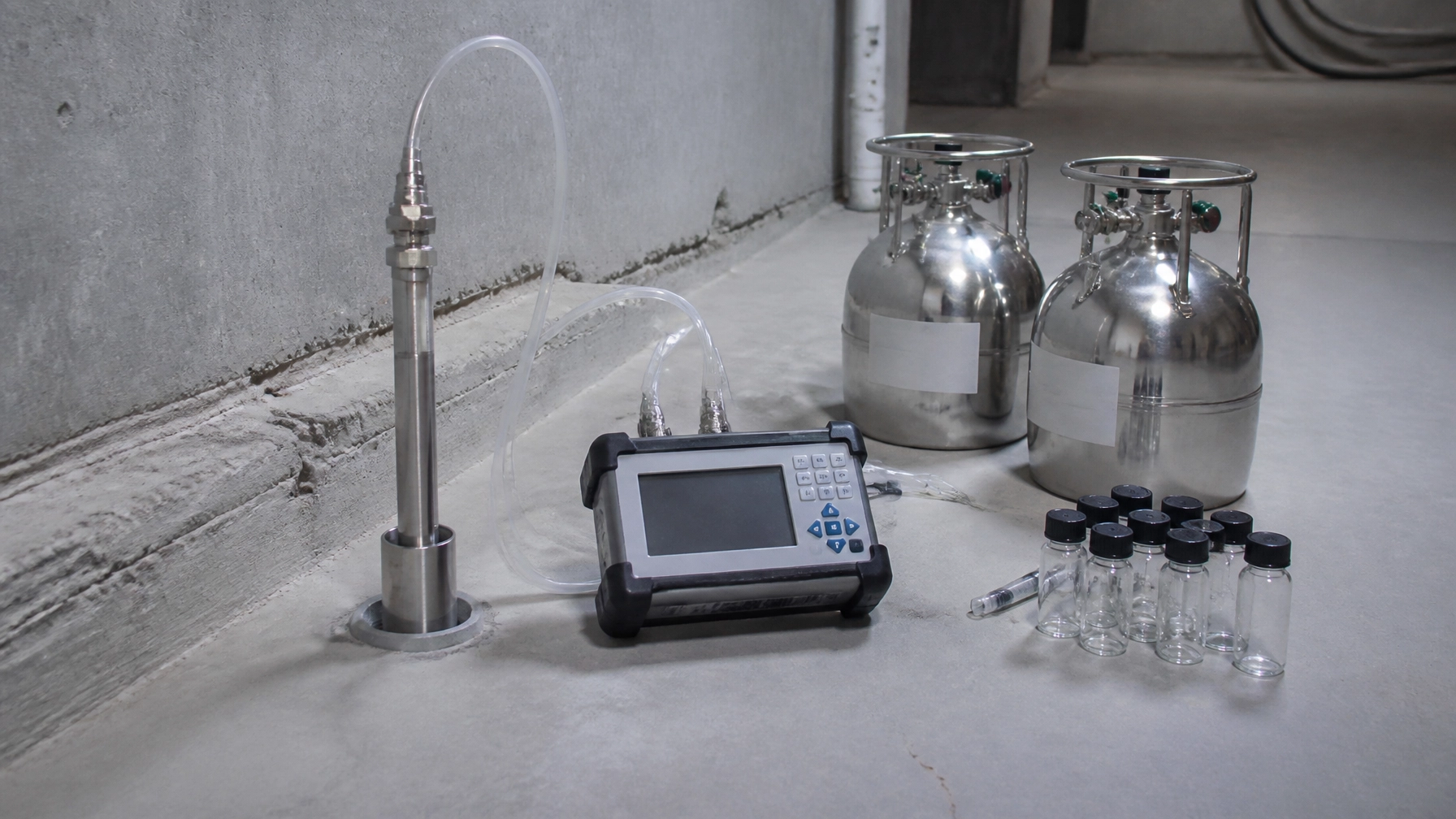
Pressure readings demonstrate system operation. They do not, by themselves, show that indoor air concentrations have fallen as intended. NJDEP requires post-mitigation verification sampling to assess whether the mitigation action reduced indoor air contaminant levels.
For active systems, verification sampling takes place on the day of commissioning, after the system has operated for the required startup period. The guidance calls for at least one round of indoor air samples during the heating season, November 1 through March 31. Sample locations should reflect the building and the prior investigation, including the basement or lowest floor and locations considered most likely to represent worst-case conditions. Indoor air results are evaluated against the applicable NJDEP standards and the site’s lines of evidence. Review Sections 6.4.2 and 6.4.3 of the guidance.
For a Phase II environmental site assessment in New Jersey, early coordination between investigation, system design, installation oversight, and verification sampling helps keep field work aligned. If commissioning identifies a gap, the team can plan corrective work and repeat testing before the issue becomes a late-stage surprise.
How a failed commissioning test can delay a project
A failed pressure point or incomplete test does not automatically decide whether a building can be occupied or a transaction can close. Those decisions depend on project conditions, regulatory requirements, and the applicable approvals. But an unresolved commissioning result can trigger more work before a reviewer or project stakeholder accepts the system as demonstrated.
That can mean adjustments to the system, repeat commissioning, additional indoor air sampling, and updated reporting. If those steps weren’t built into the schedule, they can affect occupancy planning, financing decisions, or closing timelines.
The common root cause is straightforward: teams treat installation as the finish line. It isn’t. The installation needs to be followed by planned testing, clear documentation, and a technical review that connects the field results to the regulatory requirements.
For projects in Newark, Envicon provides vapor intrusion assessment, mitigation system design, and installation oversight, with field-level coordination through the commissioning process. We work directly with owners, contractors, design professionals, attorneys, and the LSRP so everyone understands what the system must demonstrate and what happens if a measurement falls short. Our Newark environmental consulting team knows that a project needs more than a report. It needs a clear, documented path to the next decision.
Commissioning checklist for developers and project teams
Before scheduling the field test, confirm that:
- The system has operated for the required startup period.
- Permanent sub-slab measurement points cover the mitigation area.
- The micromanometer can resolve the low pressure differential being measured.
- The team can record pressure at each required sub-slab point, suction point, and fan inlet.
- Flow and other applicable system measurements can be collected.
- Combustion appliances and back-drafting test procedures are identified.
- Indoor air verification sampling is coordinated with commissioning.
- The reporting team has the as-built drawings, commissioning data, sampling results, and a record of system changes.
The NJDEP guidance and appendices are the controlling technical references. Project teams should confirm current requirements and site-specific decisions with the LSRP. A properly installed fan is only the start. Commissioning shows whether the system performs as designed, and verification sampling helps establish whether it is doing its job.
Frequently asked questions
When should an active vapor intrusion system be commissioned?
Plan commissioning 30 to 45 days after startup, while also observing the NJDEP guidance table’s broader timeframe of at least 30 days and no more than 60 days. Confirm the schedule with the project LSRP and the requirements applicable to the site.
Is 0.004 inches of water column an average across the slab?
No. The pressure differential should be demonstrated at the relevant sub-slab measurement points across the area being mitigated. Averaging readings can hide an area where the system has not established adequate pressure communication.
Does a passing pressure test replace indoor air sampling?
No. Pressure testing documents system performance below the slab. NJDEP also requires post-mitigation verification sampling to assess whether indoor air contaminant levels have been reduced.
What happens if a point does not meet the pressure criterion?
The system may need adjustment, modification, or additional suction points, followed by repeat testing. The corrective work and its results should be documented. The LSRP should determine how those findings affect the project’s reporting and next steps.
The takeaway
The 0.004-inch water-column test is a practical check on whether an active system’s pressure influence reaches the slab area it is meant to protect. It must be measured at the right locations, documented without averaging away a weak point, and considered alongside back-drafting tests and indoor air verification.
For developers, lenders, attorneys, and LSRPs, a fan turning on is not a performance record. A completed commissioning package is what helps show how the system works, what it protects, and whether the project can move forward with confidence.