A 2026 development project in Queens, Brooklyn, the Bronx, Manhattan, or Staten Island can lose weeks before construction starts if the NYC Office of Environmental Remediation, or OER, approval path is unclear.
For properties with an E-designation or Restrictive Declaration, the environmental work is tied directly to DOB permitting and occupancy. For voluntary cleanup projects, OER review provides a structured path from investigation through closure.
The starting point is usually EPIC Environment, OER’s online project portal. The finish line may be a Notice to Proceed, a Notice of Satisfaction, a Notice of No Objection, or VCP completion documentation, depending on the project scope and program.
This NYC OER EPIC portal guide explains how the process works in 2026 and what development teams should prepare before submitting.
What EPIC Environment does
EPIC Environment is the NYC OER platform for creating, submitting, and tracking environmental projects. It is used for:
- E-designation and Restrictive Declaration projects
- New building and major alteration applications
- Voluntary Cleanup Program projects
- Notice of No Objection applications
- Investigation work plans and remedial plans
- Closure reports and supporting construction records
- OER correspondence, comments, and formal determinations
You must create an EPIC account before submitting a project. OER’s new project instructions explain the basic account and submission process.
The portal is not just a document drop box. It becomes the project record. The documents you submit, the comments OER issues, the responses your consultant provides, and the final notices all need to align.
A weak submission creates avoidable review comments. A complete submission gives the OER project manager a clear technical record to evaluate.
Start by confirming the regulatory pathway
Before opening a new EPIC project, confirm what controls the property and what work you plan to perform.
An E-designation is a zoning designation that imposes environmental requirements related to:
- Hazardous materials
- Air quality
- Noise
A Restrictive Declaration is a recorded document that binds current and future owners to required investigation, remediation, or mitigation measures.
OER explains that these requirements must be addressed before the owner can obtain certain building permits for redevelopment. The applicable pathway depends on the designation, the proposed use, the DOB application type, and the specific environmental condition.
Review the property’s zoning and title records. Then compare the planned work against the environmental requirements. A new residential conversion in Manhattan, a mixed-use building in Queens, and an industrial redevelopment in Brooklyn may follow different technical scopes even when all three involve OER.
The OER remedial workflow
OER describes the remedial process in three broad stages:
- Application and investigation
- Remedial plan development
- Remedial action implementation
The project team should map these stages to the construction schedule before submitting.

EPIC workflow table
| Project stage | Typical submission or action | OER project outcome | Development milestone |
|---|---|---|---|
| Property screening | Confirm E-designation, Restrictive Declaration, VCP eligibility, and proposed DOB scope | Appropriate EPIC project type identified | Environmental path is included in the project schedule |
| Application and investigation | Pre-application materials, work plan, Phase II data, historical information, and site details | OER assigns the project for technical review | Investigation scope is accepted or comments are issued |
| Remedial planning | Remedial Action Work Plan, mitigation design, sampling plan, health and safety controls, and implementation details | OER approves the plan or requests revisions | Project can move toward authorized implementation |
| Notice to Proceed | Submit the required final plan package and supporting forms | OER issues an NTP or applicable decision document | DOB may proceed with the relevant permit action, subject to the notice and project scope |
| Remedial implementation | Perform approved work, maintain field records, collect confirmation samples, and coordinate inspections | OER evaluates implementation documentation | Cleanup and environmental controls are documented during construction |
| Closure | Submit a Remedial Closure Report, professional certifications, as-built records, and ongoing control documents | OER issues a Notice of Satisfaction or completion documentation when requirements are met | DOB can evaluate TCO or CO requirements tied to the environmental approval |
| Long-term controls | Maintain Site Management Plan, engineering controls, institutional controls, or monitoring where required | Ongoing obligations remain documented | Owner has a defined post-construction compliance plan |
OER does not provide one universal agency timeline for every project. Review duration depends on project completeness, technical complexity, comments, revisions, construction sequencing, and OER workload. Build the process around milestones and response ownership, not an assumed approval date.
Notice to Proceed: what it means
A Notice to Proceed, or NTP, is OER’s approval to move forward with the applicable remedial or mitigation work under an approved framework.
For an E-designation or Restrictive Declaration project, the NTP typically follows review of the investigation and remedial plan. The approved work may address soil contamination, vapor intrusion, noise attenuation, boiler fuel restrictions, stack placement, or other requirements identified in the designation.
An NTP is not a blanket approval for every construction activity. It is tied to the submitted project, scope, environmental condition, and approved plan.
Your project team should confirm:
- Which DOB application or construction phase the NTP covers
- Whether the NTP applies to remediation, mitigation, or both
- Whether soil disturbance limits apply
- What field oversight and air monitoring are required
- What records must be retained for closure
- Whether additional OER review is required before occupancy
Envicon supports remediation and brownfield redevelopment with investigation planning, remedial design, agency coordination, construction oversight, and closure documentation.
Sampling protocols must match the decision you need
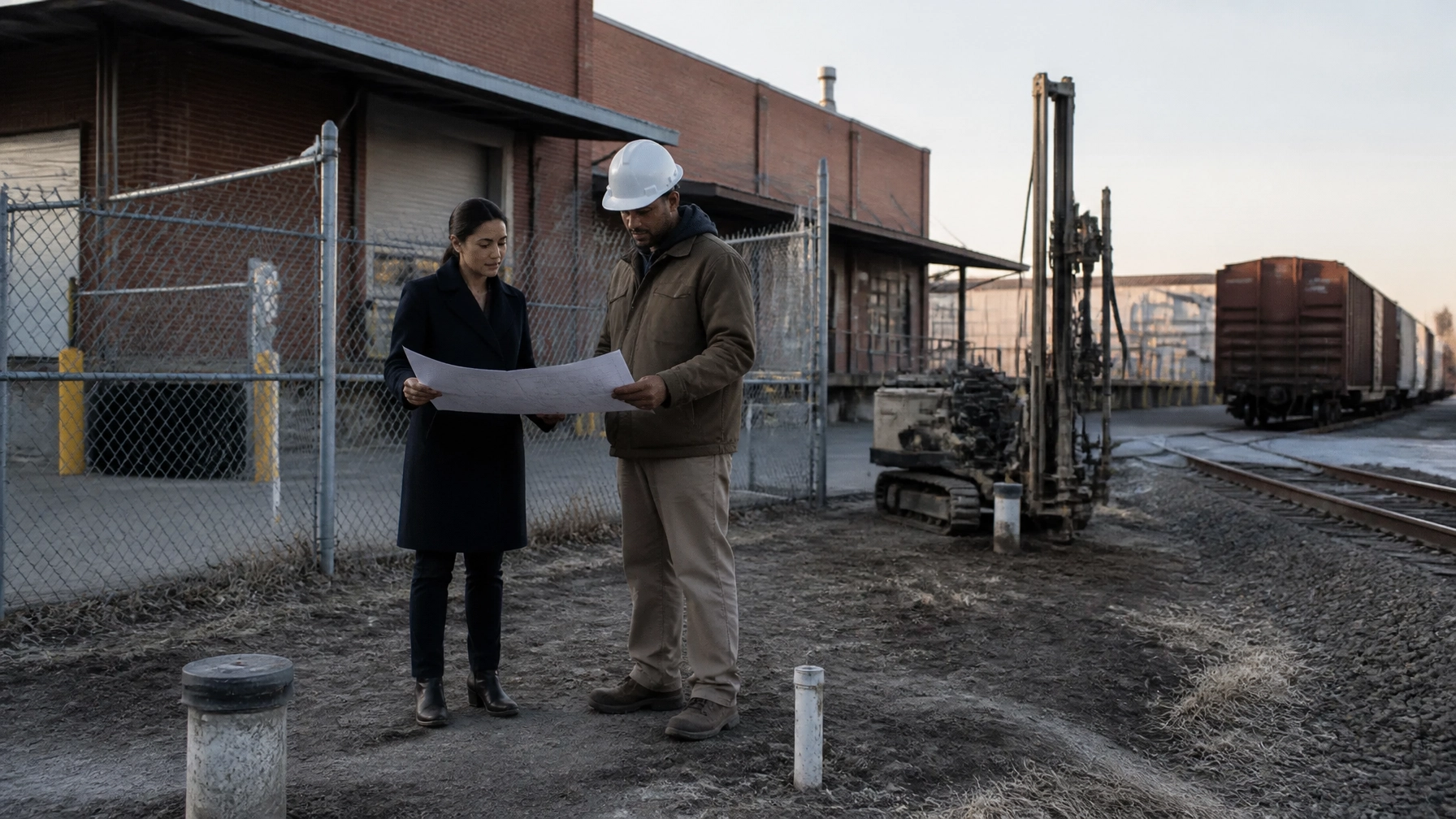
Sampling is not simply a matter of collecting more samples. The locations, depths, analytes, laboratory methods, quality controls, and reporting format must answer the regulatory question.
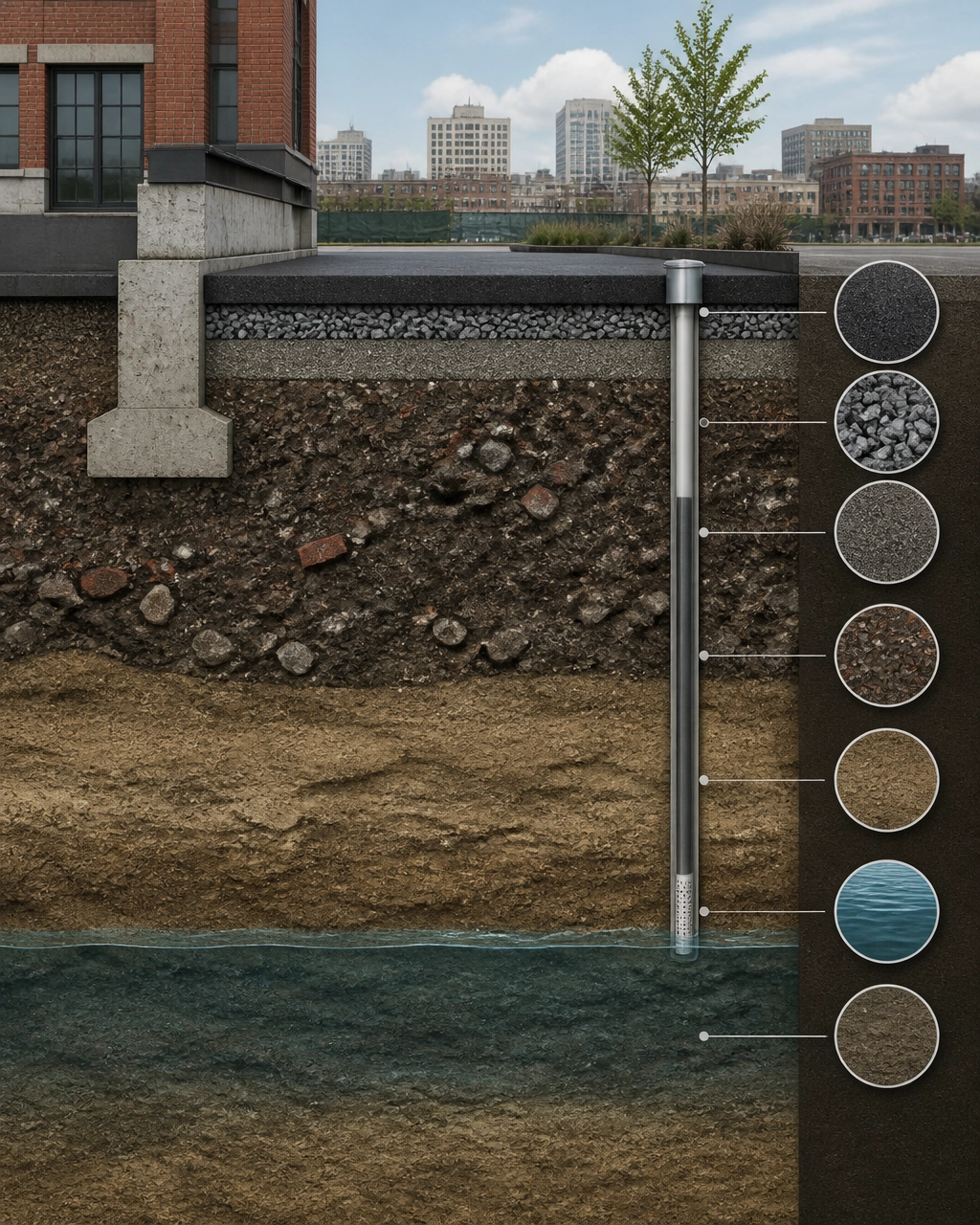
Depending on the property, the investigation may include:
- Soil borings and discrete soil samples
- Groundwater monitoring wells and sampling
- Soil vapor or sub-slab vapor points
- Indoor and outdoor air sampling
- Confirmation samples after excavation
- Waste characterization samples
- Air monitoring during intrusive work
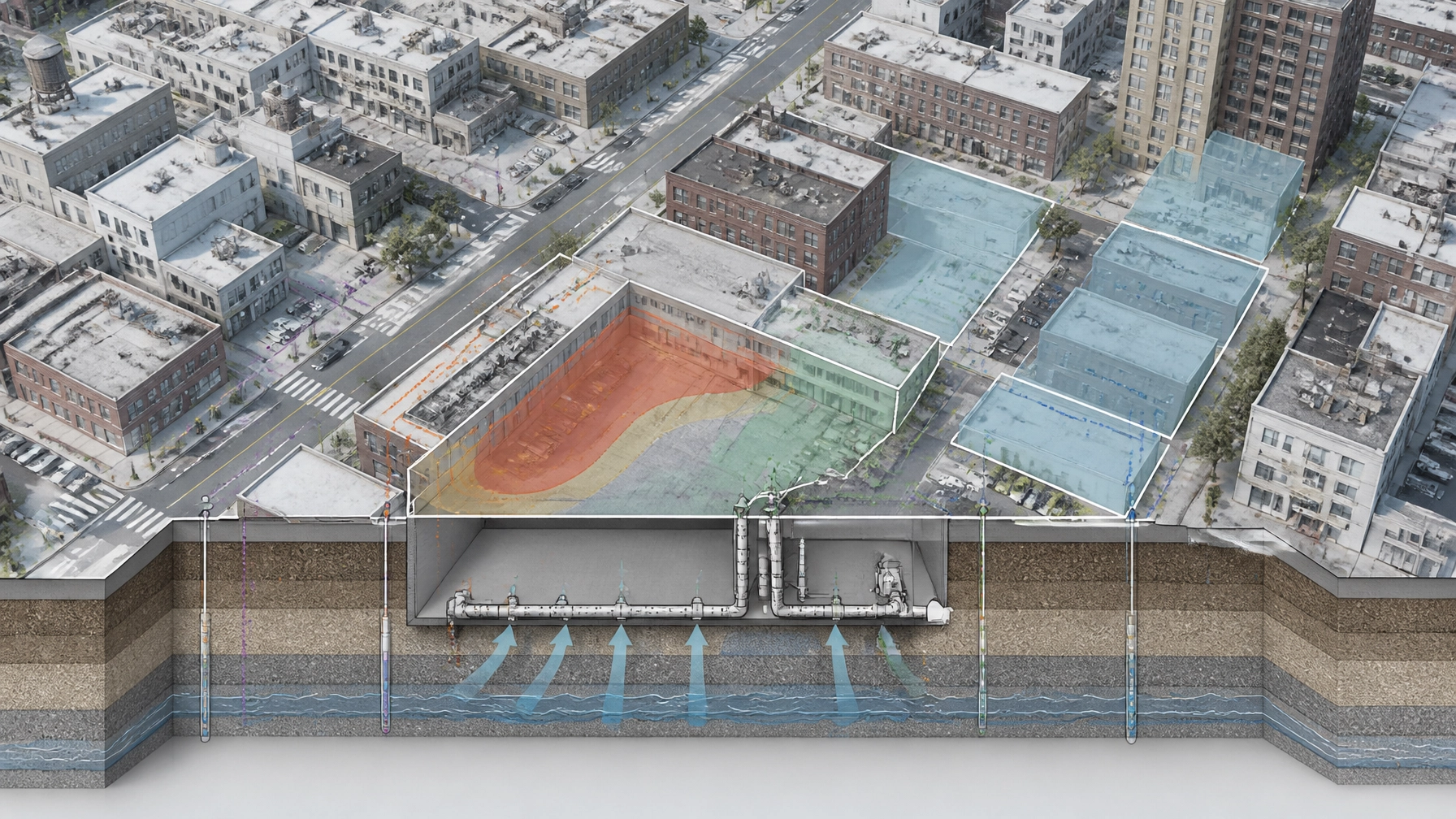
For vapor concerns, the sampling plan should address building conditions, preferential pathways, utilities, sub-slab conditions, seasonal factors, and the relationship between subsurface results and indoor air. See Envicon’s vapor intrusion assessment services.
A sampling plan should also identify decision criteria before fieldwork starts. Otherwise, the team may collect data that does not support a clear remedial endpoint.
Remedial Action Plans and construction records
A Remedial Action Plan, or comparable remedial work plan, should connect the contamination or environmental condition to the proposed remedy.
Typical plan elements include:
- Site history and investigation findings
- Contaminant distribution and exposure pathways
- Remedial objectives
- Excavation, disposal, treatment, or engineering control details
- Soil and groundwater management procedures
- Vapor mitigation design, if applicable
- Community or worker protection measures
- Air monitoring and reporting requirements
- Confirmation sampling procedures
- Construction sequencing and responsibilities
- Closure documentation requirements
The construction phase is where many projects lose control of the record. Field decisions, material deliveries, disposal documentation, photographs, survey information, sampling results, and deviations from the approved plan must be tracked as work occurs.

Envicon’s field-first approach keeps the engineer, contractor, owner, and agency communication aligned. That matters in every borough, especially on constrained sites in Brooklyn and Queens where excavation, utilities, neighboring structures, and active buildings create overlapping risks.
Notice of Satisfaction and E-designation closeout
A Notice of Satisfaction, or NOS, confirms that OER has reviewed the completed environmental work and determined that the applicable requirements have been satisfied.
The closeout package may include:
- Remedial Closure Report
- Professional Engineer certification
- Confirmation sampling results
- Excavation and disposal records
- Construction photographs
- As-built drawings
- Vapor barrier or sub-slab system documentation
- Air monitoring records
- Operation and maintenance materials
- Site Management Plan
- Recorded engineering or institutional controls
The NOS is not the same as an NTP. The NTP allows the project to move into the approved implementation phase. The NOS addresses completion.
For many E-designation projects, the NOS is important to DOB’s evaluation of a temporary or final Certificate of Occupancy. The notice may also identify ongoing controls that remain with the property.
A closure submission should be prepared before the last day of construction. Waiting until the end to reconstruct the record often leads to missing signatures, incomplete photographs, inconsistent sample identifiers, or unresolved field changes.
When a Notice of No Objection may apply
A Notice of No Objection, or NNO, is generally used for qualifying minor alterations that do not trigger hazardous materials, air quality, or noise review under the applicable E-designation or Restrictive Declaration.
OER identifies typical minor alteration conditions that do not:
- Disturb soil
- Change use, occupancy, or egress
- Change windows
- Change boiler or HVAC systems
- Change fuel type or stack locations
NNO eligibility is scope-specific. A project that begins as a limited interior renovation may require a different review if the work changes ventilation, windows, occupancy, or other environmental conditions.
Submit NNO requests through EPIC Environment and use OER’s NNO instructions before preparing the application.
VCP projects use the same discipline
NYC’s Voluntary Cleanup Program provides a path for owners and developers addressing contamination under OER oversight.
OER states that VCP enrollment requires a Remedial Investigation Report, Remedial Action Work Plan, VCP application, VCP agreement, and the applicable enrollment fee. The project team develops the investigation and remedial plan in consultation with OER technical staff.
The exact closure documentation may differ from an E-designation project. VCP projects typically proceed through investigation, remedial planning, implementation, and completion documentation. Do not assume that a VCP file and an E-designation file use identical notices or deliverables.
The practical requirement is the same: create a defensible technical record and maintain direct communication with the assigned OER project manager.
Status tracking and OER project manager communications
EPIC allows applicants and consultants to check project status and view submitted records. Use that function regularly.
Keep a project communication log that records:
- Submission dates
- OER comments
- Response deadlines
- Technical questions
- Revised document versions
- Field changes
- Pre-construction and construction meetings
- Decisions made by the project manager
- Open items required for NTP or NOS
Do not rely on informal assumptions. If OER provides direction by email or during a meeting, summarize the decision in the project record and confirm how it affects the work plan, schedule, or closure package.
The project manager communication is part of the path to certainty. A consultant who waits for a rejection before asking a clear question is not managing risk. A senior team should identify the issue early, explain the technical basis, and give OER a clean decision to review.
What NYC development teams should do now
Before submitting an OER environmental project in Brooklyn, Queens, the Bronx, Manhattan, or Staten Island:
- Confirm the block and lot and applicable E-designation or Restrictive Declaration
- Define the DOB scope and construction sequence
- Identify whether the project is new development, major alteration, NNO, or VCP
- Review existing Phase I, Phase II, vapor, air, noise, and zoning records
- Prepare a sampling and data quality strategy
- Build the RAP around the actual site and proposed end use
- Assign one person to control EPIC submissions and revisions
- Set up field documentation before mobilization
- Plan the closure report before remedial work begins
- Track OER communications and open items in real time
The takeaway
EPIC is the system. The technical record is the argument. The NTP is the authorization to proceed with the approved phase. The NOS is the evidence that the environmental requirements were completed.
For a 2026 development project, the right time to resolve the OER pathway is before the permit package, before mobilization, and before your closing or construction schedule depends on an approval you have not yet mapped.
Envicon helps NYC owners, developers, attorneys, architects, and contractors move from environmental uncertainty to a documented path forward. Collaboration is not a buzzword. It is how the work gets done.
Request an EPIC Submission Readiness Review
Have Envicon review your property status, proposed scope, investigation data, sampling plan, remedial strategy, and closeout requirements before submission.
- Request an EPIC submission readiness review
- Call Envicon at (917) 764-2171
- Use the proprietary project risk screener
Official sources
- NYC OER: New Projects and Notices of No Objection
- NYC OER: E-Designation
- NYC OER: Remediation Process
- NYC OER: Voluntary Cleanup Program Enrollment
- EPIC Environment Portal
- NYC OER: E-Designation Fees
- NYC OER: Official Contact Page