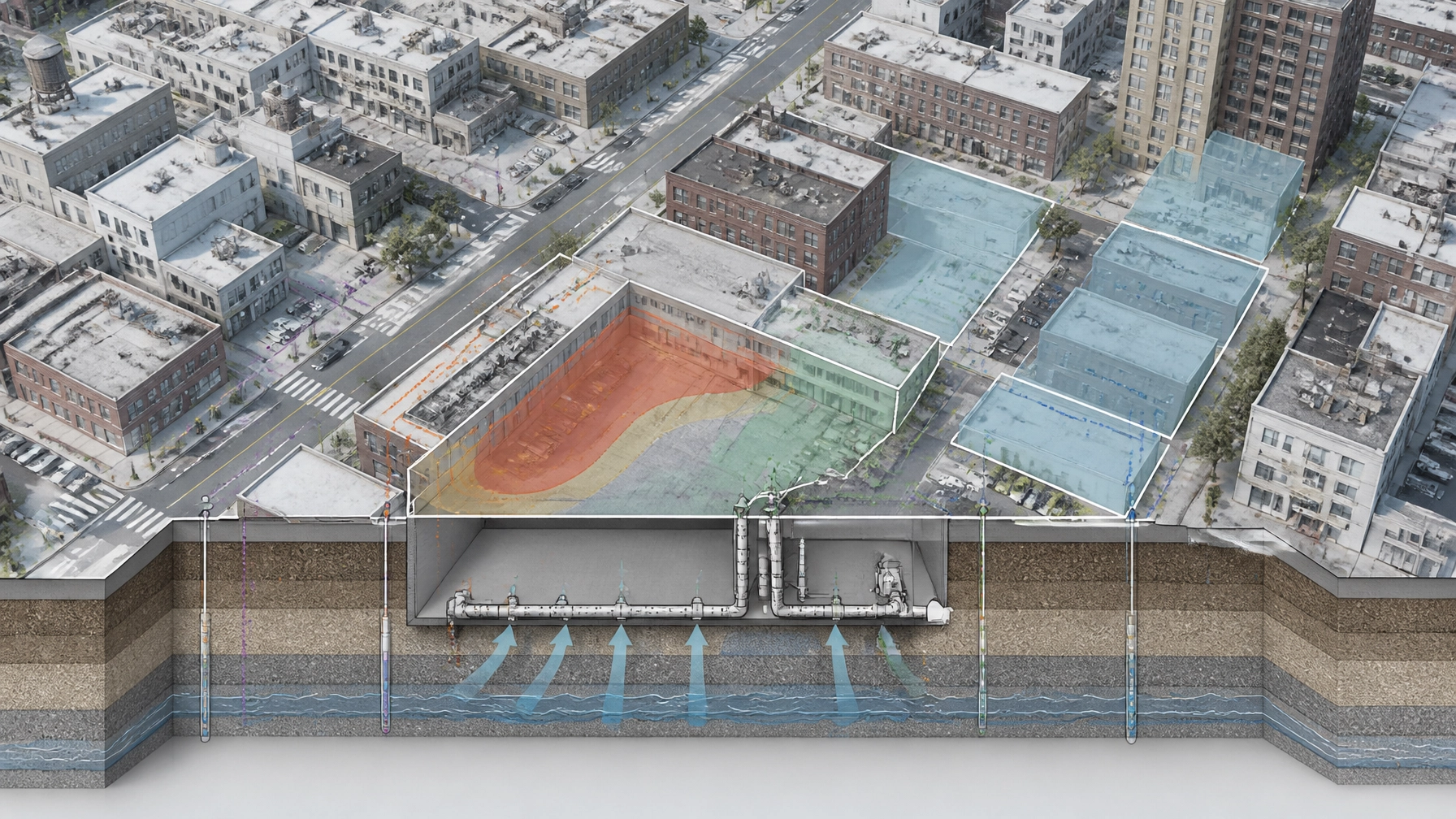
A complete NYC OER EPIC submission checklist starts with one distinction: EPIC is the submission platform, not the permit authority.
The NYC Department of City Planning may establish an E-Designation through a CEQR-related zoning action. The NYC Office of Environmental Remediation reviews environmental documentation and issues the required notices. The NYC Department of Buildings makes the final permit and certificate of occupancy decisions.
Those steps connect. They are not interchangeable.
Whether your project is in Queens, Brooklyn, Manhattan, the Bronx, or Staten Island, incomplete information in EPIC can delay technical review, remediation planning, and the Notice to Proceed or Notice of Satisfaction your project needs.
What EPIC, OER, DCP, and DOB each do
Before assembling documents, identify which agency controls each decision.
- NYC Department of City Planning, or DCP: Establishes zoning-related E-Designations and maintains zoning information. A DCP administrative update is not the same as OER environmental approval.
- NYC Office of Environmental Remediation, or OER: Reviews environmental investigations, remedial plans, construction controls, field documentation, and closure submissions through EPIC.
- NYC Department of Buildings, or DOB: Reviews construction filings and permits. For covered E-Designation or Restrictive Declaration work, DOB may require OER-issued documentation before moving forward.
- EPIC Environment: The online portal used to create projects, submit applications, upload documents, track status, and communicate with OER.
OER’s New Projects and Notices of No Objection guidance states that new buildings and certain Alt-1 conversions to residential or office use require a New Development Project in EPIC. Those projects may require a Notice to Proceed and a Notice of Satisfaction.
A correction to the DCP zoning record does not replace an OER review. A DOB permit approval does not replace a Notice of Satisfaction.
Before you open the EPIC project wizard
Prepare the project record first. This prevents duplicate projects and reduces avoidable clarification requests.
1. Confirm the property identity
Have the following information ready:
- Street address and borough
- Block and lot
- Tax lot ownership information
- Current use and proposed use
- Project name
- CEQR number, if available
- E-Designation type and number, if available
- Restrictive Declaration recording information, if applicable
- Existing OER project number, if one exists
- DOB job number and application type, if already assigned
Tax block and lot information must match across EPIC, DOB filings, surveys, environmental reports, and project plans. If the lot number changed through a merger, subdivision, or tax map update, document that history before submission.
2. Confirm the project pathway
Use the New Development Project workflow when the property:
- Is seeking NYC OER Voluntary Cleanup Program, or VCP, oversight
- Has an E-Designation or Restrictive Declaration
- Involves a new building, expansion, or conversion to residential or office use
- Requires OER review before covered DOB work
For an existing OER project, do not create a second project. Use EPIC’s request-access function or contact OER.
For limited alteration work, a Notice of No Objection may be the correct pathway. That process has different documentation and should not be confused with a full E-Designation or VCP submission.
3. Create the right contacts
The project should identify the owner and the PE or RA of Record. Add the expeditor, attorney, architect, construction manager, and environmental consultant as needed.
Use current contact information. OER correspondence often controls the next technical step, and a missed request can affect the project schedule.
Current EPIC portal workflow
The official OER EPIC project creation instructions direct applicants to:
- Go to the EPIC Environment portal.
- Sign in or create an EPIC account.
- Select EPIC Environment.
- Choose Start a New Project.
- Select New Development Project when the project meets the OER criteria.
- Enter the block, lot, E-Designation, Restrictive Declaration, development, and prior report information.
- Verify the property environmental designations displayed by EPIC.
- Complete the submission and select Submit OER Initial Submission.
Saving the application does not submit it.
OER’s instructions state that a saved application remains incomplete until the final submission button is selected. A saved draft will not be processed as an application.
The current OER website also notes that staff contact information can change. Use the contact information shown in the active EPIC record and on the OER homepage if the portal displays an error or the project information is incorrect.
The NYC environmental remediation portal checklist

EPIC requirements vary by project. The following checklist covers the document groups most often needed for E-Designation and VCP review.
Site and planning documents
Upload or organize:
- Current survey or site plan
- Block and lot documentation
- Project description
- Proposed use and occupancy information
- CEQR documentation or environmental review references
- E-Designation or Restrictive Declaration information
- DOB job numbers and project plans, when available
- Prior environmental reports
- Ownership and contact information
Do not assume that a general Phase I report explains the entire CEQR or E-Designation history. Include the relevant CEQR findings, zoning references, and prior agency correspondence.
Phase I and Phase II environmental information
A Phase I ESA provides the historical and current site context. It may identify former dry cleaners, manufacturing uses, petroleum storage, fill placement, spills, or other recognized environmental conditions.
A Phase II investigation tests those conditions.
Typical Phase II documentation may include:
- Sampling and Analysis Plan
- Soil boring logs
- Groundwater monitoring well logs
- Soil, groundwater, and soil vapor sample locations
- Laboratory analytical reports
- Data tables and comparison criteria
- Quality assurance and quality control information
- Field notes and observations
- Waste characterization data, if excavation is planned
- Updated conceptual site model
Sampling, laboratory, and chain-of-custody records
Laboratory data must be traceable to the field work.
Include:
- Sample identification numbers
- Collection dates and times
- Sample matrix
- Sampling locations and depths
- Requested analytical methods
- Laboratory reports
- Data qualifiers and detection limits
- Cooler receipt information
- Chain-of-custody forms
- Field preservation and shipment records
- Laboratory certifications or qualifications, when applicable
A lab report without matching field records leaves gaps in the evidence. OER needs to understand where the sample came from, how it was handled, and whether the result supports the proposed remedy.
Field photographs
Field photos should show more than general site conditions.
Organize photos by:
- Date
- Location
- Direction of view
- Work activity
- Sample or boring location
- Utility or structural constraint
- Waste staging area
- Vapor barrier or engineering control installation
- Final site condition
Use a photo log that connects each image to the plan set and field report. Clear documentation helps OER evaluate whether the work performed matches the approved scope.
RAP, CHASP, vapor, and engineering controls

For an E-1 hazardous materials designation, OER may require remedial planning and construction health and safety documentation before intrusive work begins.
Depending on the project, the submission may include:
- Remedial Action Plan, or RAP
- Remedial Action Work Plan, or RAWP
- Construction Health and Safety Plan, or CHASP
- Community air monitoring procedures
- Excavation and soil management procedures
- Waste characterization and disposal plan
- Dewatering and treatment procedures
- Vapor barrier specifications
- Sub-slab depressurization design
- Indoor air and sub-slab sampling plan
- Engineering control drawings
- Institutional control or site management requirements
OER may use RAP or RAWP terminology depending on the program and document template. Use the current OER template and project manager direction rather than reusing a plan from another property.
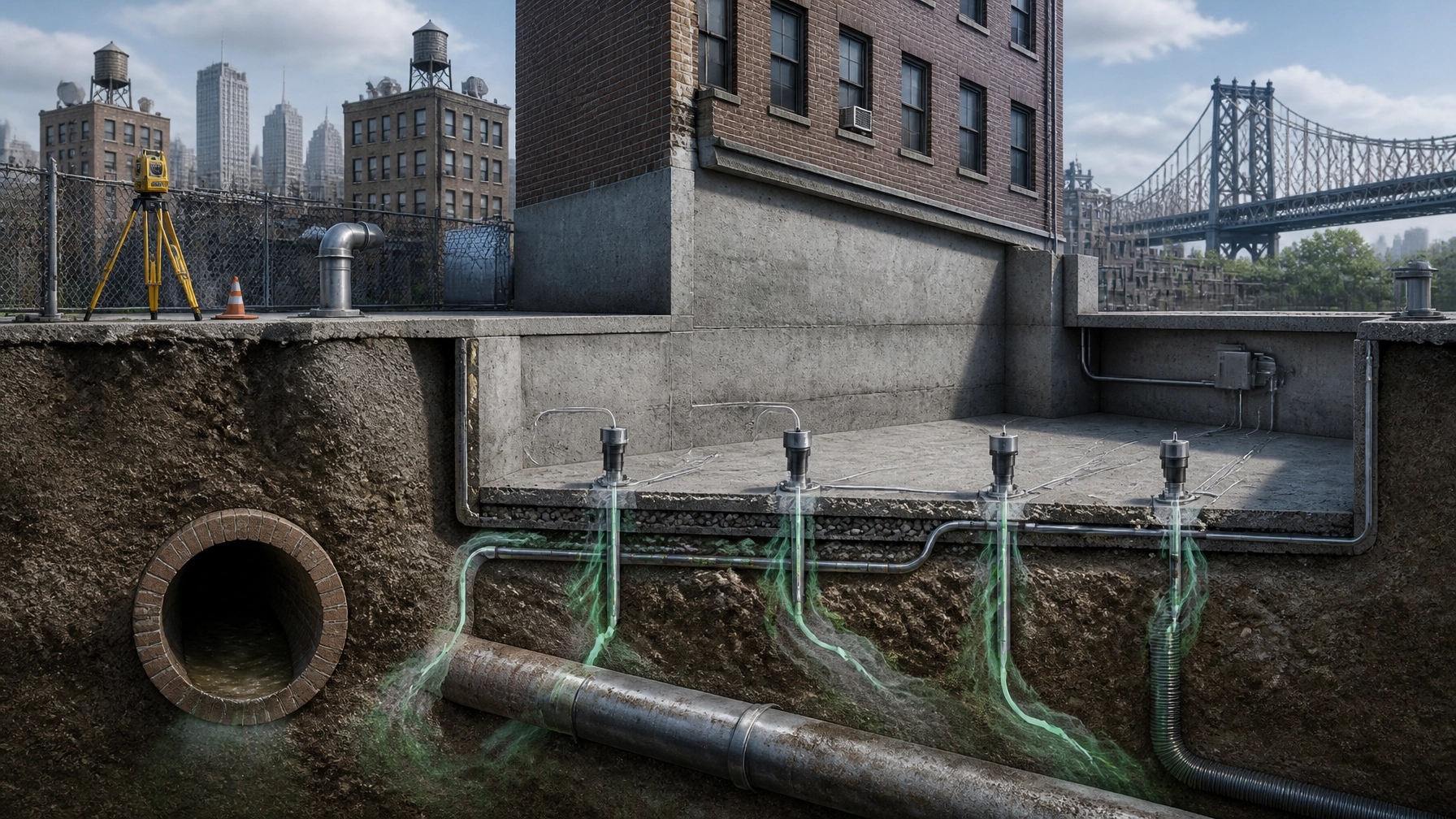
Vapor and indoor air requirements should match the building design. A residential conversion in Brooklyn, for example, may require a different vapor mitigation strategy than a commercial warehouse in Queens. The remedy must account for slabs, foundations, occupied spaces, utility penetrations, and long-term operation.
Envicon’s NYC E-Designation and OER clearance service coordinates the investigation, remedial planning, field oversight, and closure path. Our remediation and brownfield team can also coordinate engineering controls, waste management, and construction documentation.
Installation Report and closure documents
After approved controls are installed, OER may require an Installation Report or equivalent documentation demonstrating that the work matches the approved plans.
A strong Installation Report can include:
- Approved design reference
- Installation dates
- Contractor and field personnel
- As-built drawings
- Product information
- Field photographs
- Inspection records
- Pressure or performance testing
- Penetration and edge-detail documentation
- Deviations and corrective actions
- Operation and maintenance information
The final Remedial Closure Report should connect the entire project record. It may include:
- Summary of completed remedial work
- Confirmation sampling
- Laboratory data
- Waste manifests and disposal records
- Soil import or reuse documentation
- Air monitoring results
- Vapor and indoor air results
- Engineering control certification
- Field photos
- Updated drawings
- Remaining restrictions or controls
- Requests for OER approval and closure
For projects seeking a Notice to Proceed EPIC NYC determination, OER reviews the initial project information and required remedial path before issuing the applicable notice to DOB.
For projects seeking Notice of Satisfaction documents in the Bronx or any other borough, the final record must demonstrate that the E-Designation or Restrictive Declaration requirements have been completed to OER’s satisfaction.
VCP submissions in Brooklyn and citywide
The OER VCP enrollment page identifies four core VCP enrollment items:
- Remedial Investigation Report
- Remedial Action Work Plan
- VCP Application
- VCP Agreement
OER also identifies a $1,000 VCP enrollment fee.
VCP enrollment does not eliminate the need for a project-specific technical review. The RIR, RAWP, sampling data, controls, and closure documents must reflect the actual property conditions.
That applies equally to an NYC OER VCP submission in Brooklyn, a former industrial site in the Bronx, a mixed-use conversion in Manhattan, a redevelopment parcel in Queens, or a Staten Island waterfront property.
Five-borough coordination matters
The EPIC workflow applies citywide, but site conditions and project teams differ.
Envicon supports projects across Manhattan, Brooklyn, Queens, the Bronx, and Staten Island.
Our NYC environmental consultant team works with developers, architects, attorneys, contractors, and agency reviewers to keep one coordinated record from Phase II through closure.
Final EPIC submission checklist
Before clicking submit, confirm that:
- The block and lot match the survey, reports, and DOB documents.
- The correct project type is selected.
- The E-Designation or Restrictive Declaration information is verified.
- Prior reports and CEQR references are included.
- Owner and PE/RA contacts are current.
- Phase II data is traceable to field records and laboratory reports.
- Chain-of-custody documents are complete.
- Field photos include dates and locations.
- RAP, RAWP, and CHASP documents use current project information.
- Vapor, indoor air, and engineering control documents match the building design.
- Installation and closure reporting requirements are understood.
- The application is actually submitted, not merely saved.
- OER review is not being confused with a DCP record update or DOB permit approval.
A clean EPIC submission does not guarantee immediate approval. It does give OER a defensible, organized record to review.
That is the objective. Not more paperwork. A clear path from environmental obligation to buildable site.
Frequently asked questions
What is an NYC OER EPIC submission?
It is a digital submission through NYC’s EPIC Environment portal for OER review of environmental oversight projects, including E-Designation, Restrictive Declaration, VCP, and other OER pathways.
Does a DCP E-Designation update clear the environmental requirement?
No. A DCP administrative update and an OER environmental review are separate actions. OER may still require investigation, remedial planning, implementation records, and closure documentation.
What is the difference between a Notice to Proceed and a Notice of Satisfaction?
A Notice to Proceed addresses whether covered work can move forward after OER reviews the applicable environmental requirements. A Notice of Satisfaction confirms that required environmental work has been completed to OER’s satisfaction.
Does every E-Designation require a Phase II?
The required scope depends on the designation, prior data, site conditions, and OER direction. E-1 hazardous materials designations commonly require subsurface investigation, but the project manager should confirm the final scope.
Can Envicon prepare the EPIC submission?
Yes. Envicon can review the block and lot, E-Designation history, prior reports, Phase II data, remedial plans, field records, engineering controls, and closure documents before submission.
Official references
- NYC OER EPIC New Development Project Instructions
- NYC OER How to Enroll in the Voluntary Cleanup Program
- NYC OER New Projects and Notices of No Objection
- EPIC Environment Portal
- NYC OER
- NYC Department of Buildings Operational Bulletin 2014-026
Ready to organize your EPIC submission?
- Get a free quote from Envicon
- Review NYC E-Designation and OER clearance services
- Explore remediation and brownfield support
- Use the project cost estimator