The 30-day window is not a guaranteed NOS date
A 30-day review window is not a promise that your project will receive a Notice of Satisfaction (NOS) within 30 days. OER reviews the required closeout submission, including a Remedial Action Report (RAR) or Remedial Closure Report (RCR), and may need additional information or revisions before it can approve the record.
The timing depends on the submission. It needs to be complete and consistent with the approved remedial approach and the work completed in the field. OER does not publish aggregate statistics for average review periods, so there is no reliable universal average to put on a closing schedule.
For a Queens project, that distinction matters. Your buyer, lender, contractor, and design team may all be waiting on the same closeout milestone. A calendar estimate does not replace a complete, review-ready record.
OER describes its remediation and E-designation processes on its remediation page and E-designation page. For a project-specific deadline, confirm the current requirements and review status directly with OER.
What the Notice of Satisfaction confirms
OER issues an NOS after successful review of the applicable RAR or RCR. It confirms that the relevant E-designation requirements have been satisfied. Depending on the designation and project, those requirements may relate to hazardous materials or noise.
Do not treat every NOS as proof that every long-term site obligation has disappeared. The applicable OER determination and project documents control. If a remedy includes ongoing controls or site-management requirements, confirm what remains in place and whether the NOS addresses the designation, construction milestones, or both.
If you are pursuing NYC OER E-designation removal, check the project’s specific closeout requirements before assuming that report approval alone removes the designation from the relevant records. OER’s E-designation guidance explains the program and its requirements.
Internal inconsistency is a field problem that shows up in the report
A report can contain every expected section and still be difficult to approve if its parts do not agree. Reviewers can compare the submitted closure materials with the approved remedial plan, prior submissions, sampling data, and the documented field work.
Common examples include:
- Survey data that does not match the report. The surveyed excavation limits, elevations, or site boundaries differ from the figures and descriptions in the RAR or RCR.
- Sampling locations that do not line up with the plan. The report’s sample map or table does not show the locations required by the approved plan, or field records use different IDs.
- Work that changed without a clear record. The final report describes a different excavation, sample location, or remedial measure than the approved plan, but does not explain or document the change.
- Missing as-built information. The report describes installed work, but the closeout package lacks the as-built drawings or other records needed to show what was actually built.
- Data tables that conflict with the narrative. Sample IDs, dates, analytical results, or disposal information differ across sections or supporting attachments.
These are not merely formatting issues. A mismatch can make it harder for OER to verify whether the approved work occurred and whether the submitted evidence supports closure. The reviewer may request clarification or a revised submission. Each response takes coordination, and field records can become harder to reconstruct as crews and subcontractors move on.

Why a reviewer can find the mismatch
OER’s review is not limited to reading the conclusion paragraph. The closeout record needs to support the claim that the approved work was completed. A reviewer can compare the report against the remedial plan, sampling results, figures, field documentation, and other submitted records.
For example, if the RAP calls for samples at defined locations, the reviewer can compare those commitments with the sample table, map, laboratory results, and field notes. If those records use inconsistent identifiers or show locations that do not correspond, the reviewer has a reason to ask for clarification.
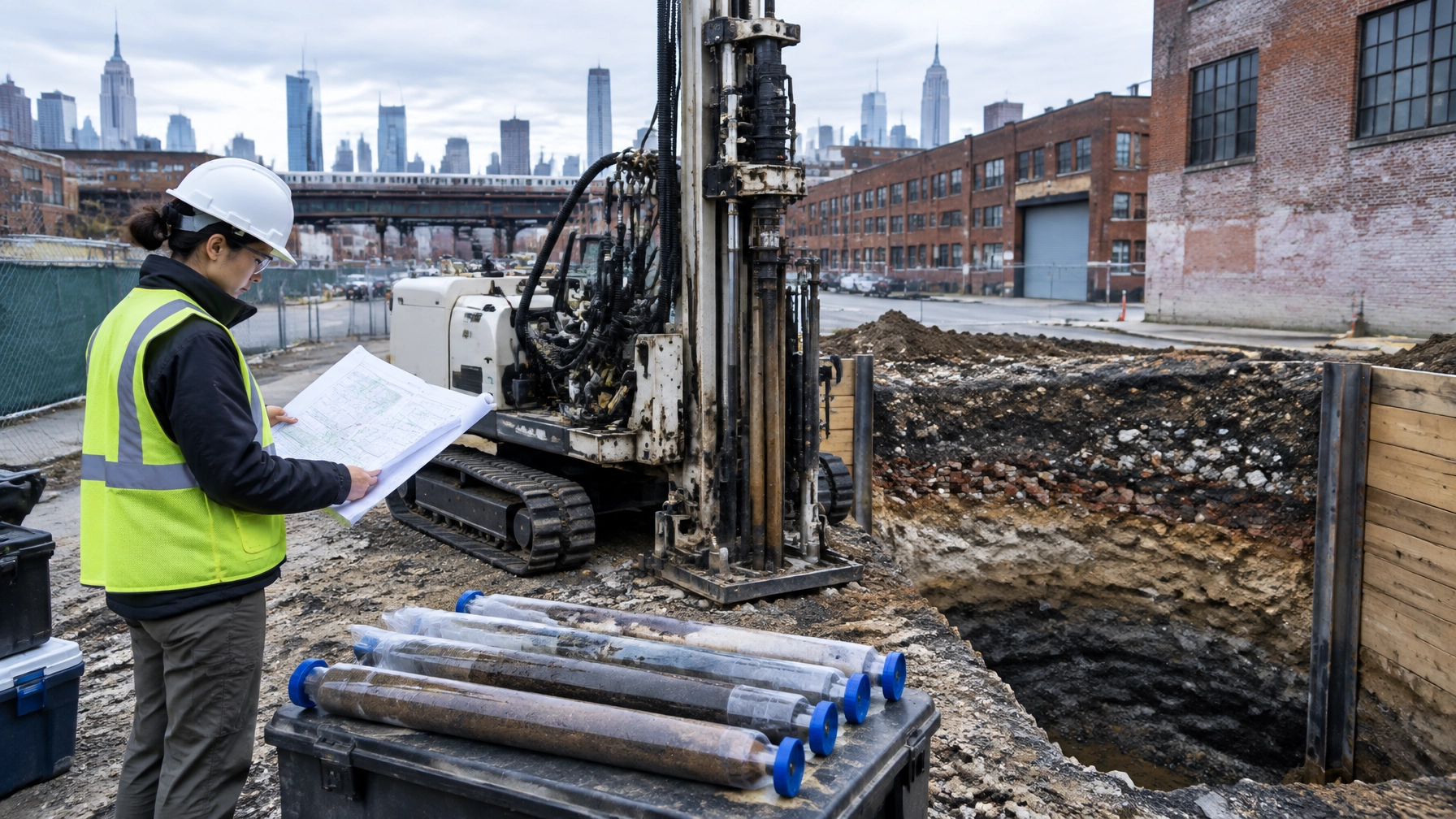
The same principle applies to construction. A report may state that a feature was installed, but without suitable as-builts or field documentation, the record may not clearly establish its location or configuration. During remediation, daily field reports, photographs, monitoring records, and survey information help connect the approved design to what crews actually completed.
That is why construction oversight and environmental monitoring should support closeout from the start, not just appear as a final report-writing task. Field-level documentation gives the closeout team traceable evidence while the work is happening.
Self-audit before submitting your RAR or RCR
Before sending the closeout package to OER, review it as one record. Do not rely on separate teams to assume that another person reconciled the drawings, tables, and field notes.
Use this checklist:
- Confirm the controlling requirements. Check the applicable OER approvals and determine which closeout document and supporting records the project requires.
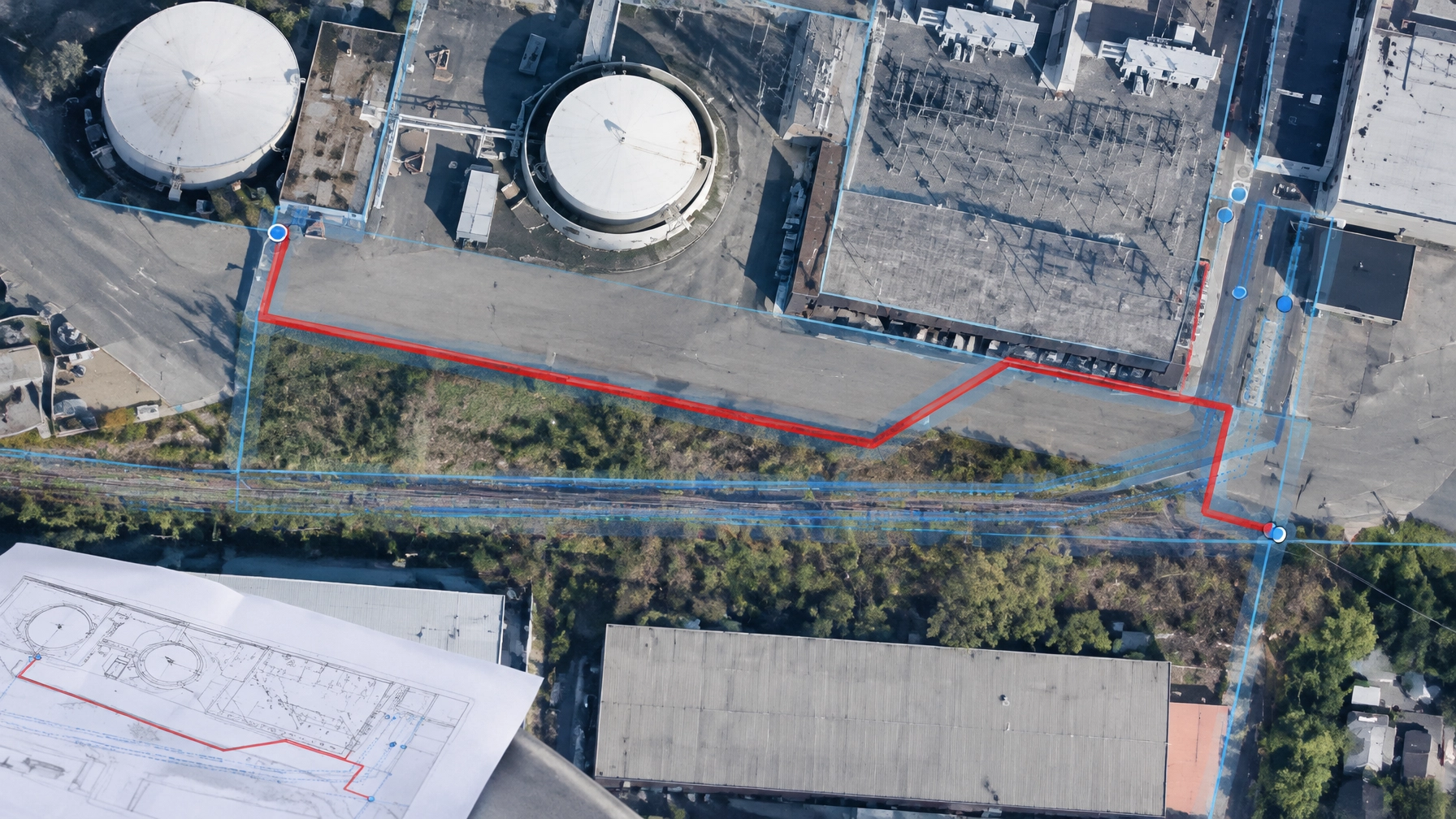
- Reconcile the site plan and survey. Verify that property limits, excavation boundaries, sample locations, elevations, and any installed features match across drawings and text.
- Trace every required sample. Compare the approved sampling commitments with field logs, sample IDs, laboratory reports, and report tables. Explain approved changes clearly.
- Document field changes. Tie deviations to the relevant approval, direction, or project record. Do not leave the reviewer to infer what happened.
- Verify as-builts and field records. Confirm that the package includes the documentation needed to show completed work and any relevant installed features.
- Cross-check the narrative against the attachments. Make sure the report’s conclusions match its figures, tables, analytical results, and supporting records.
- Assign one person to reconcile the package. A single accountable reviewer should check that the components tell the same story before submission.
A clean closeout package does not guarantee approval. It does make the submitted work easier to understand, verify, and review.

Keep closeout connected to field execution
An environmental consultant NYC project teams can reach during construction should be able to connect the approved plan with the site conditions, field decisions, and closeout record. That connection is especially valuable when the contractor encounters an unexpected condition or a planned detail changes.
Envicon supports NYC OER brownfield cleanup and NYC OER VCP work through field coordination, construction oversight, and environmental monitoring. Our team works with project stakeholders to document what happened, flag gaps while they can still be corrected, and keep the path from field work to closure visible.
For Queens projects, direct local coordination can help keep the owner, contractor, design team, and environmental team aligned. You can also learn about our Queens project support, our NYC E-designation services, and remediation and brownfield services.
The practical takeaway
Plan around the review process, not an assumed approval date. The 30-day window does not promise that OER will issue an NOS within 30 days of your initial submission. Completeness, internal consistency, and timely responses to comments all affect the path to closeout. Build the record as the field work happens, then reconcile it before submission.
Frequently Asked Questions
Does NYC OER guarantee an NOS within 30 days?
No. OER reserves up to 30 days for review of submissions, but that is not a guaranteed end-to-end timeline for an NOS. Timing depends on the submission’s completeness, consistency, and any follow-up information or revisions OER requests.
What does an OER Notice of Satisfaction confirm?
An NOS follows OER’s successful review of the applicable RAR or RCR. It confirms that the relevant E-designation requirements have been satisfied. Check the project-specific determination and documents for any continuing obligations or controls.
What does internal inconsistency mean in an RAR or RCR?
It means that information in the closeout package does not line up. Examples include mismatched survey boundaries, sample locations that do not match remedial plan commitments, missing as-builts, or sample IDs that differ between the field record and report.
How can construction oversight help with OER closeout?
Construction oversight and environmental monitoring document the work while it is underway. Field reports, photographs, monitoring records, and survey information can help connect approved requirements to completed work and support a more traceable closeout package.
Are average NYC OER review times published?
OER does not publish aggregate statistics for average review periods. Project schedules should account for the specific submission requirements and the possibility that OER may request additional information or revisions.
Get your OER closeout ready
A closeout review should not be a scramble to rebuild field records. Talk with a team that understands how the plan, field work, and final report need to align.