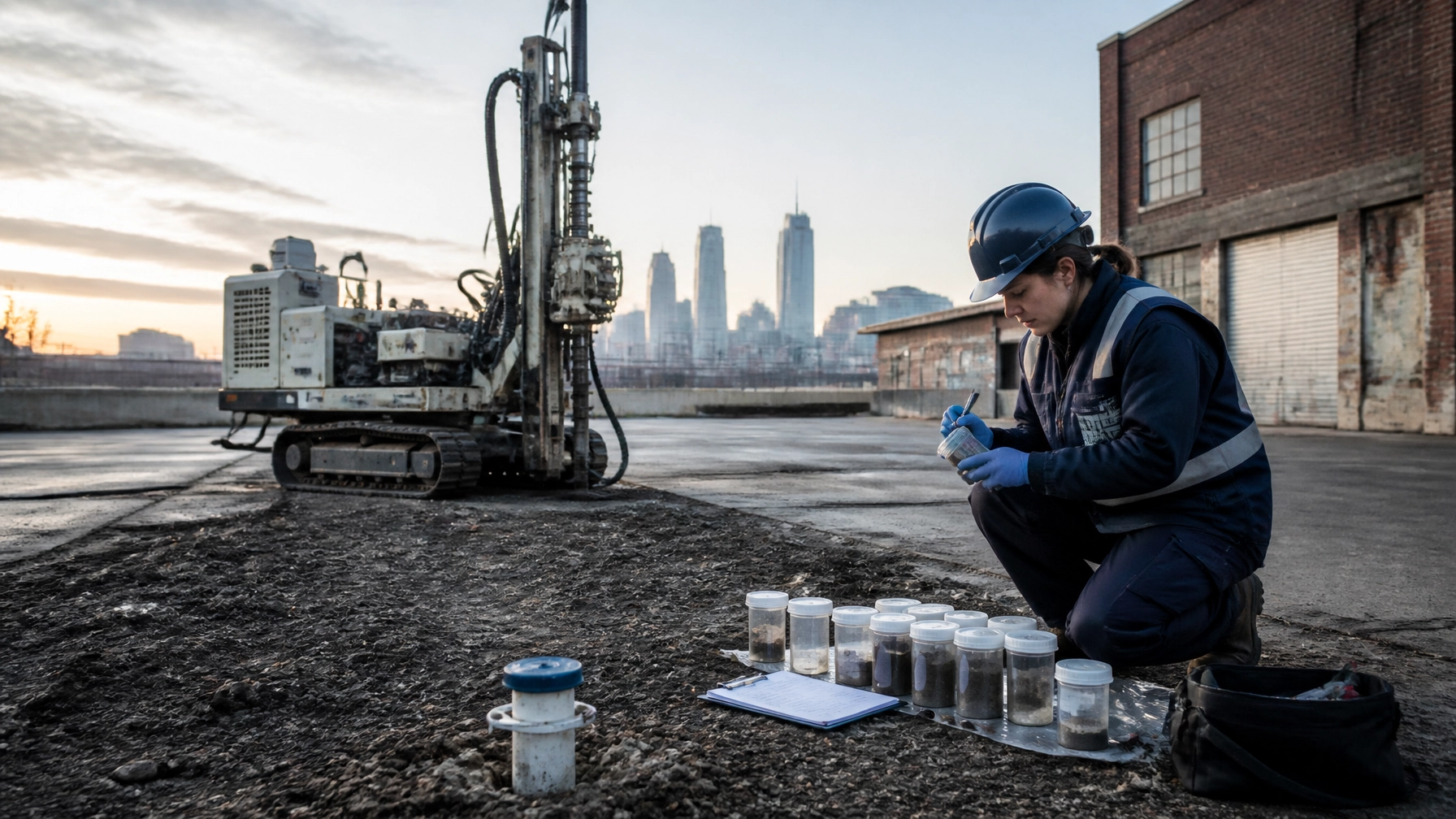
Meta description: Learn how long a Phase I ESA remains viable under ASTM E1527-21 and 40 CFR Part 312, what expires first, what lenders review, and how updates affect NY and NJ closing costs.
A Phase I Environmental Site Assessment does not stay current forever.
For commercial property transactions in Manhattan, Brooklyn, Newark, Jersey City, and throughout New York and New Jersey, the report has two separate timing requirements:
- Five critical components must be conducted or updated within 180 days before acquisition.
- All Appropriate Inquiries must be completed within one year before acquisition.
That distinction matters. A report can look complete, professional, and recently issued while still falling outside the lender's required window.
The problem usually appears late, when the lender reviews the report, the closing date is already scheduled, and the buyer discovers that a site visit, records search, interview, lien search, or environmental professional declaration is too old.
The rule under ASTM E1527-21 and 40 CFR Part 312
EPA's All Appropriate Inquiries rule at 40 CFR Part 312 establishes the federal framework for evaluating environmental conditions before a property acquisition. It also supports CERCLA liability protections for qualifying innocent landowners, contiguous property owners, and bona fide prospective purchasers.
EPA states that:
“AAI must be conducted or updated within one year before the date of acquisition of a property.”
EPA also identifies certain activities that must be current within 180 days before acquisition.
ASTM E1527-21 is the current industry standard for commercial Phase I ESAs and is recognized by EPA as consistent with the AAI rule.
The important point is simple: the report date is not the only date that matters.
The five components subject to the 180-day clock
The following components must be conducted or updated within 180 days before closing or another applicable transaction date:
- Interviews with current and past owners, operators, and occupants.
- Searches for recorded environmental cleanup liens.
- Reviews of federal, state, tribal, and local government records.
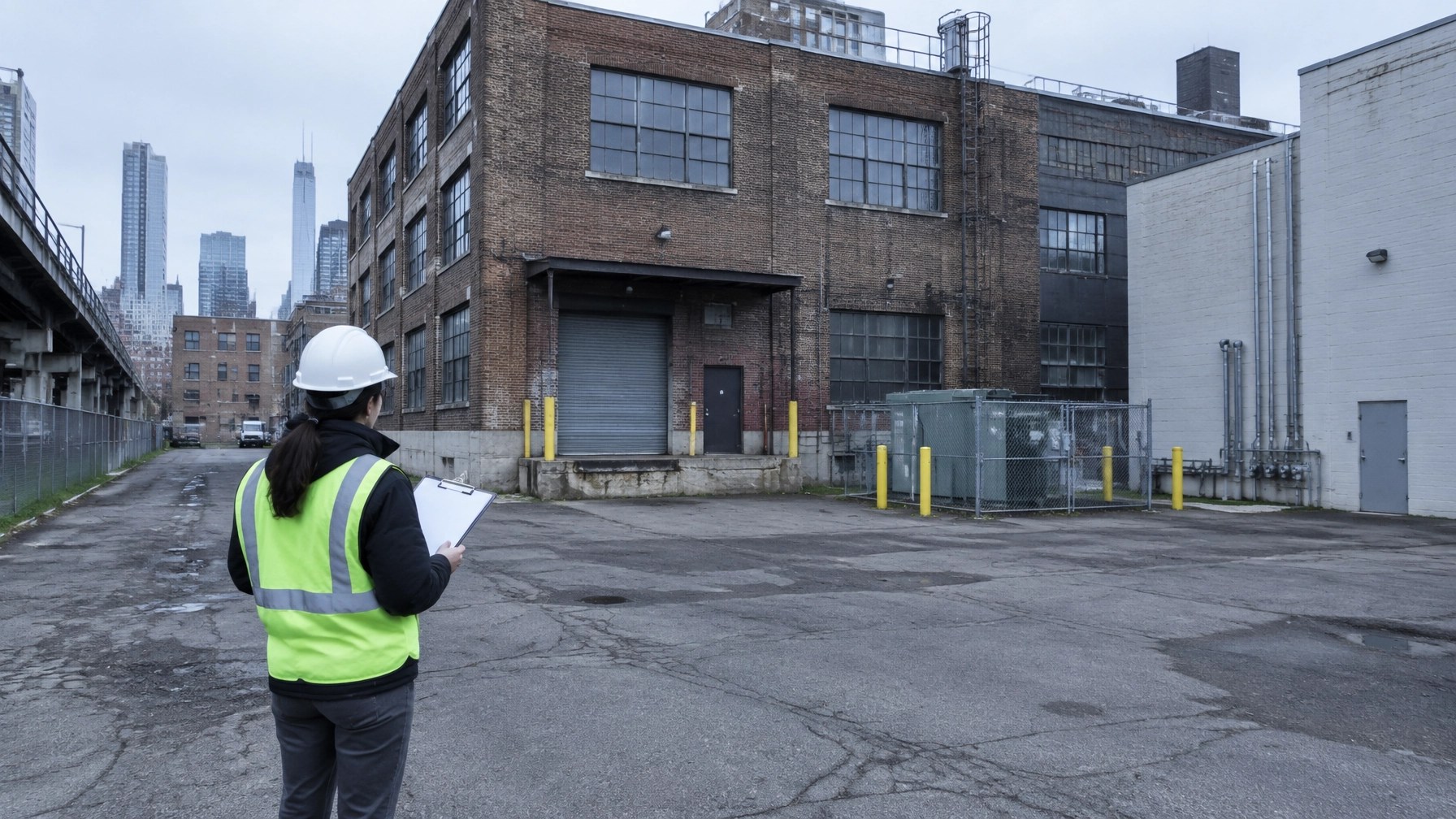
- Visual inspection of the property and adjoining properties.
- The environmental professional's declaration and certification.
The dates for these activities should be identified in the report. The environmental professional's signature date alone does not reset every other component.
ASTM E1527-21 specifically explains that the report date generally does not represent the date each Phase I component was completed. That is why lenders and attorneys review the underlying dates instead of relying only on the cover page.
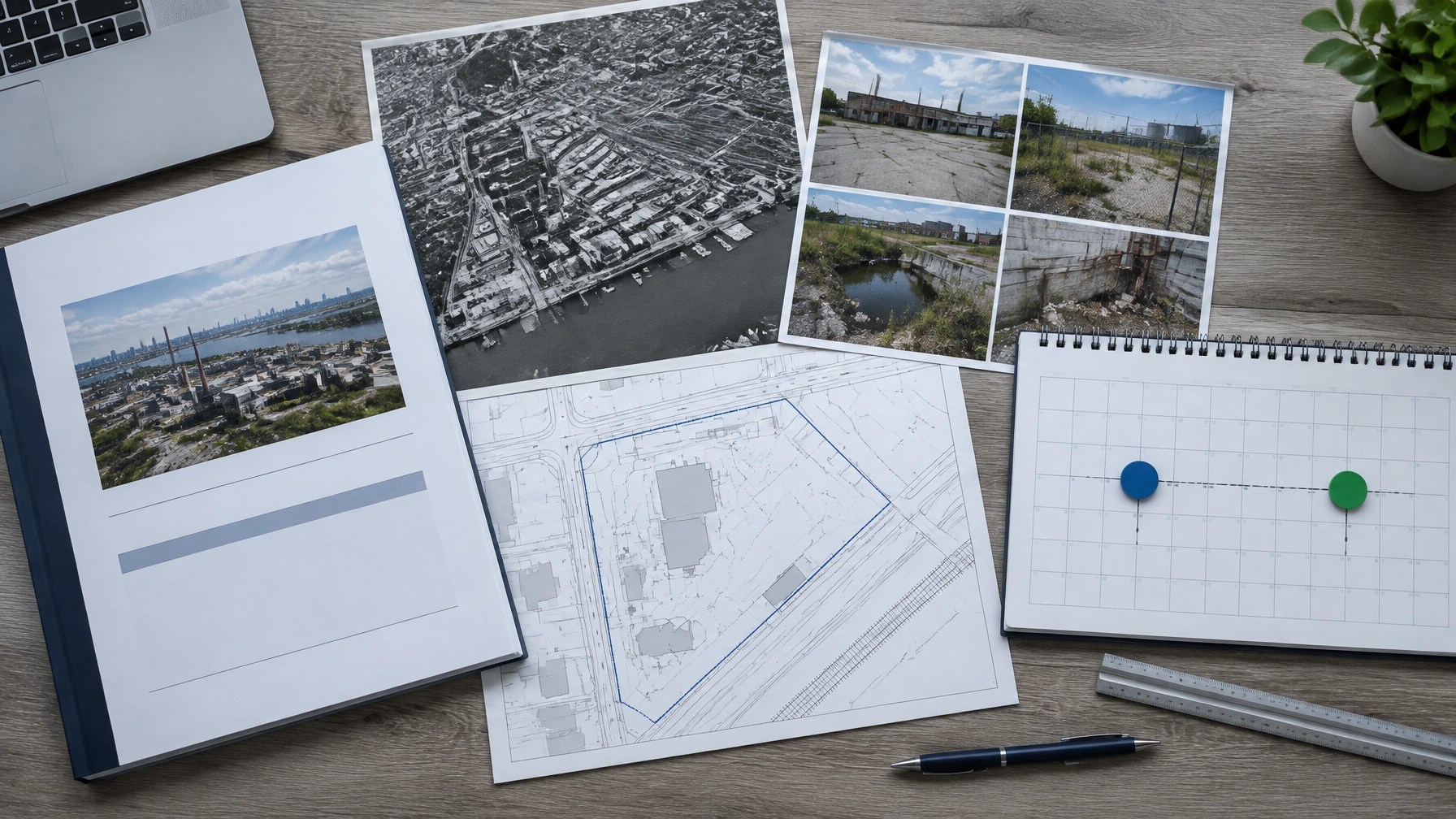
The one-year limit applies to the full assessment
The 180-day update rule does not create an unlimited shelf life.
All other components of the Phase I ESA must be completed within one year before acquisition. That includes the broader historical review, environmental database review, evaluation of current and past property uses, and the environmental professional's analysis.
A practical way to view the timing is:
| Assessment status | What may be required |
|---|---|
| Less than 180 days old | The assessment may remain viable, subject to lender review and user responsibilities |
| More than 180 days old, but less than one year old | The five critical components may need to be updated |
| More than one year old | A new Phase I ESA is generally required for current AAI compliance |
| Approximately five years old | The prior report may provide historical background, but it is not a current AAI-compliant assessment |
There is no five-year ASTM update exception
The phrase “five-year update” causes confusion.
ASTM E1527-21 and 40 CFR Part 312 do not provide a five-year shelf life for a Phase I ESA. They provide a one-year outer limit, with a five-component update pathway inside that period.
A five-year-old report may still be useful. It can provide historical information, prior site photographs, former recognized environmental conditions, and context for a new assessment. It cannot normally be refreshed into a current AAI-compliant Phase I ESA by simply changing the cover letter.
The correct concept is a five-component update exception, not a five-year exception.
What goes stale first?
The field and transaction components usually create the immediate problem.
1. Site reconnaissance
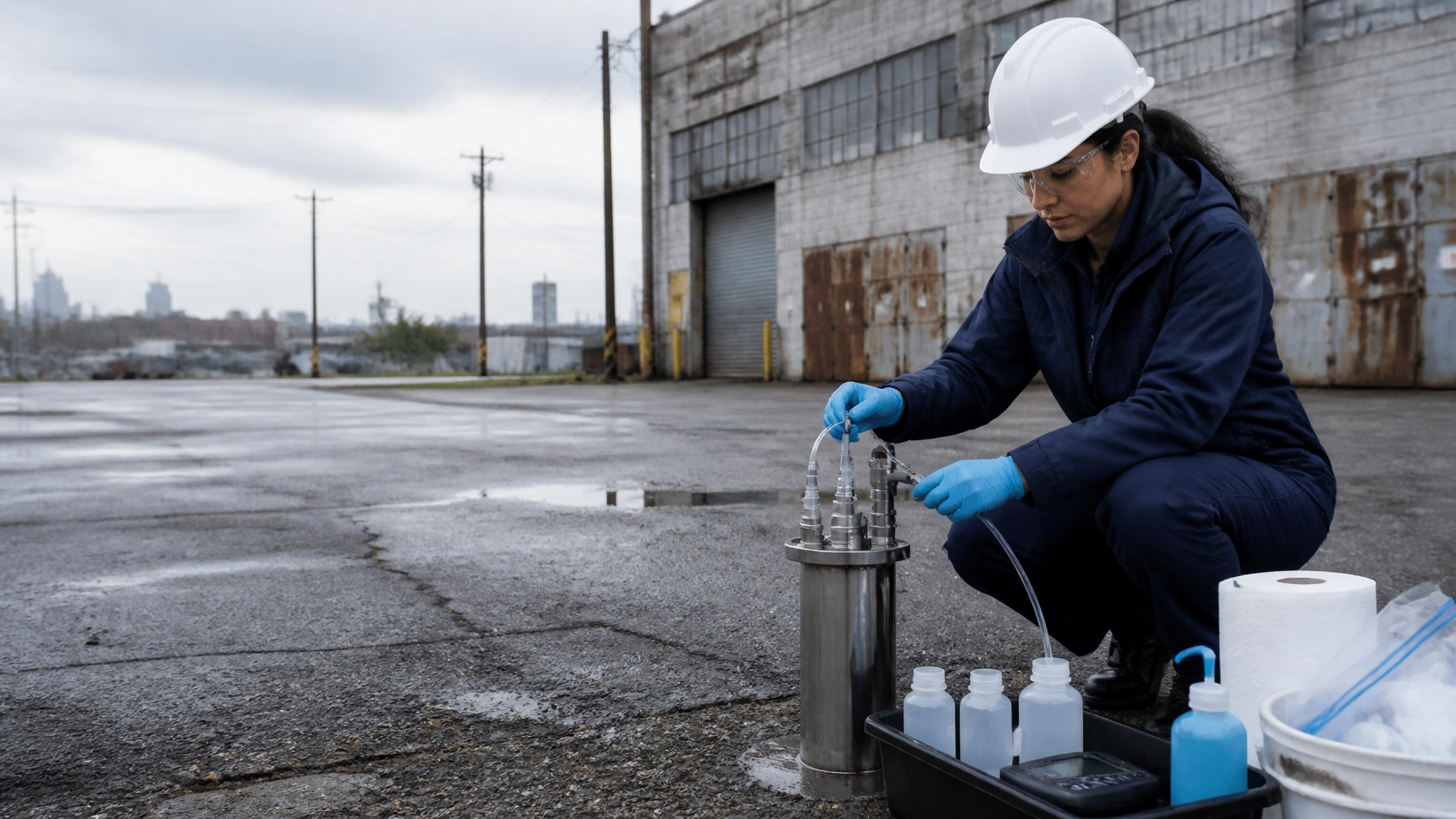
A site visit captures conditions at a specific point in time. Properties change. Tenants move. Aboveground storage containers appear or disappear. Buildings are demolished. Construction starts. Soil is excavated. Adjoining properties change use.
A visual inspection completed 190 days before acquisition may be outside the 180-day window even if the property looks unchanged.
2. Interviews
An interview with an owner, operator, facility manager, or occupant reflects the information available at that time. A new tenant may have different knowledge. A property manager may disclose a spill, tank, floor drain, or historic use that was not known during the original assessment.
3. Government records review
Environmental records can change after the initial search. A spill may be reported. A regulatory case may be opened. A nearby property may enter a cleanup program. A new listing may appear in federal, NYSDEC, NJDEP, or local records.
4. Environmental cleanup lien search
The lien search is a user responsibility unless the environmental professional performs it as part of the engagement. It must be current within the 180-day window. Title and lender counsel often pay close attention to how this requirement was handled.
5. Environmental professional declaration
The environmental professional must review the assessment and provide the required declaration. A new declaration is not a substitute for updating the other required components.
What does a lender actually look at?
A lender is not only asking whether you have a PDF. The lender is asking whether the report supports the loan decision and satisfies its internal environmental policy.
Typical lender review points include:
- Whether the report follows ASTM E1527-21.
- Whether the environmental professional meets the applicable qualifications.
- Whether the five critical components fall within the 180-day window.
- Whether the full assessment falls within one year of closing.
- Whether the legal description and property address are correct.
- Whether recognized environmental conditions, controlled recognized environmental conditions, or historical recognized environmental conditions are clearly explained.
- Whether data gaps are material and adequately addressed.
- Whether the user questionnaire and lien search responsibilities were completed.
- Whether the report identifies activity and use limitations or institutional controls.
- Whether the conclusions support the lender's intended transaction.
- Whether a reliance letter or lender-specific form is required.
A lender may also require a new report even when an update could satisfy ASTM and AAI. Lender policy controls the financing decision. The environmental professional should identify that issue before work begins.
That is where experience matters. At Envicon, we review the original report and the lender's requirements before telling a client to order an update. We do not assume that a technically possible update will satisfy the bank.
Phase I ESA update versus a new report
An update is appropriate only when the prior assessment can still support the current transaction.
A responsible update typically includes:
- Review of the original Phase I ESA.
- Review of changes in site use, ownership, occupants, and surrounding properties.
- Current interviews.
- Current government records review.
- Current site reconnaissance.
- Current lien search, when included in scope.
- Review of new regulatory information and known environmental conditions.
- A current environmental professional declaration.
- Clear identification of changes, data gaps, and any need for additional assessment.
A new Phase I ESA is generally more appropriate when:
- The prior report is more than one year old.
- The property has undergone demolition, excavation, redevelopment, or a major change in use.
- New environmental information has surfaced.
- The original report was prepared under a different standard or does not meet the lender's requirements.
- The original environmental professional will not provide an update.
- The original report contains material gaps or unsupported conclusions.
- The lender requires a new report under its underwriting policy.
A prior report can reduce duplication, but it does not eliminate current professional judgment. ASTM E1527-21 cautions that information from earlier assessments must be evaluated against current conditions.
How much does a Phase I ESA cost in New York and New Jersey?
The answer depends on property size, historical use, site complexity, available records, access, transaction timing, and lender requirements.
For planning purposes, Envicon publishes the following typical ranges for standard commercial Phase I ESAs:
- New Jersey: approximately $2,200 to $4,500.
- New York City: approximately $2,640 to $5,625.
A Phase I ESA in Manhattan or Brooklyn may cost more than a straightforward suburban assessment because of dense development history, complex adjoining properties, older industrial uses, restricted access, and the amount of historical research required.
A Phase I ESA update is often less expensive than starting over because some historical research and prior documentation may remain useful. It is not automatically half the cost. If the property has changed, the lender requests expanded scope, or the original report is difficult to verify, the update can approach the cost of a new assessment.
The right way to compare cost is to request two separate scopes:
- A viability review of the existing report.
- A fixed-price update or new Phase I ESA, based on the findings.
Envicon uses transparent fixed pricing after reviewing the property and transaction requirements. We tell you whether an update is likely to satisfy your lender before you order one. There are no surprise change orders for basic scope decisions that should have been addressed at the start.

How a stale report compresses your closing timeline
A stale Phase I ESA creates a sequence problem.
First, the lender identifies the expired component. Then the environmental consultant schedules a site visit, contacts owners or occupants, orders updated records, reviews the findings, prepares an update, and waits for lender acceptance.
If the update identifies a new recognized environmental condition, the lender may request a Phase II ESA. That can require soil, groundwater, or soil vapor sampling, laboratory analysis, interpretation, and additional regulatory review.
The result is a closing timeline with less flexibility and more carrying cost.
Before ordering a Phase I ESA, confirm:
- The expected closing date.
- The lender's environmental requirements.
- The date of the earliest critical component.
- Whether the transaction involves acquisition, refinancing, or another event.
- Whether the lender accepts an update.
- Whether a reliance letter is required.
- Whether a Phase II investigation could be triggered.
The takeaway for NY and NJ buyers
A Phase I ESA is a transaction tool, not a permanent property certificate.
The 180-day clock controls five critical components. The one-year clock controls the full assessment. After one year, the prior report may still inform the investigation, but it generally cannot serve as the current AAI-compliant assessment.
For a Manhattan acquisition, a Brooklyn redevelopment, a Newark industrial property, or a Jersey City transaction, timing should be reviewed before the report is ordered.
Envicon delivers ASTM E1527-21 Phase I ESA due diligence for New York and New Jersey transactions, with direct senior-engineer involvement, lender-focused documentation, and clear next steps. We also support projects through our Environmental Assessment and Investigation hub and serve clients through our Newark, NJ environmental consulting team.
A current report protects more than a closing date. It gives you a clearer decision about the property itself.
Frequently asked questions
How long is a Phase I ESA valid in New York or New Jersey?
For AAI purposes, the full assessment must be completed within one year before acquisition. Five specified components must be conducted or updated within 180 days before acquisition.
How much does a Phase I ESA cost in NYC?
Envicon's published planning range for a standard commercial Phase I ESA in New York City is approximately $2,640 to $5,625. Final pricing depends on the property, scope, access, schedule, and lender requirements.
Can a five-year-old Phase I ESA be updated?
Usually not for current AAI compliance. A five-year-old report can provide historical background, but ASTM E1527-21 does not provide a five-year update exception. A new current assessment is generally required.
Is a Phase I ESA update cheaper than a new report?
Often, but not always. An update may reuse reliable historical information. The cost can approach a new report if site conditions changed, the original report has gaps, or the lender requires expanded work.
Does the report date start the 180-day clock?
Not necessarily. The relevant dates are the dates when the individual Phase I components were completed or updated. Lenders should review the component dates, not only the report issuance date.
Plan your Phase I ESA before the clock becomes a closing problem
- Call Envicon now at (917) 764-2171
- Get a free quote today
- Use the proprietary Phase I ESA cost estimator
- Use the proprietary project risk screener