A vapor intrusion assessment can determine whether volatile organic compounds in soil or groundwater are migrating into a building. For New York City property transactions, the assessment can also determine whether an acquisition stays on schedule or moves into a longer regulatory and lender review.
The issue often appears during Phase I or Phase II due diligence. It can also arise from an NYC E-Designation, historic dry-cleaning use, petroleum storage, industrial operations, or contamination documented on an adjoining property.
For developers, investors, attorneys, and lenders, the objective is not simply to collect samples. The objective is to establish an evidence-based path to closing, occupancy, remediation, or mitigation.
When a Phase I or Phase II triggers vapor assessment
A Phase I Environmental Site Assessment identifies recognized environmental conditions, historical uses, regulatory listings, and potential contaminant sources. A Phase I does not usually confirm whether vapor is entering a building. It identifies when additional investigation may be justified.
Common triggers for a Phase II or targeted vapor investigation include:
- A former dry cleaner, metal plating facility, auto repair shop, gas station, or industrial operation
- Chlorinated solvents such as tetrachloroethene, also known as PCE, or trichloroethene, also known as TCE
- Petroleum-related VOCs in soil or groundwater
- An active or historical underground storage tank
- Soil vapor or groundwater contamination beneath or near an occupied structure
- A regulatory listing, spill record, or adjacent property with a documented VOC release
- An NYC E-Designation requiring hazardous materials investigation
- A lender, insurer, or environmental attorney requiring vapor pathway evaluation
An ASTM vapor encroachment screening can help determine whether a vapor pathway may exist. It is a screening tool, not a substitute for a site-specific investigation when the available information indicates a potential pathway.
Our Phase I and Phase II environmental assessment services connect the historical review to field data, regulatory requirements, and transaction deadlines.
NYC E-Designation vapor intrusion requirements are site-specific
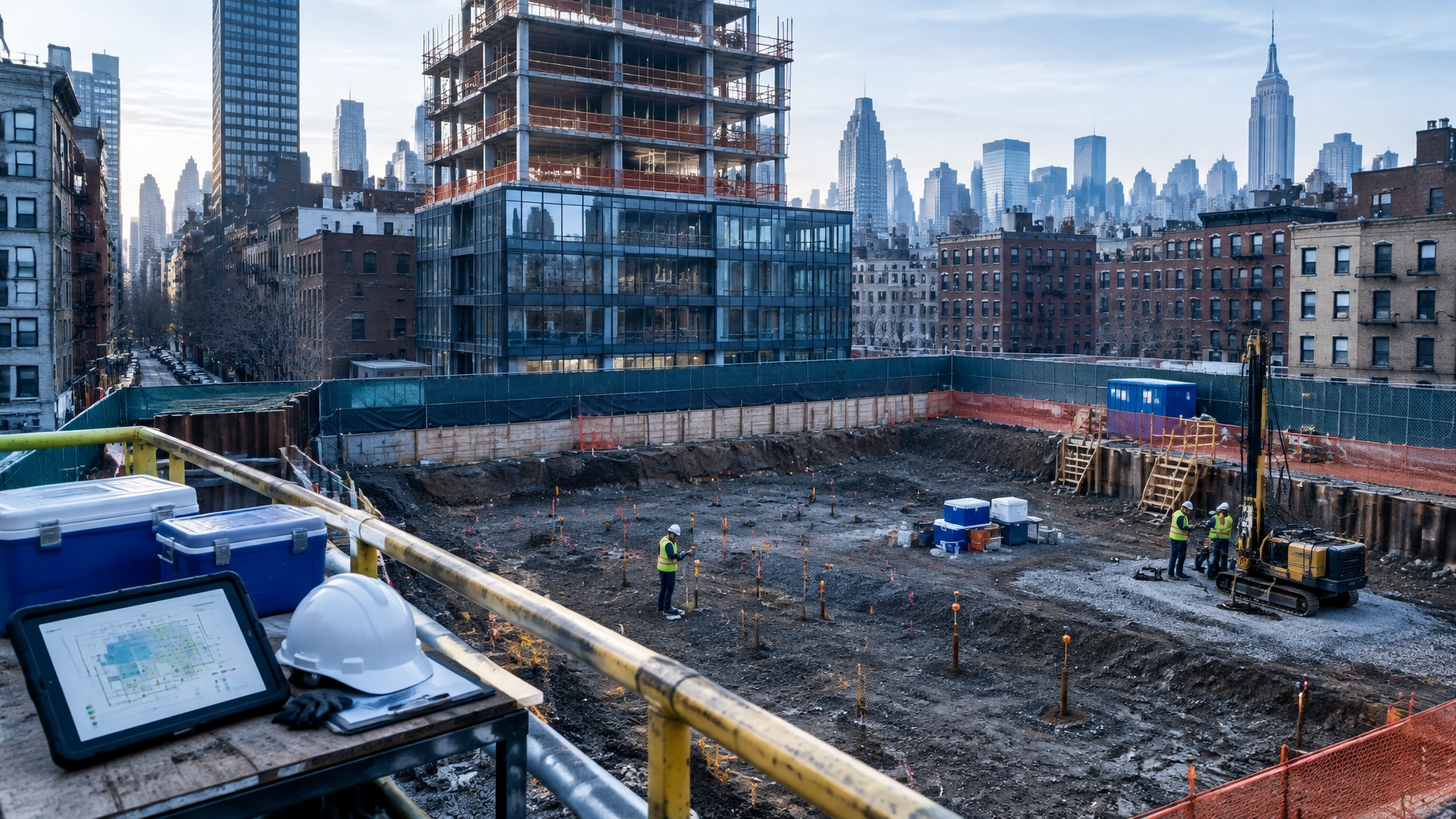
An NYC E-Designation is a zoning-related requirement tied to environmental conditions identified during the land use or development approval process. For hazardous materials, the developer may need to complete a Phase I, prepare a sampling protocol, perform Phase II work, and submit documentation to the NYC Office of Environmental Remediation.
The important point is sequencing. Under typical OER procedures, sampling should not begin until the required protocol receives agency approval.
An OER sampling protocol generally addresses:
- The site history and conceptual site model
- Suspected sources and target contaminants
- Soil, groundwater, soil vapor, sub-slab vapor, indoor air, and outdoor air locations
- Building foundation conditions and occupancy
- Sampling methods and laboratory analysis
- Quality assurance and quality control
- Data evaluation and reporting
- Potential remediation or engineering controls
OER does not apply a single generic sampling layout to every property. The number and location of samples should reflect the site history, building configuration, proposed development, and known contamination.
That is why a generic vapor report can create problems. The report may contain data, but not the data OER, the lender, or the project team needs to make a decision.
What soil vapor testing should evaluate
Soil vapor testing evaluates volatile chemicals in the unsaturated zone. Sub-slab vapor testing evaluates conditions immediately beneath a building slab. These are related but different lines of evidence.
A complete vapor intrusion assessment may include:
- Soil vapor probes near or above the water table
- Sub-slab vapor points beneath the building
- Indoor air samples from basements, crawlspaces, and occupied floors
- Outdoor air samples to establish background conditions
- Groundwater sampling where groundwater is a potential source
- A building survey to identify products that may create indoor VOC concentrations
Sub-slab vapor sampling
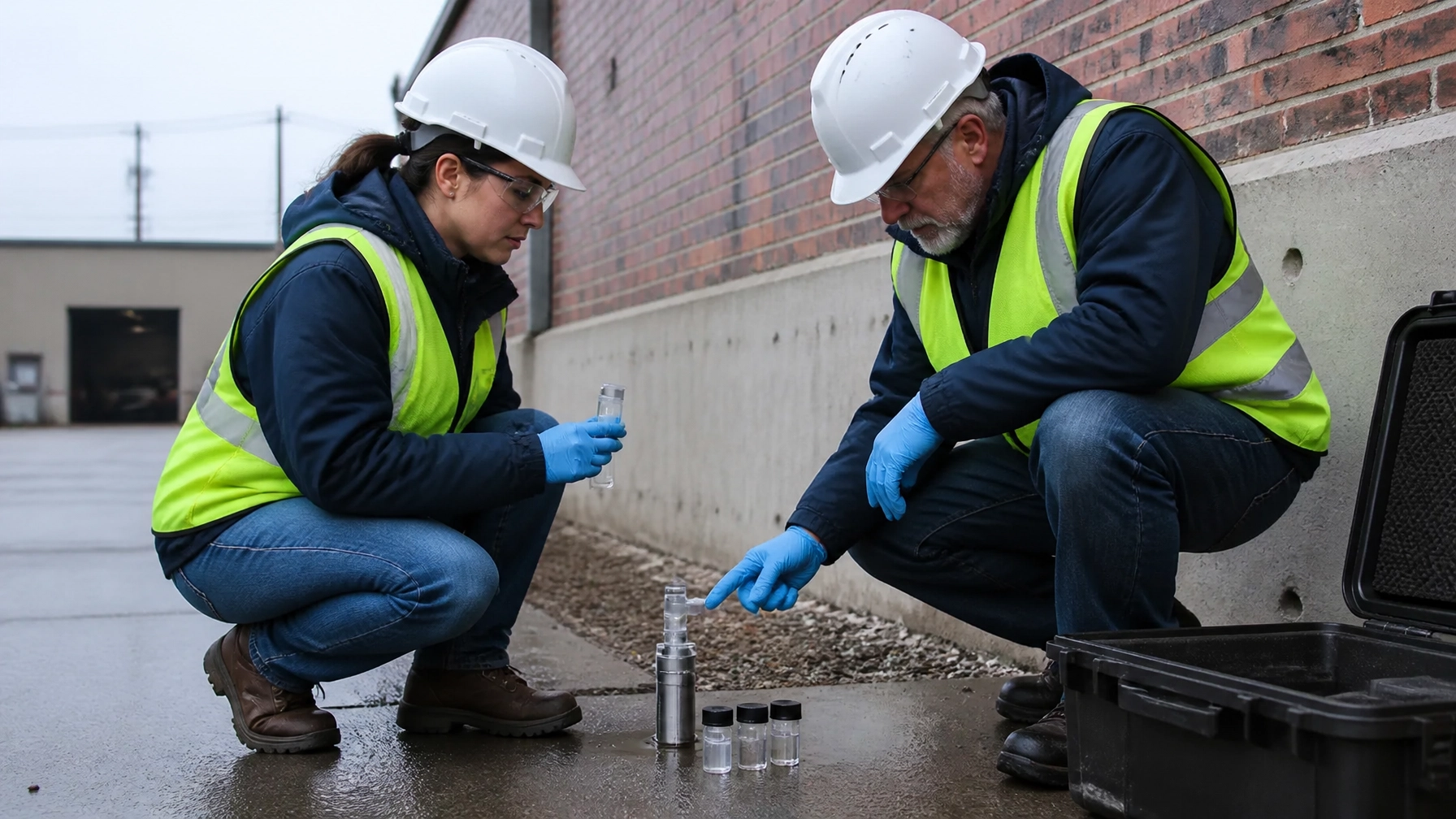
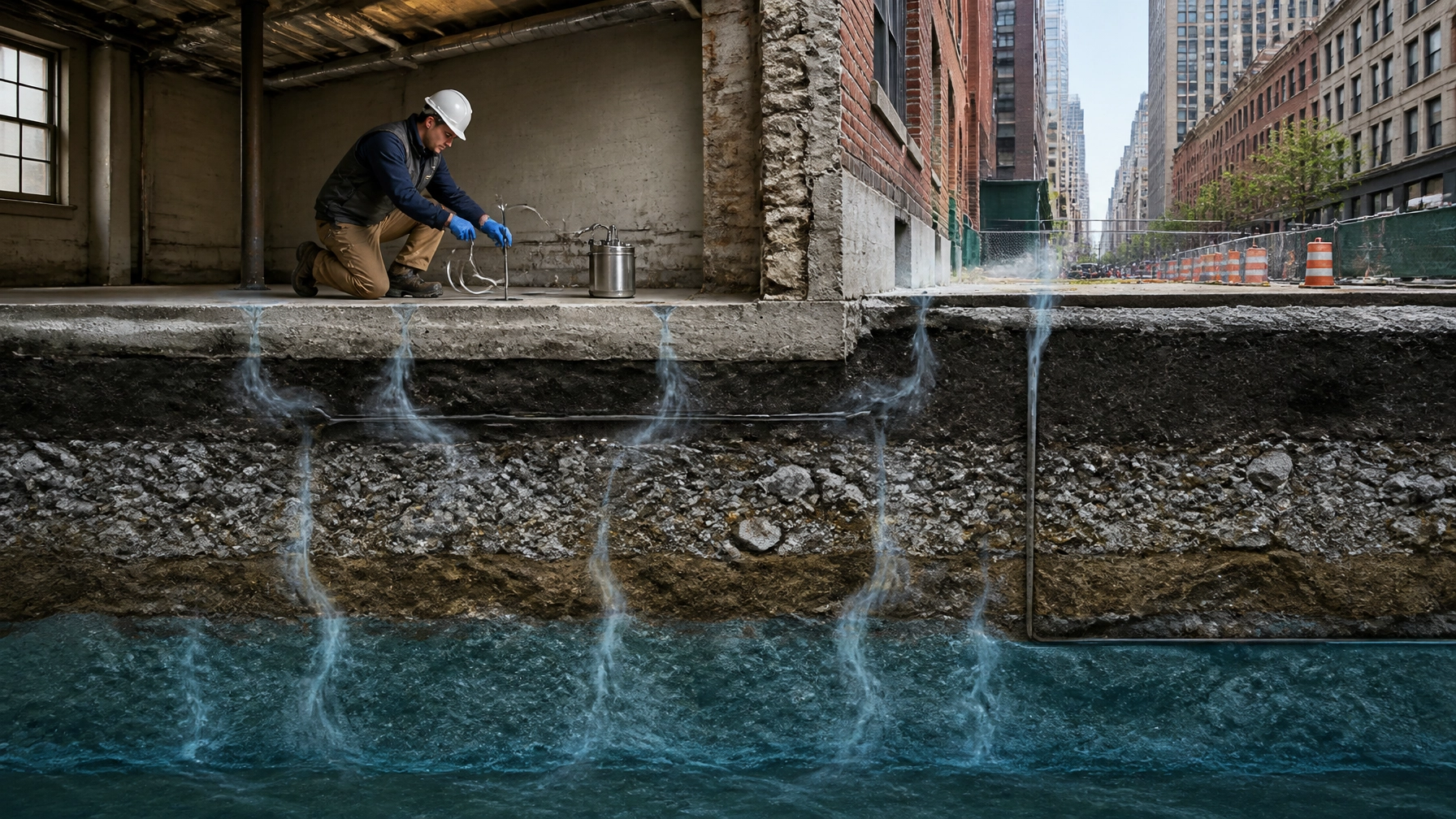
Sub-slab points are installed through the concrete slab and sealed to prevent short-circuiting. Samples are typically collected using dedicated tubing and laboratory-clean canisters. The sampling point should represent the air beneath the slab, not air leaking from the room.
A tracer gas, such as helium, can be used as a quality control check. The purpose is to assess whether the sampling point and seal are functioning as intended. NYSDOH updates include the use of tracer gas for sub-slab sampling.

Indoor air and crawlspaces
Indoor air results can be affected by ordinary products, including paints, solvents, cleaners, fuels, and stored chemicals. A building survey helps identify these potential background sources before sampling.
NYSDOH guidance recommends evaluating the lowest occupied areas. Depending on the building, that may include:
- A sub-basement
- A basement
- A crawlspace
- The first floor
- Other occupied areas over or near a suspected source
Crawlspaces require specific attention. They can provide less separation between subsurface vapor and indoor breathing zones than a conventional slab-on-grade floor. First-floor and crawlspace air data may be necessary to determine whether vapor is entering occupied space.
The NYSDOH Soil Vapor Intrusion Guidance and Updates and the 2006 NYSDOH guidance document provide the technical framework for evaluating these conditions.
Preferential pathways can change the result
Vapor does not always move uniformly through soil. Cracks, utility conduits, floor drains, elevator pits, sumps, sewer lines, and plumbing penetrations can create preferential pathways.
These pathways matter because a building may show higher indoor air concentrations than a basic soil vapor model would suggest. They can also create uneven conditions across a large building.
A useful field investigation reviews:
- Foundation type and slab condition
- Utility entrances and trench lines
- Floor drains and sumps
- Elevator pits and mechanical spaces
- Former tanks or piping
- Crawlspaces and inaccessible sub-slab areas
- Building pressure and ventilation conditions

The NYSDEC vapor intrusion guidance and NYSDOH decision matrices should guide the interpretation. The decision matrices are risk-management tools. They compare sub-slab vapor and indoor air concentrations to determine whether additional sampling, monitoring, mitigation, or source identification may be appropriate.
They are not a simple pass-or-fail substitute for professional judgment.
How mitigation affects closing and construction timing
If the data indicate a completed or potentially completed vapor pathway, the next step may include source control, pathway sealing, building ventilation changes, or an active mitigation system.
Common engineering controls include:
- Sub-slab depressurization systems
- Vapor barriers installed beneath new slabs
- Sealing cracks, penetrations, and preferential pathways
- Mechanical ventilation or building pressure controls
- Soil or groundwater remediation
- Long-term monitoring and operation and maintenance plans
A mitigation system must be designed for the actual building. The design should account for slab layout, occupied areas, utilities, foundation conditions, electrical requirements, discharge points, and future construction.
After installation, verification may include:
- System pressure or vacuum measurements
- Confirmation that the fan and alarms operate correctly
- Inspection of sealed penetrations
- Indoor air and sub-slab sampling
- Documentation for OER, NYSDEC, the lender, and future owners

Our vapor intrusion mitigation services and remediation and brownfield services help connect investigation findings to a practical closure strategy.
Plan the assessment around the transaction
A vapor intrusion assessment can affect more than environmental compliance. It can affect lender approval, purchase agreement conditions, construction financing, insurance, tenant disclosure, and the closing date.
For a Manhattan acquisition, a Brooklyn conversion, a Queens industrial redevelopment, or a Bronx and Staten Island mixed-use project, build the schedule around the following sequence:
- Review the Phase I, historical records, regulatory listings, and building plans.
- Identify whether an NYC E-Designation or OER review applies.
- Define the conceptual site model and likely vapor sources.
- Prepare the sampling protocol before field mobilization.
- Coordinate building access, tenant notifications, and chemical inventories.
- Collect co-located and concurrent samples where appropriate.
- Compare results with the applicable NYSDOH decision matrices and agency criteria.
- Resolve data gaps before lender and agency review.
- Design mitigation or remediation if the pathway is complete.
- Provide a clear report that states what the data mean and what happens next.
Sampling itself may take only a few days. The full timeline can be longer when OER approval, tenant coordination, laboratory analysis, seasonal conditions, or mitigation verification enters the schedule.
A vapor intrusion consultant for an NYC real estate closing should coordinate with your attorney, lender, architect, contractor, and agency contact from the start. That coordination reduces duplicate sampling and prevents a report from arriving after the transaction team has already made a decision.
Local vapor intrusion assessment across NYC and Westchester
Envicon works with property teams across Manhattan, Brooklyn, Queens, the Bronx, Staten Island, and Westchester County.
That local coverage matters when a project needs a fast site walk, sub-slab access coordination, OER communication, or a lender-ready report. Our team combines field investigation, regulatory coordination, remediation planning, and engineering oversight under one accountable project structure.
“The objective is not to create more paperwork. It is to create a defensible path to the next project decision.”
Takeaway
A vapor intrusion assessment NYC project should answer three questions:
- Is there a credible vapor source?
- Is there a complete pathway into the building?
- What action will satisfy the regulator, lender, and project schedule?
Soil vapor testing alone rarely answers all three. The strongest assessment connects Phase I and Phase II findings with sub-slab vapor, indoor air, crawlspace conditions, preferential pathways, tracer gas quality checks, NYSDOH decision matrices, and the applicable OER process.
CTA: Get an evidence-based screening review
If your property has an NYC E-Designation, a known VOC source, a lender vapor concern, or a closing deadline, send us the Phase I, site address, building plans, and transaction timing. We’ll review the available evidence and identify the next defensible step.
- Request an evidence-based vapor intrusion screening review
- Call an Envicon engineer at (917) 764-2171
- Review vapor intrusion assessment services