Updated October 12, 2026
A Phase I report can identify no recognized environmental conditions and still fail a lender’s review. The reason may have nothing to do with a confirmed release. Missing professional qualifications, stale inquiry dates, or an unexplained data gap can leave the lender without the documentation it needs.
For a buyer in Newark, NJ, the practical question is not just whether the report says “no RECs.” It’s whether the report shows how the environmental professional reached that opinion, what information was unavailable, and whether the buyer completed their own required tasks.
What ASTM E1527-21 requires from a Phase I
ASTM E1527-21 is the current ASTM practice for Phase I Environmental Site Assessments. The U.S. Environmental Protection Agency recognizes it as a method that can satisfy All Appropriate Inquiries (AAI) under 40 CFR Part 312. AAI helps eligible buyers meet an important requirement for certain CERCLA landowner liability protections. It doesn’t guarantee a lender will approve a report or establish every legal protection on its own.
A Phase I uses records review, interviews, a site inspection, and professional judgment to identify recognized environmental conditions (RECs). It is not a sampling investigation, and a clean conclusion does not prove that contamination is absent. It means the inquiry did not identify evidence of RECs under the standard’s scope.
ASTM describes its practice as a way to assess commercial property and reduce uncertainty, not eliminate it. Read the ASTM E1527-21 standard page and the EPA’s All Appropriate Inquiries overview.
Data gap, data failure, or limitation?
These terms can sound interchangeable in a report review. They are not.
- Data gap: Required information is missing or unavailable despite good-faith efforts to obtain it. That is the definition in 40 CFR §312.10. For example, a historical directory or past occupant may not be available.
- Data failure: A practical description, not a defined ASTM or AAI term, for a required task that was missed or inadequately completed. Examples may include an omitted required interview or a report that lacks the environmental professional’s qualifications and signed declaration. A failure is not simply a record that could not be found after reasonable efforts.
- Limitation: A constraint on the inquiry, such as denied access to a building, snow cover, or records that could not be reviewed. A limitation may create a data gap. The report should explain what restricted the work and how that affects the conclusions.
A missing record doesn’t automatically become a significant data gap. The key question is whether the missing information affects the environmental professional’s ability to identify a REC.

When the report must disclose a gap
Under 40 CFR §312.20(g), the inquiry should identify data gaps that affect the ability to identify conditions indicative of releases or threatened releases. The report must identify those gaps, the sources consulted to address them, and their significance. Under §312.21(c), it must also explain how the gaps affect the environmental professional’s opinion. If the professional cannot reach an opinion, the report must say so.
In practice, a buyer should be able to find:
- What information was unavailable and what efforts the team made to obtain it.
- Whether the gap affects the REC analysis, and why.
- What additional investigation, if any, could resolve the uncertainty.
- A clear opinion that distinguishes RECs, historical RECs, and conditions that are not RECs.
A significant data gap is not automatically a REC. But leaving one unexplained can make the report difficult for a lender to rely on.
Why a lender can reject a “clean” report
Lenders and their environmental risk desks review both the conclusion and the file supporting it. They may reject or return a report with no identified contamination if they cannot verify that the right person completed the work, required inquiry elements were covered, or the report is current for the transaction.
Common issues include:
- Qualifications aren’t documented. The report should identify the environmental professional and include the qualifications and signed declaration required by AAI. Federal qualification pathways generally require a qualifying license plus relevant experience, an appropriate science or engineering degree plus relevant experience, or equivalent years of relevant experience. See 40 CFR §312.10.
- A data gap clouds the opinion. The report flags unavailable access or records but doesn’t explain whether the gap prevents a REC opinion.
- The inquiry is stale. AAI generally must be conducted within one year before acquisition. Interviews, lien searches, government-record reviews, visual inspections, and the environmental professional’s declaration must be conducted or updated within 180 days before acquisition. The report date alone doesn’t show that each component meets the timing requirements. See 40 CFR §312.20.
- The client’s tasks are missing. A Phase I is not a substitute for the user’s responsibilities.
- The lender has additional requirements. A lender may require a specific report format, addressee, reliance letter, or underwriting review beyond the AAI baseline.
A lender’s rejection does not, by itself, prove the report violated ASTM E1527-21. Ask for the specific objection in writing, then separate a standards issue from a lender-specific condition.
What the buyer must provide
ASTM E1527-21 and AAI assign certain inquiry items to the user, generally the party seeking to meet AAI requirements. The environmental professional may ask for this information, but the buyer should not assume the consultant can supply it all.
Before the report is finalized, provide or address:
- Environmental cleanup lien information, unless the environmental professional has been engaged to perform the search.
- Your specialized knowledge or experience about the property and surrounding area.
- Commonly known or reasonably ascertainable property information, including relevant prior reports and records you hold.
- Whether the purchase price differs from the property’s fair market value without contamination, and whether contamination may explain the difference.
- Information about known releases, threatened releases, activity and use limitations, or other environmental conditions.
Answer the user questionnaire completely. Share relevant information even if you think it’s already in the public record. The environmental professional needs to evaluate it alongside the records review and site observations. Review ASTM E1527-21 and 40 CFR Part 312 with your environmental and legal advisors for transaction-specific guidance.
The Phase I file a buyer should expect
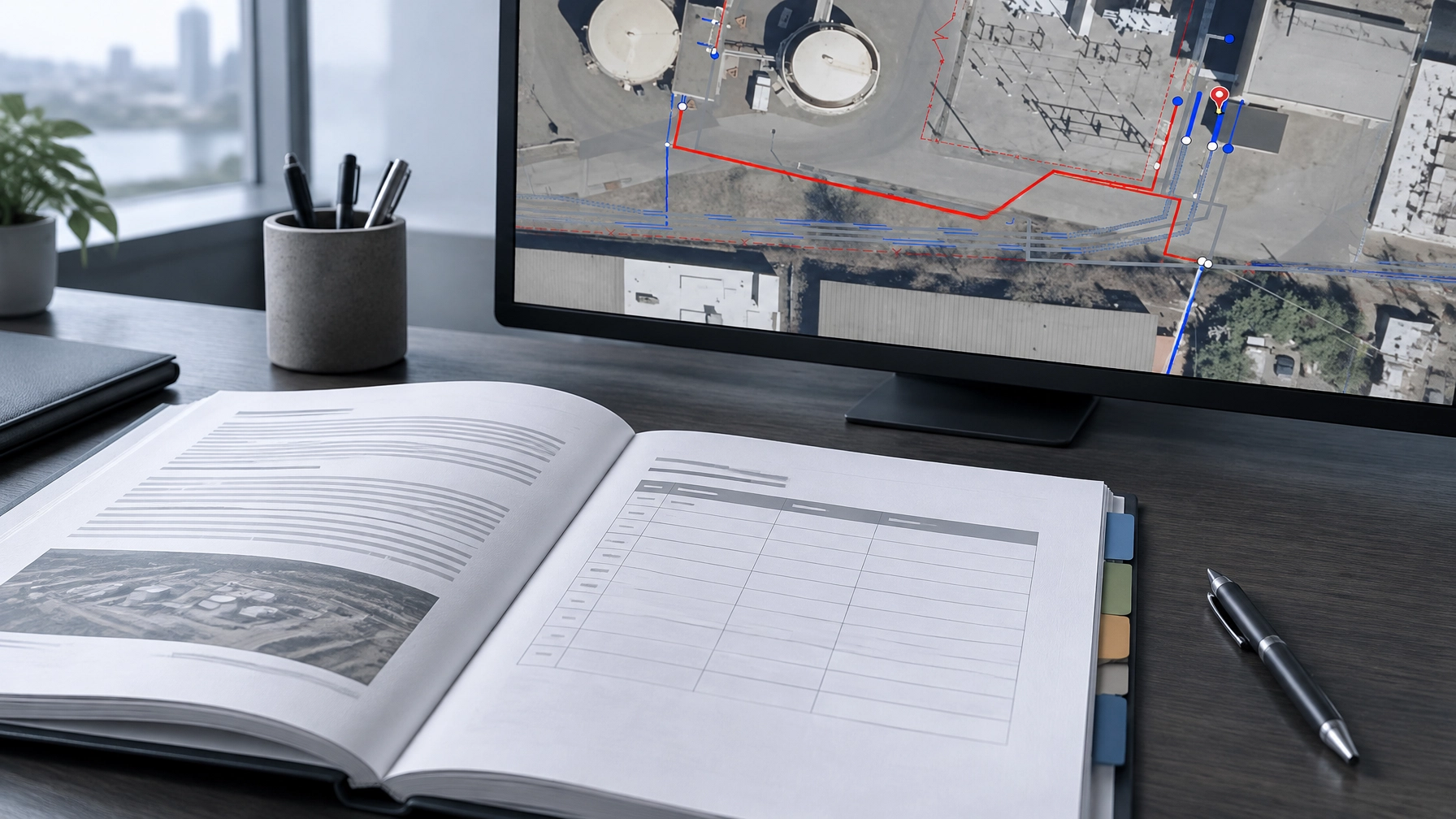
A defensible deliverable should let your lender and counsel follow the inquiry without guessing. For a Newark acquisition, ask for a report package that includes:
- Environmental professional qualifications: relevant credentials, experience, and the signed declaration.
- Interview documentation: who was interviewed, when, and the substance of relevant information.
- Regulatory database radius maps: mapped listings, search radii, and supporting records that show what the review covered.
- A clear REC opinion: the conclusion, supporting reasoning, exceptions, and any significant data gaps.
- Component dates: dates for required 180-day items, so the team can check timing against the acquisition date.

Cost, timing, and the right next step
How much does a Phase I ESA cost? Envicon’s environmental assessment page lists a typical New York and New Jersey range of $2,200 to $4,500 for a commercial Phase I. Property size, history, access, turnaround, and the scope the lender requires can change the Phase I cost. Ask whether the quote includes any requested lien search or lender reliance requirements before you authorize the work.
If a lender flags qualifications or a data gap, don’t start over before you know why. Request the lender’s written checklist. Have the environmental professional map each item to the report and the applicable standard. Then confirm whether the gap can be resolved with records, access, an interview, an updated component, or targeted investigation.
Our Phase I and Phase II environmental assessment services focus on clear documentation and actionable next steps. We work with clients across Newark, NJ and the wider New Jersey environmental consulting market. The same local awareness matters on projects in Monmouth County and Queens, NY, where site history and agency records differ.
The takeaway
ASTM E1527-21 calls for a documented inquiry, not a promise that a property has no environmental risk. A data gap should be described and evaluated. A missed requirement should be corrected. And the buyer needs to complete their part of AAI.
Before closing, check the qualifications, interview records, database maps, component dates, user-provided information, and REC opinion. If the lender has an objection, get it in writing and address the specific issue. A clear file helps everyone make the next decision with confidence.
Talk with Envicon