If you’re a developer or project sponsor in New York, the regulatory landscape just shifted beneath your feet. As of June 12, 2026, the New York State Department of Environmental Conservation (NYSDEC) officially updated the model Environmental Assessment Forms (EAFs) used for SEQRA (State Environmental Quality Review Act) reviews.
This isn’t just a minor administrative tweak. These updates represent the full integration of the Climate Leadership and Community Protection Act (CLCPA) into the daily due diligence process. If you’re still using the May 2026 versions of the Short or Full EAF, your submittal is already obsolete.
At Envicon Group, we’ve been tracking these changes since they were first drafted. The new forms demand a level of technical specificity regarding climate resilience and air impact analysis that many "big-box" consulting firms aren’t prepared to handle without a significant: and costly: learning curve.
The New Baseline: Why the EAF Changed
The 2026 amendments focus on three pillars: Climate Resilience, Air Emissions, and Environmental Justice (EJ).
New York’s mandate is clear: every state agency decision, including the issuance of permits or SEQR findings, must now be consistent with statewide Greenhouse Gas (GHG) emission limits. Specifically, Section 7(2) of the CLCPA requires agencies to consider if their actions will interfere with the state’s climate goals.
The June 12 updates to the EAF provide the mechanism for agencies to gather the data they need to make those determinations. You are no longer just reporting if a project is in a flood zone; you are now required to demonstrate how your project will hold up in 2050’s climate and how its emissions profile affects the local community.
Decoding the Climate Resilience Questions
The updated EAFs: particularly the Full EAF used for Type I actions: now include detailed prompts regarding climate-related risks.
"We don’t just deliver services: we help transform underused and contaminated properties into thriving assets."
To do that under the new rules, your site investigation must look beyond the current property lines. The new questions ask:
- Vulnerability to Extreme Weather: How will your project withstand increased frequency and intensity of flooding, storm surges, and extreme heat?
- Design Resilience: What specific design features (e.g., elevated mechanicals, enhanced stormwater management, or permeable surfaces) are being incorporated to mitigate these risks?
- GHG Emissions Footprint: For projects above certain thresholds, a quantitative assessment of Greenhouse Gas emissions is now a functional requirement for Part 1 of the EAF.
If your consultant is just checking "No" on these boxes without a site-specific Civil and Site Engineering strategy, you’re inviting a "Positive Declaration" and a trip into the multi-year purgatory of an Environmental Impact Statement (EIS).

Air Impact Analysis: Beyond the Checkbox
Air quality has always been part of SEQRA, but the 2026 updates turn up the heat on regulatory compliance and permitting.
Under the new forms, project sponsors must explicitly identify all air emission sources. This includes not just the obvious ones, like boilers or industrial stacks, but also "co-pollutants" that often accompany GHG emissions.
For projects requiring air permits, the NYSDEC is moving from informal dialogue to active enforcement of CLCPA conformity. This means your air impact analysis needs to be ready for the "Disadvantaged Communities" test.
Disadvantaged Communities and Environmental Justice
Section 7(3) of the CLCPA requires that agency decisions do not disproportionately burden disadvantaged communities. The June 12 EAF updates include new questions designed to flag EJ concerns immediately:
- Proximity Mapping: Is the project located within or adjacent to a DEC-identified Disadvantaged Community?
- Disproportionate Impact: Will the air emissions or traffic patterns from the project create a new burden or exacerbate an existing one in that community?
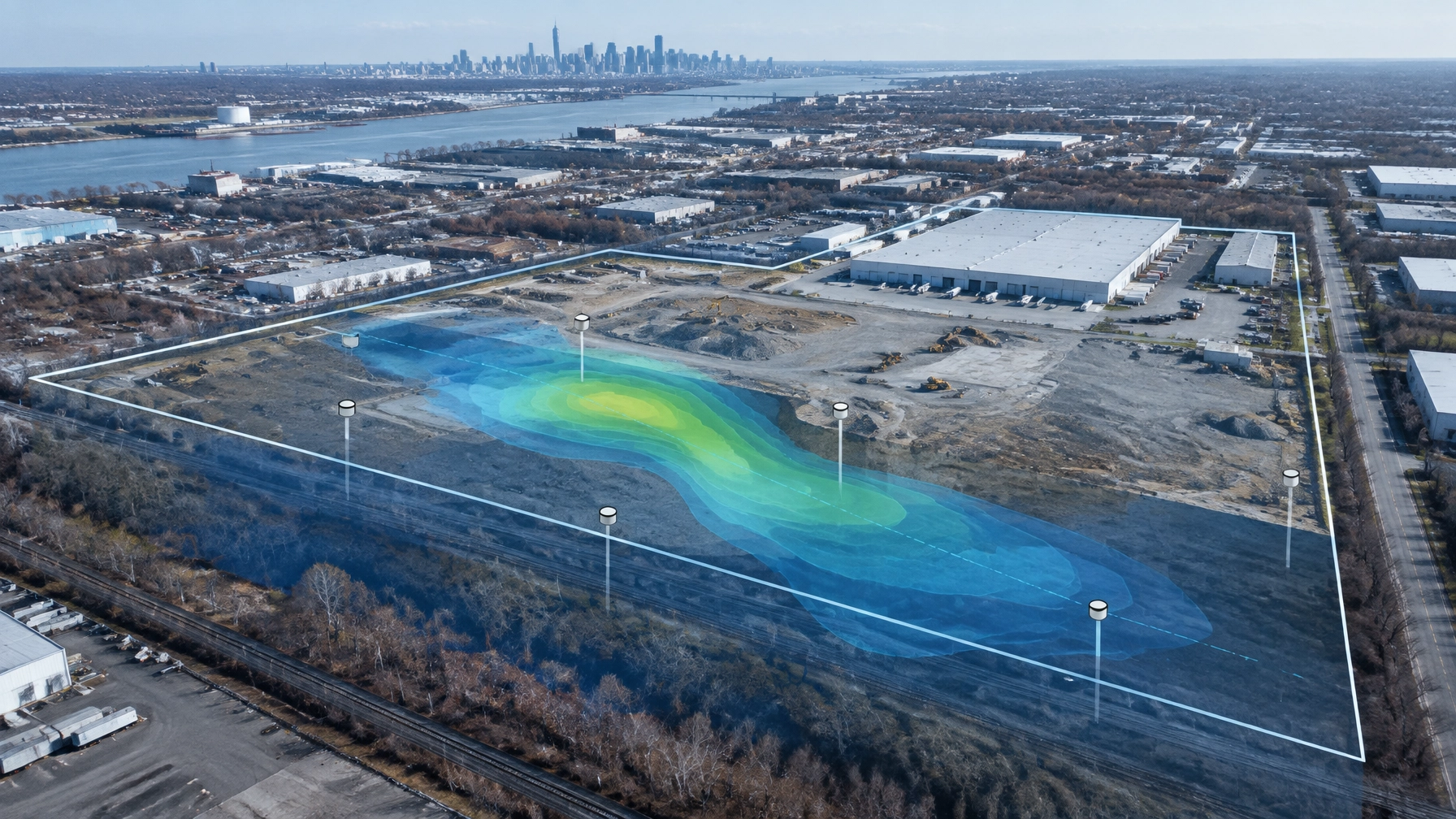
Envicon uses proprietary GIS mapping and data dashboards to answer these questions with precision. We don't guess; we map your project against the latest state data to ensure your Brownfield Redevelopment Support is grounded in defensible facts.
The Envicon Advantage: Speed, Precision, and Trust
When you hire a large national firm to handle your EAF, you’re often paying for a "black box" process. You talk to a senior partner during the pitch, but your critical climate and air impact assessments are likely being drafted by a junior associate in a satellite office who has never set foot on your NYC or NJ site.
At Envicon, we operate differently.
- Regional Fluency: We’ve spent 20 years building relationships with the NYSDEC, NYC OER, and NJ DEP. We know the reviewers by name, and we know exactly what they are looking for in the new 2026 EAF climate sections.
- Actionable Outcomes, Not Just Reports: Most consultants hand you a report and leave you to figure out what it means. We provide a cleared path. If the new EAF flags a climate risk, our Civil Engineering team is already designing the fix before the report is even finalized.
- Transparent Technology: Our clients get real-time visibility into their project status. You’ll see the air monitoring data and the resilience mapping as we generate it, not weeks later in a bloated PDF.
"Collaboration is not a buzzword: it's how we work."
Practical Step-by-Step for Your Next Project
If you are initiating a project in NY after the June 12, 2026 update, here is your roadmap:
- Verify the Form Version: Ensure your team is using the revised EAFs (Short or Full) updated specifically for the June 2026 amendments.
- Conduct an Early EJ Screen: Before you even file, map your project against the NYSDEC Disadvantaged Communities map. If you’re in a "red zone," your air impact analysis needs to be bulletproof.
- Quantify GHG Early: Don't wait for the agency to ask for it. Calculating your project’s greenhouse gas footprint early allows you to build in mitigation measures (like solar-ready roofs or high-efficiency HVAC) that prove CLCPA consistency.
- Update Your SWPPP: Climate resilience and stormwater are now linked in the EAF. Ensure your Stormwater Pollution Prevention Plan (SWPPP) accounts for the new 2026 intensity-duration-frequency (IDF) curves.

Summary: Don't Let Regulatory Change Stall Your Site
The June 12, 2026, EAF updates are a signal that the NYSDEC is no longer treating climate and air impacts as "extra" considerations: they are now the core of the review.
Every week your project sits in a reviewer's queue because of an incomplete climate assessment is a week of carrying costs and lost market timing. We specialize in turning these complex, environmentally challenged sites into buildable assets by navigating these exact hurdles with precision.
Your project shouldn't be a test case for a junior consultant's first climate assessment.
If you want a team that combines 20 years of field experience with the technology needed to master the 2026 EAF updates, contact Envicon Group today. We don't just sell reports; we sell cleared paths.
Take the Next Step
If your project is facing new climate review questions, don't wait until a regulator or lender flags the gap. Get clarity early and keep your site moving.
- Call now: (917) 764-2171
- Check your property risk: Use the Envicon Risk Screener
- Book a free consultation: Contact Envicon Group