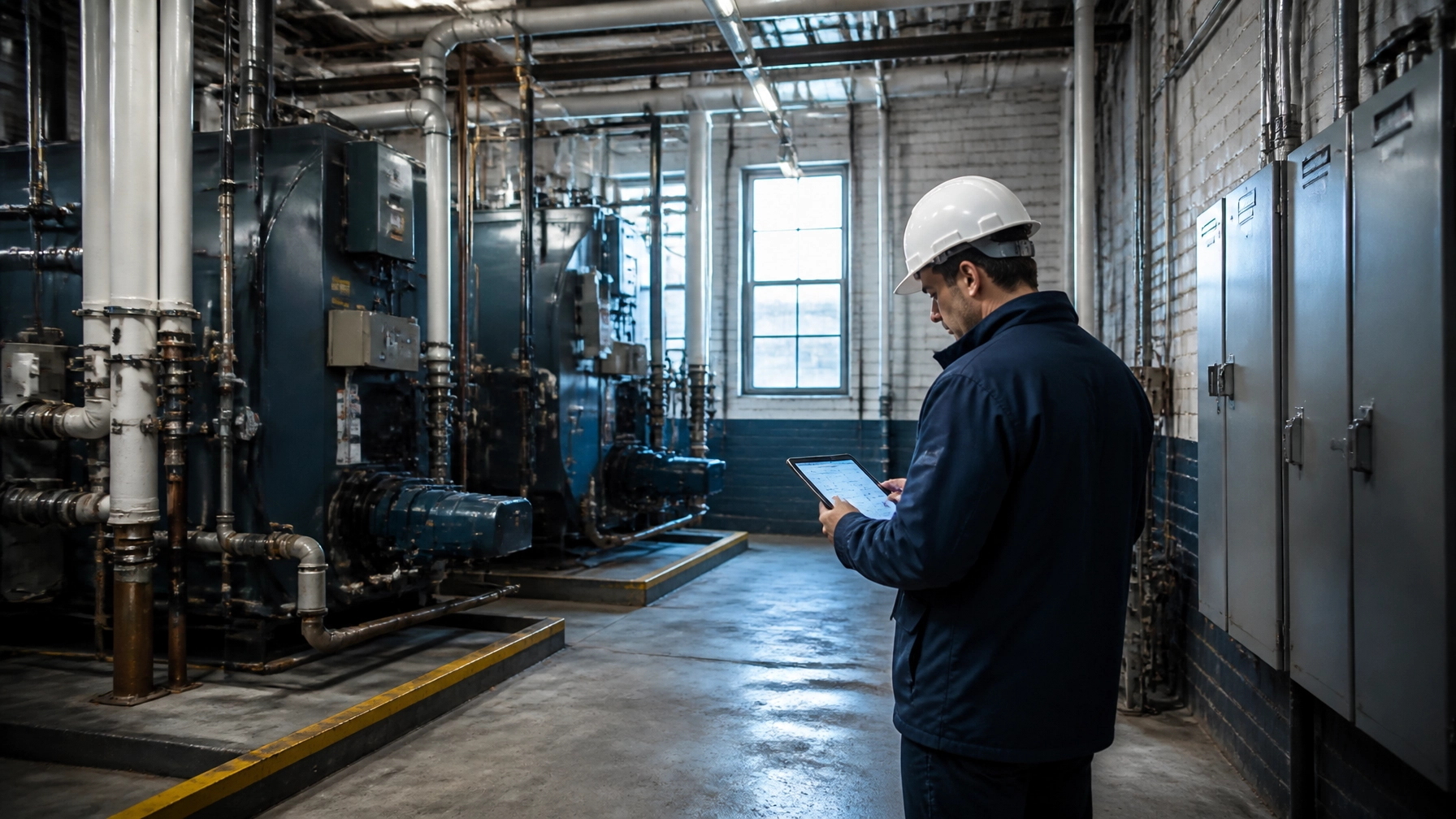
In New Jersey, a geotechnical investigation can cost anywhere from a few thousand dollars to more than $50,000. The range is wide because the work is not priced by the report alone. It is priced by the amount of uncertainty your engineer must resolve before the foundation design is finalized.
For 2026 planning purposes, many NJ projects fall within these broad budgeting ranges:
- Small residential or light commercial site: $3,000 to $10,000
- Small commercial or multifamily project: $8,000 to $20,000
- Large commercial, industrial, or complex urban site: $20,000 to $50,000 or more
These are planning ranges, not engineering proposals. The actual cost depends on your building footprint, boring count, boring depth, access conditions, soil profile, groundwater, laboratory program, and reporting requirements.
The important point is simple: a lower geotechnical fee does not always mean a lower project cost. If the investigation misses a soft clay layer, undocumented fill, shallow groundwater, or variable bedrock, the foundation risk moves downstream into construction.
What drives geotechnical investigation costs in New Jersey?
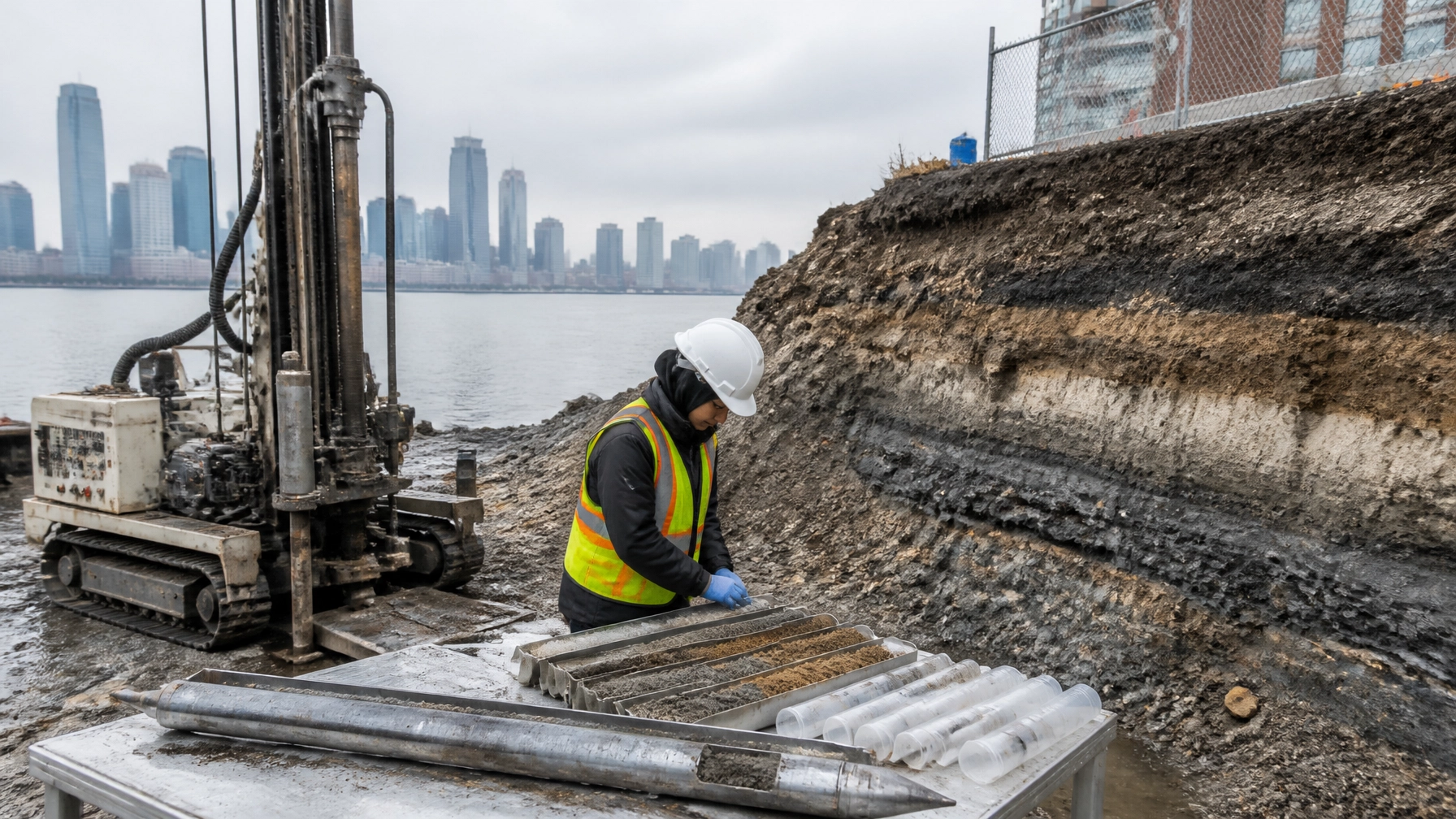
A complete investigation usually includes field exploration, laboratory testing, engineering analysis, and a written report. Each part answers a different question.
- What is below the site?
- How will the soil behave under the proposed structure?
- What foundation system is appropriate?
- What construction conditions should the contractor expect?
Envicon’s civil and geotechnical engineering team combines subsurface investigation, foundation recommendations, civil design, and construction support. That integrated approach matters because geotechnical findings affect grading, drainage, excavation support, utilities, and the foundation plan at the same time.
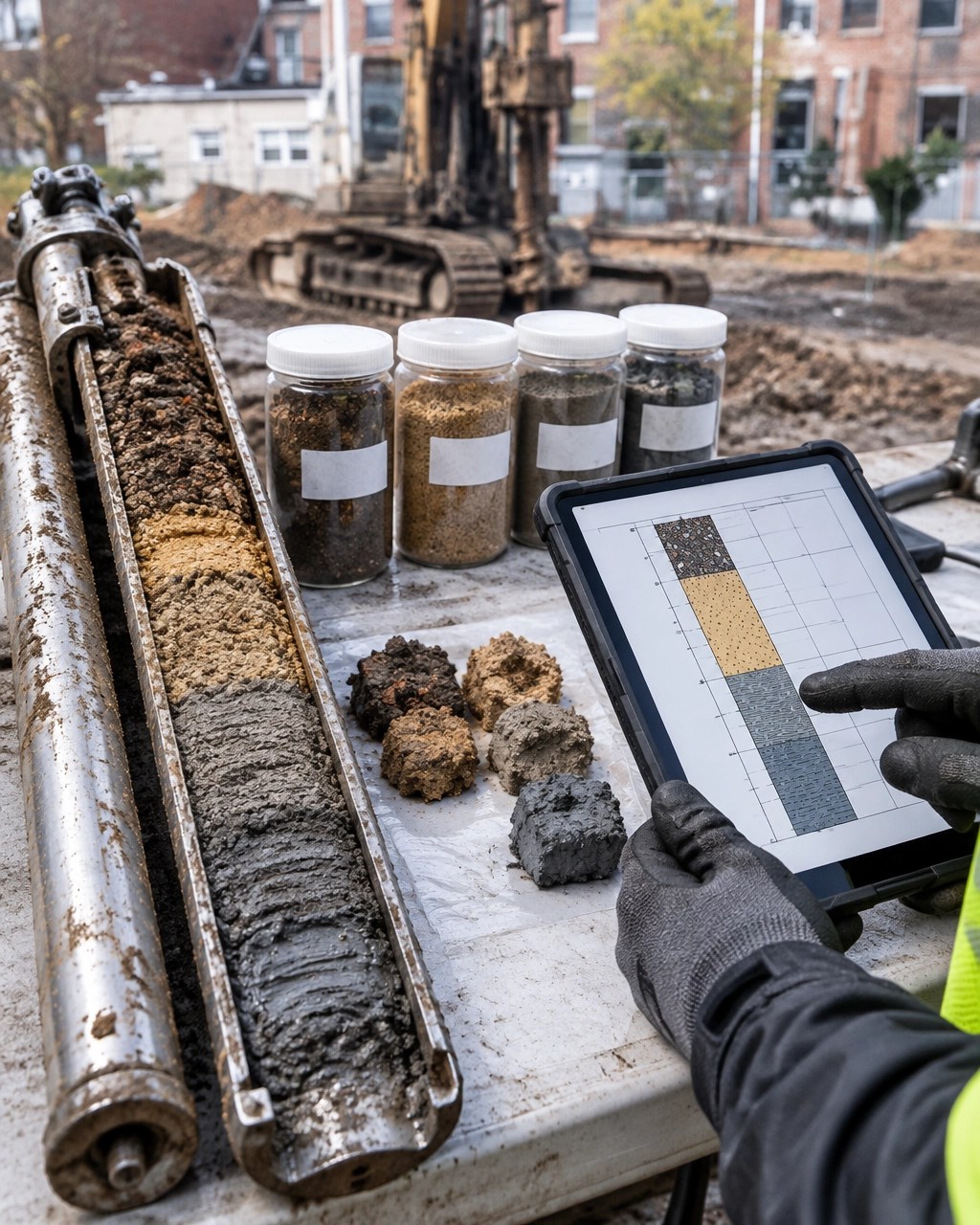
1. Number and depth of borings
The boring program is usually the largest cost driver.
A small building may need two or three borings. A larger commercial site may require six, ten, or more. The engineer determines the program based on:
- Building size and configuration
- Expected structural loads
- Number of proposed foundation elements
- Basement or below-grade construction
- Site history and previous development
- Anticipated foundation type
- Variability of fill and native soil
- Access for the drill rig
- Nearby buildings, utilities, and sensitive structures
A preliminary budget for a small building pad may include two or three borings to approximately 30 to 40 feet. A commercial or multifamily project may require four to eight borings extending 40 to 60 feet or deeper.
Typical drilling and mobilization costs can range from approximately $1,000 to $2,500 per boring, although constrained access, traffic control, permits, night work, drilling through concrete, and difficult soils can increase the price.
Depth matters as much as quantity. A shallow boring may identify the upper soil layers but fail to characterize the material supporting the actual foundation. Deeper borings may be necessary to evaluate compressible soils, dense bearing layers, groundwater, or rock.
Bedrock depth is not always obvious
New Jersey does not have one consistent subsurface profile. Conditions change significantly across the state.
A site in Hudson County may contain historic urban fill, loose granular materials, soft compressible soils, and high groundwater. A site closer to the Palisades may encounter shallow rock. Coastal and Meadowlands areas can present very different conditions from sites in Morris, Somerset, or Bergen County.
Drilling refusal also does not automatically mean competent bedrock. The sampler may encounter cobbles, construction debris, dense fill, or boulders. The investigation needs to distinguish between actual rock and an obstruction that only appears to be rock.
That distinction can affect whether the project uses shallow footings, piles, micropiles, caissons, ground improvement, or another foundation solution.
2. Soil strata complexity
New Jersey development sites often contain multiple soil layers with different engineering properties. A boring log may show fill over sand, followed by silt, clay, weathered rock, or a deeper bearing stratum.
The more variable the soil profile, the more difficult it becomes to apply one foundation recommendation across the entire site.
Complexity increases when the project includes:
- Historic fill or reclaimed land
- Organic soil or peat
- Soft clay or silt
- Loose sands below the groundwater table
- Variable bedrock elevations
- Former industrial use
- Existing foundations or slabs
- Deep excavations
- Adjacent buildings or infrastructure
This is where the cost of a careful investigation is measured against the cost of uncertainty. An additional boring or targeted laboratory test may cost hundreds or a few thousand dollars. A foundation redesign during construction can cost far more through structural revisions, remobilization, delays, additional excavation, or deep foundation installation.
3. Laboratory testing
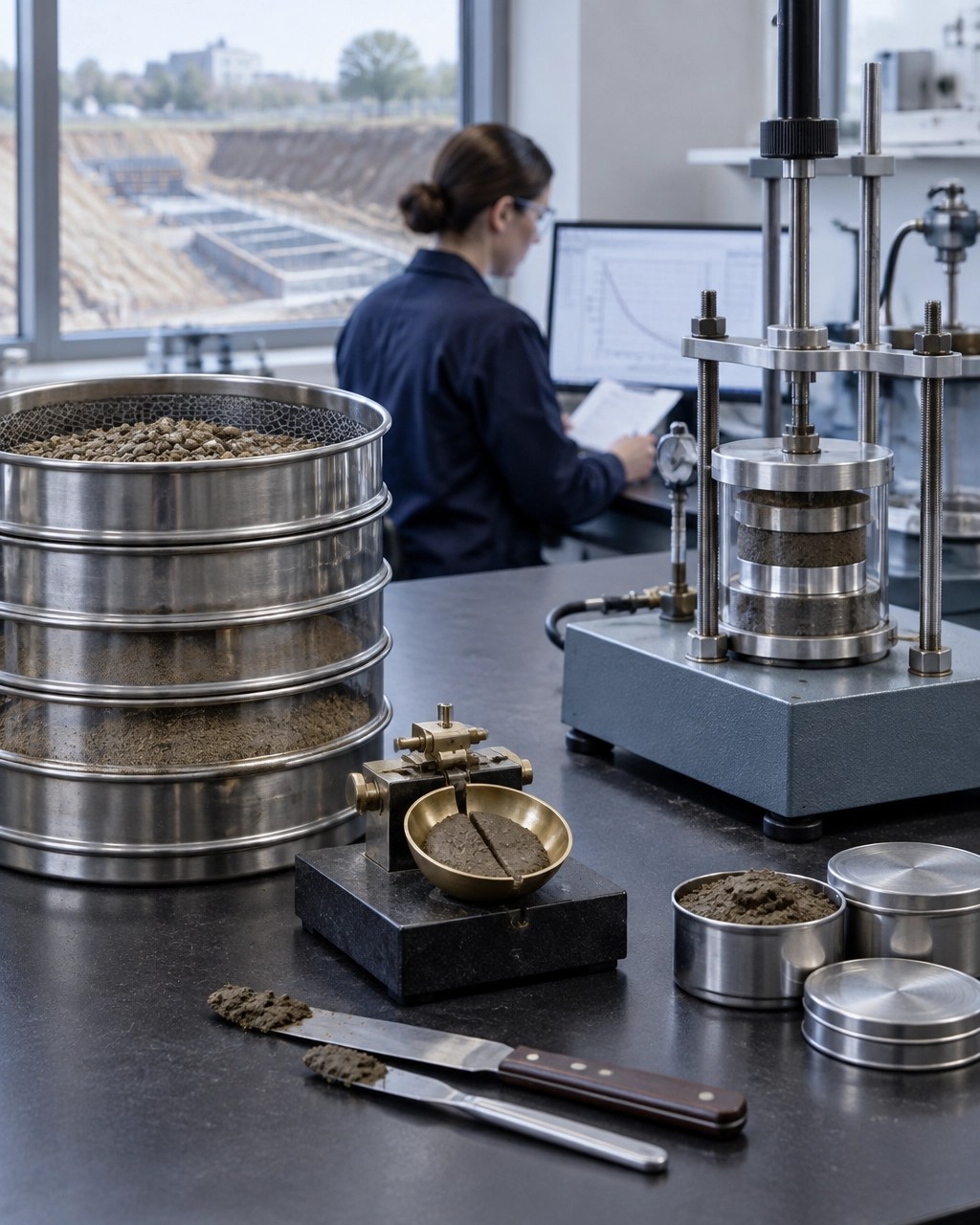
Field sampling shows what the soil looks like. Laboratory testing helps determine how it behaves.
A laboratory program should match the site conditions and the proposed structure. It should not be selected from a generic template.
Atterberg limits
Atterberg limits evaluate the plasticity and moisture-related behavior of fine-grained soils. They help classify clays and silts and indicate whether a soil may be susceptible to shrinkage, expansion, or strength changes as moisture conditions change.
This information can influence decisions about:
- Subgrade preparation
- Foundation support
- Pavement sections
- Excavation stability
- Fill reuse
- Ground improvement
Sieve analysis
Sieve analysis determines the particle-size distribution of granular soils. It helps classify sands, gravels, and mixed soils and provides information about drainage, compaction, and suitability for reuse.
Sieve results may affect:
- Structural fill specifications
- Backfill requirements
- Drainage design
- Subgrade treatment
- Earthwork quantities
- Stormwater infiltration assumptions
Consolidation testing
Consolidation testing becomes important when the site contains compressible clay, silt, organic soil, or other materials that may settle under building loads.
The test helps estimate the amount and rate of settlement. It can identify conditions that may lead to:
- Differential settlement
- Cracked slabs
- Distorted framing
- Utility misalignment
- Foundation movement
- Long-term serviceability problems
A minimal investigation may use only basic classification tests. A more defensible commercial investigation may add consolidation, shear strength, moisture-density, or other specialized testing where the subsurface profile warrants it.
The right question is not, “How can we remove laboratory testing from the proposal?” It is, “Which tests answer the foundation and construction questions that matter on this site?”
4. Engineering analysis and reporting
The report is the final deliverable, but it is not the entire investigation.
A useful geotechnical report should translate field and laboratory data into recommendations that the design and construction teams can use. Depending on the project, it may address:
- Allowable soil bearing pressures
- Estimated total and differential settlement
- Shallow foundation options
- Deep foundation alternatives
- Slab-on-grade support
- Subgrade preparation
- Excavation conditions
- Temporary or permanent shoring considerations
- Groundwater and dewatering
- Earthwork and fill placement
- Seismic site classification
- Frost protection
- Pavement subgrade conditions
- Construction observation and testing needs
Reporting costs rise when the project requires settlement calculations, foundation alternatives, slope stability analysis, seismic evaluation, support-of-excavation input, or coordination with the structural engineer.
A short report that only summarizes boring logs may satisfy a narrow administrative requirement. It may not give your design team enough information to make a sound foundation decision.
As one Envicon client stated:
“The geotechnical investigation identified soil conditions that would have caused major foundation problems if we hadn't known about them. Envicon's recommendations saved us from costly change orders.”
That is the purpose of the investigation. It is not simply to produce a document. It is to give the project team enough information to act before the work reaches the excavation.
Why subsurface uncertainty creates change order risk
Foundation redesign usually occurs when the construction team encounters conditions that the original investigation did not adequately characterize.
Common examples include:
- Weak soil below the assumed bearing elevation
- Unanticipated fill or debris
- Higher groundwater than expected
- Bedrock at inconsistent elevations
- Settlement concerns under a portion of the building
- Inadequate subgrade for slabs or pavement
- Excavation instability near adjacent properties
The consequences may include larger footings, deeper excavations, undercutting, imported structural fill, ground improvement, piles, dewatering, revised shoring, or structural redesign.
These changes affect more than the foundation budget. They can interrupt the contractor’s sequence, delay concrete placement, create disputes over responsibility, and affect lender or investor confidence.
A targeted geotechnical program reduces that exposure. It does not eliminate every unknown. No investigation can do that. It gives the team a defensible understanding of the conditions most likely to affect cost and schedule.
A practical NJ budgeting checklist
Before comparing geotechnical proposals, ask whether each scope clearly identifies:
- Number and depth of borings
- Standard Penetration Testing or other field methods
- Expected groundwater observations
- Bedrock or refusal criteria
- Laboratory tests and number of samples
- Atterberg limits and sieve analysis where appropriate
- Consolidation testing for compressible strata
- Foundation recommendations
- Settlement analysis
- Excavation and dewatering considerations
- Report delivery date
- Construction-phase support
- Exclusions, permits, utility mark-outs, and restoration
Avoid comparing proposals only by the bottom-line fee. Compare what each engineer is actually doing to reduce risk.
A national consultant may offer a lower initial scope that produces a generic report and leaves the design team to resolve the gaps. Envicon works directly with owners, architects, structural engineers, contractors, and regulators. Our team stays connected from field exploration through design and construction support.
That means you get clear documentation, direct access to the engineer responsible for the work, and recommendations tied to the actual conditions at your site.
Geotechnical investigation costs NJ: the takeaway
For New Jersey projects in 2026, geotechnical investigation costs commonly range from $3,000 for a small, straightforward scope to $50,000 or more for a large or difficult commercial site.
The price is driven by:
- The number and depth of borings
- The depth to bedrock or competent bearing material
- Soil strata complexity
- Laboratory testing requirements
- Engineering analysis and reporting
- Site access, groundwater, permitting, and construction constraints
The least expensive investigation is not always the most economical choice. A well-scoped program can prevent foundation redesign, construction delays, and expensive change orders before they begin.
If your project is in Jersey City, Newark, Hoboken, or elsewhere in New Jersey, start with the subsurface data. Build the design around what the site can support.
Get a site-specific geotechnical cost range
Use Envicon’s proprietary cost estimator to develop an initial project range. Then request a free consultation so our team can review your site, schedule, and anticipated foundation scope.
You can also view our complete list of services for integrated civil, geotechnical, environmental, and construction support across New Jersey.
Good engineering does more than describe the ground. It gives your project a clear path forward.