If you are a major property owner or developer in New York, the clock isn’t just ticking: it’s racing. As of today, June 29, 2026, you are exactly 64 days away from a critical regulatory deadline that many in the industry are still scrambling to meet.
Under 6 NYCRR Part 253, New York’s mandatory Greenhouse Gas (GHG) reporting regulation, applicable entities must submit their Emissions Monitoring and Measurement Plan (EMMP) by September 1, 2026. This isn't just a "check-the-box" administrative task; it is the foundational requirement for the first mandatory data submission due in June 2027.
At Envicon Group, we don’t sell defensive reports that sit on a shelf. We sell cleared paths to compliance. If your current consultant hasn't walked you through your EMMP yet, your project: and your bottom line: are at risk.
What is Part 253 and Who is in the Crosshairs?
New York’s Part 253 is the state’s aggressive move to quantify carbon footprints across the most significant sectors of the economy. It applies to "reporting entities" that meet specific emission thresholds or operate in designated high-impact categories.
Specifically, you are likely subject to these requirements if you fall into any of the following:
- Large Facilities: Any facility emitting ≥10,000 metric tons of CO2e per year.
- Fuel Suppliers: Those delivering fossil fuels or fuel products into New York State.
- Electric Power Entities: Importers and exporters of electricity.
- Waste Management: Specified waste transporters and operators of certain anaerobic digesters.
The thresholds are lower than many developers expect. A large-scale residential or mixed-use development with significant onsite energy generation or central boiler plants can quickly cross the 10,000-metric-ton threshold.
The September 1 Deadline: The EMMP Explained
The Emissions Monitoring and Measurement Plan (EMMP) is your roadmap for how you will track, calculate, and report your emissions. NYSDEC requires this plan to be submitted by September 1, 2026, to ensure that by the time you start your 2027 reporting, your data is bulletproof.
A compliant EMMP must include:
- Detailed Measurement Methodologies: How are you tracking fuel use? Are you using direct measurement, or mass-balance calculations?
- QA/QC Procedures: What is your internal process for catching data anomalies? How often are your meters calibrated?
- Calculation Framework: NY Part 253 specifically requires reporting in CO2e using 20-year Global Warming Potentials (GWP20), a more stringent standard than many federal programs.
- Data Management Systems: Where is this data living? If your answer is "a series of disparate spreadsheets," you’re already behind.
The Business Impact: Beyond Simple Compliance
In the world of high-stakes development, a missed regulatory deadline is never just a fine. It’s a cascading series of delays.
Every week your compliance is in question, you incur carrying costs. Lenders are increasingly flagging GHG compliance as a prerequisite for funding and refinancing. If your Phase I or environmental due diligence doesn't account for Part 253 reporting obligations, you are flying blind into a potential "stop-work" scenario or a rejected lender submittal.
As we often say at Envicon: Every week of delay costs you carrying costs, lender patience, and market timing. A rejected EMMP in September means re-mobilization of staff and re-billing, which is exactly the kind of big-firm bloat we help our clients avoid.
The Problem with "Big-Box" Consulting
If you’ve hired a national firm for your Environmental Assessments, you know the drill: you met a senior partner at the pitch, and then you were handed off to a junior staffer who hasn't stepped foot on your site in six months.
When it comes to GHG reporting, these firms tend to produce 300-page reports written defensively to protect their own liability, rather than to move your project forward. They hand you a document and leave you to figure out what it means for your operations.
At Envicon, we take a different approach. We are field-first and regulator-facing. We sit at the table with NYSDEC and NYC OER reviewers because we know them by name. We understand how they interpret Section 2.20 requirements, and we build your EMMP to satisfy those reviewers on the first pass.

The Envicon Edge: Real-Time Data Transparency
Compliance shouldn't be a black box. Most consultants deliver a static PDF report that is outdated by the time it hits your inbox.
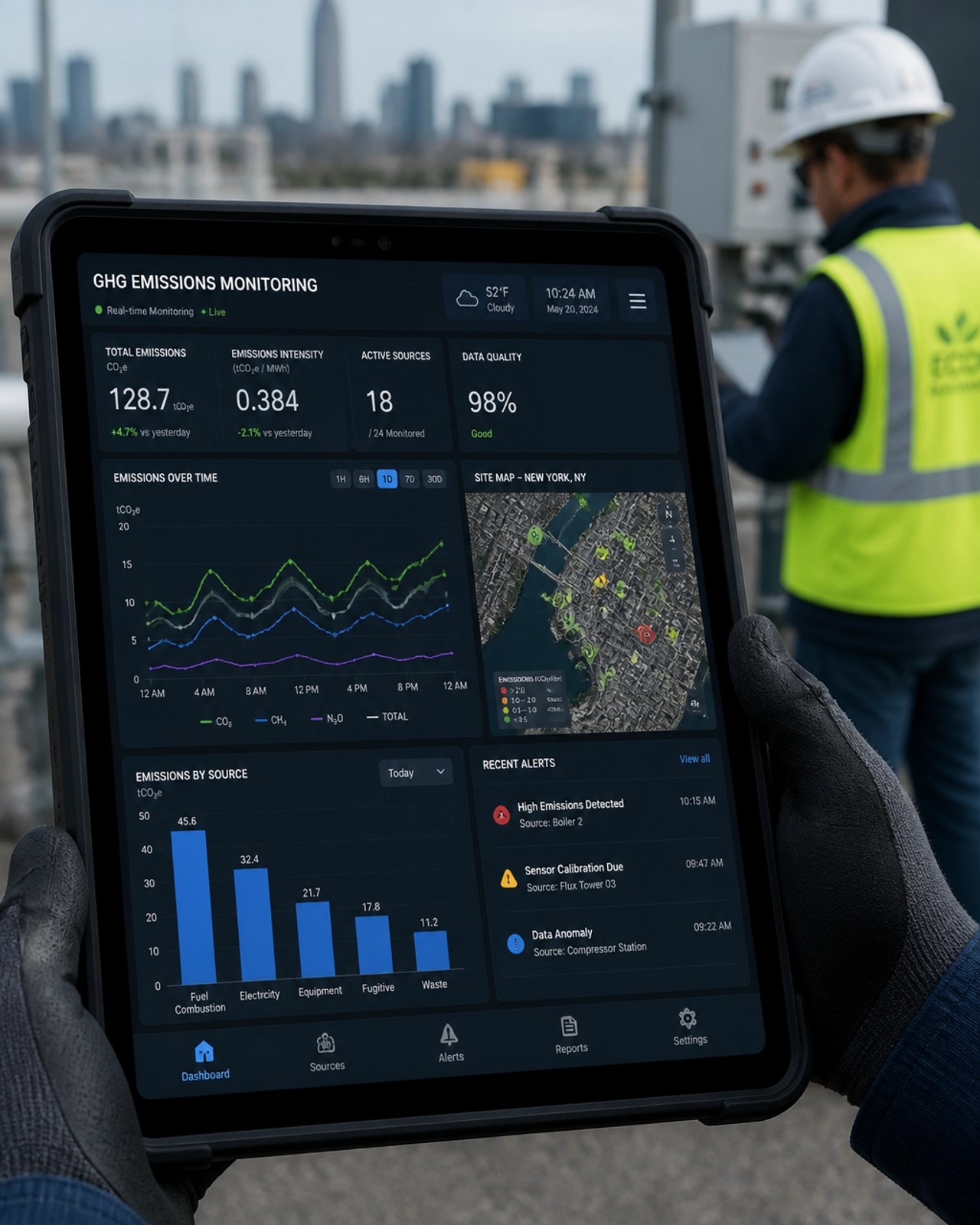
Through our Digital Solutions, Envicon provides real-time project reporting dashboards. For GHG reporting, this means you can see your data collection status, emissions trends, and compliance milestones in real-time.
Instead of wondering if your team is ready for the June 2027 reporting deadline, you can log in and see the verified data points as they are collected. This transparency changes the dynamic with your stakeholders: whether they are investors, lenders, or regulators.
"Collaboration is not a buzzword: it's how we work. We don't just sell reports; we sell the truth and a clear path to the next stage of your project." : Jason Pancoast, CEO, Envicon Group
Action Plan: What You Need to Do Right Now
With the September 1st deadline approaching, there is no time for "synergy" or corporate fluff. You need actionable outcomes.
- Confirm Applicability: Immediately assess your facility's projected emissions for the 2026 calendar year. Use our Risk Screener to get a baseline.
- Audit Your Data Systems: Ensure you have the hardware (meters, sensors) and software in place to start collecting 2026 data accurately.
- Draft the EMMP: Your plan must be finalized and ready for submission by late August to avoid last-minute filing errors.
- Prepare for June 2027: Remember, the EMMP is the plan. The action starts in January 2026, with the first formal report due June 1, 2027.
Summary: Move Forward with Precision
The new GHG reporting landscape in New York is complex, but it doesn't have to be a project-killer. By focusing on precision, urgency, and direct agency coordination, you can turn a regulatory hurdle into a managed business process.
Don't let your project sit in someone’s queue at a national firm while your carrying costs mount. Hire a team that lives and breathes the NYC and NJ regulatory environment every day.

Ready to secure your project's future?
Don't wait until August to find out your monitoring plan isn't compliant. Get ahead of the NY Part 253 requirements today.
- Determine your project's exposure: Use our Risk Screener tool
- Stay updated on NY/NJ regulations: Read more on the Envicon Blog
- Explore our full range of services: Visit our website