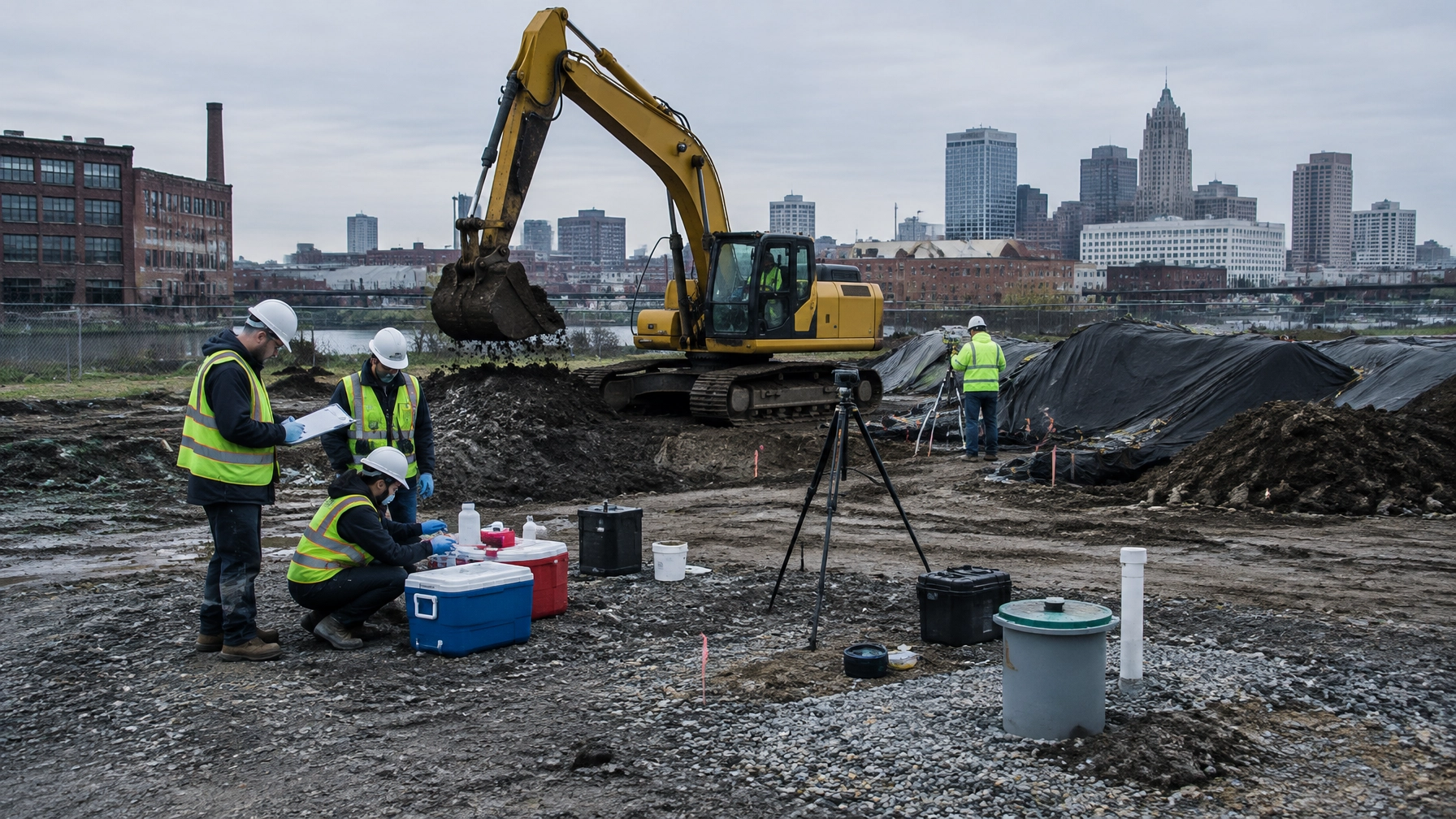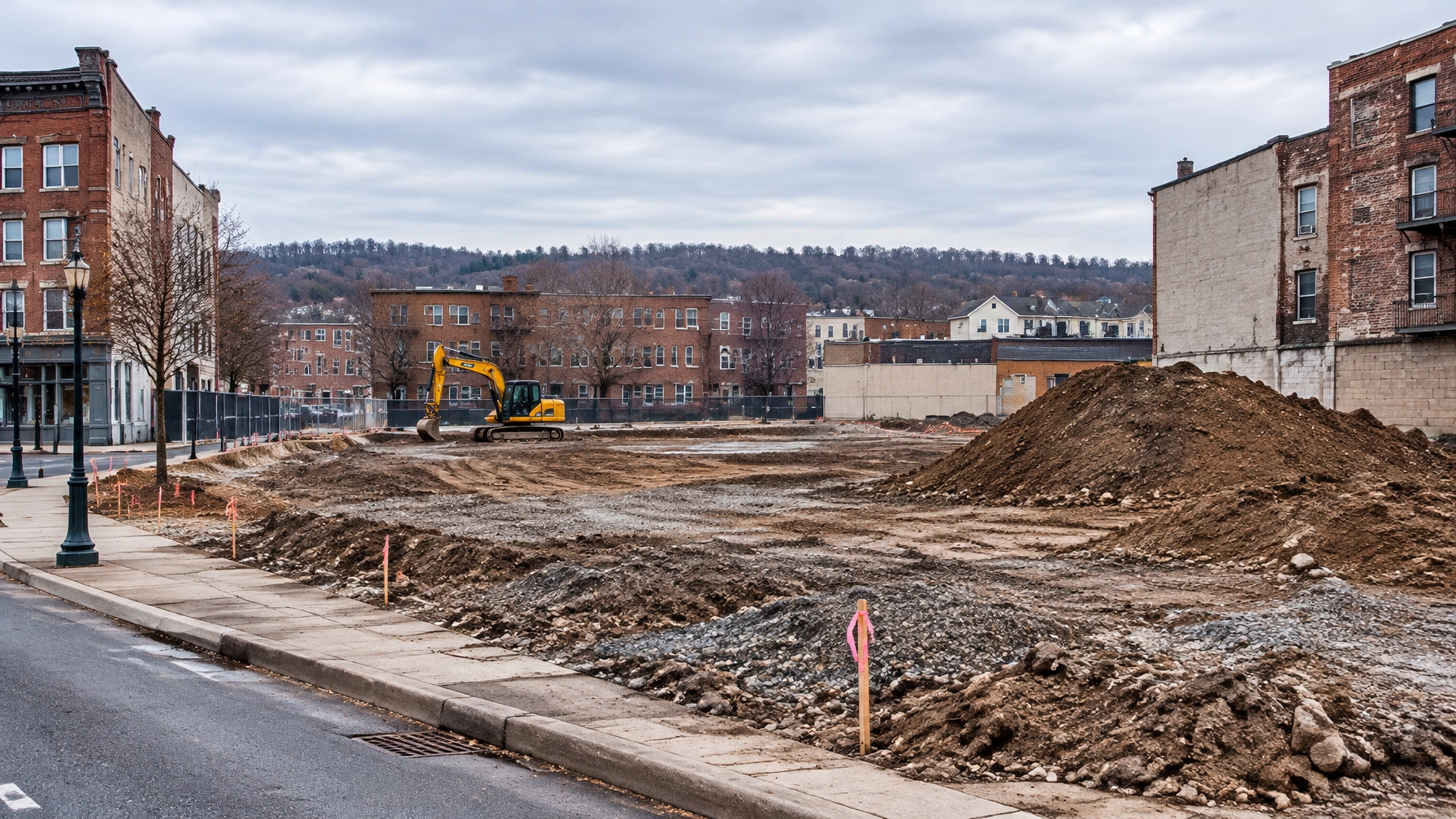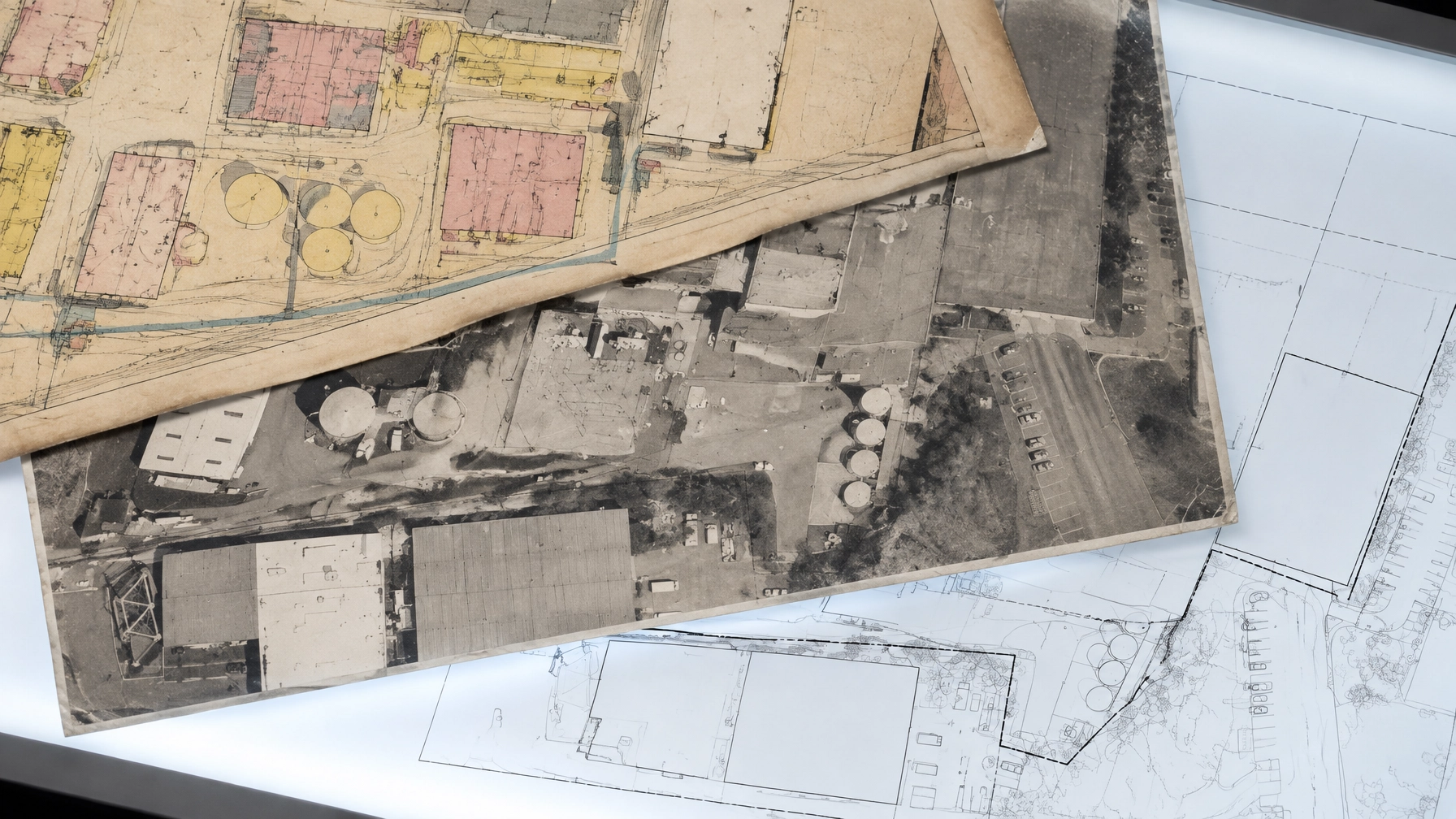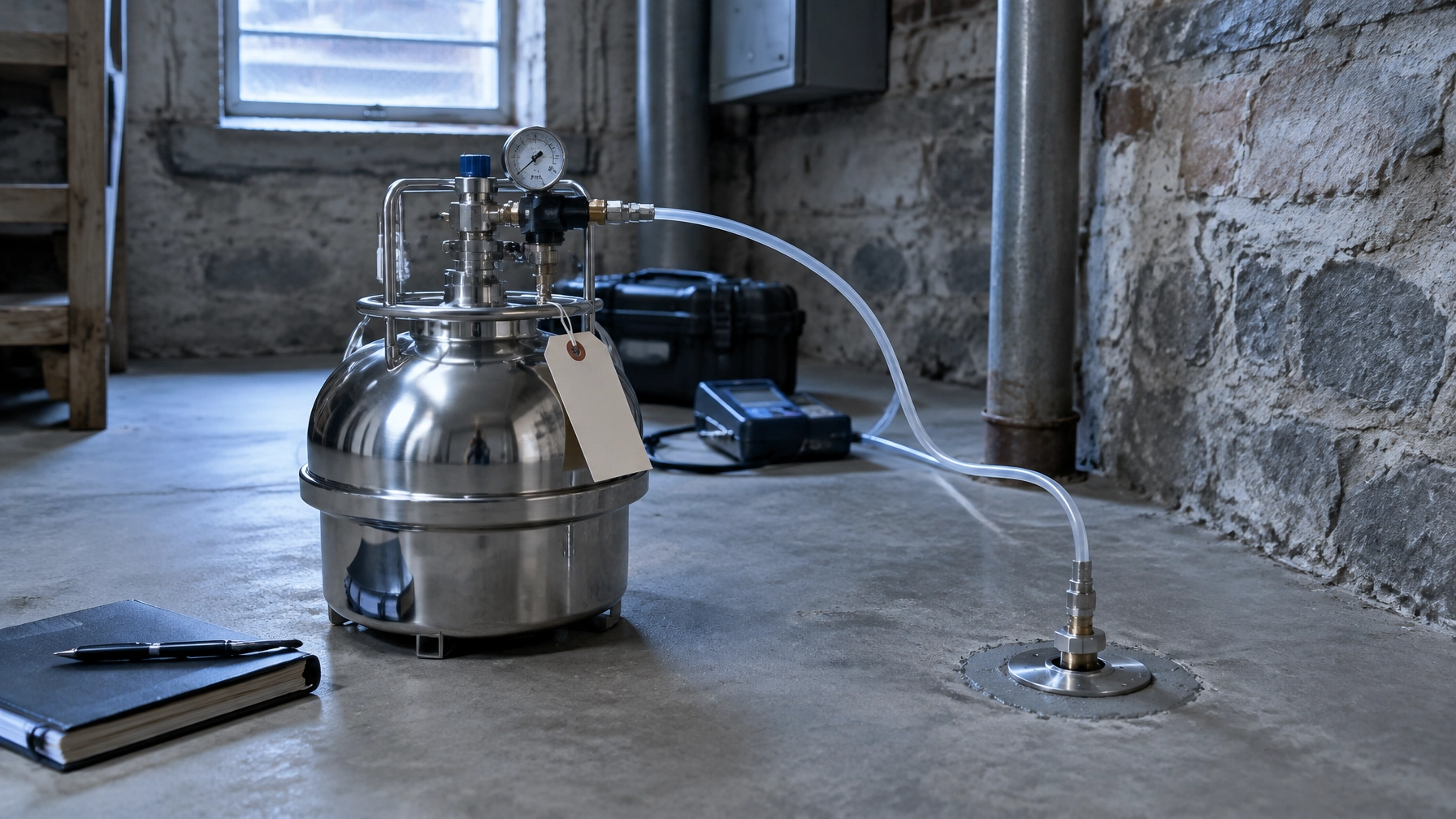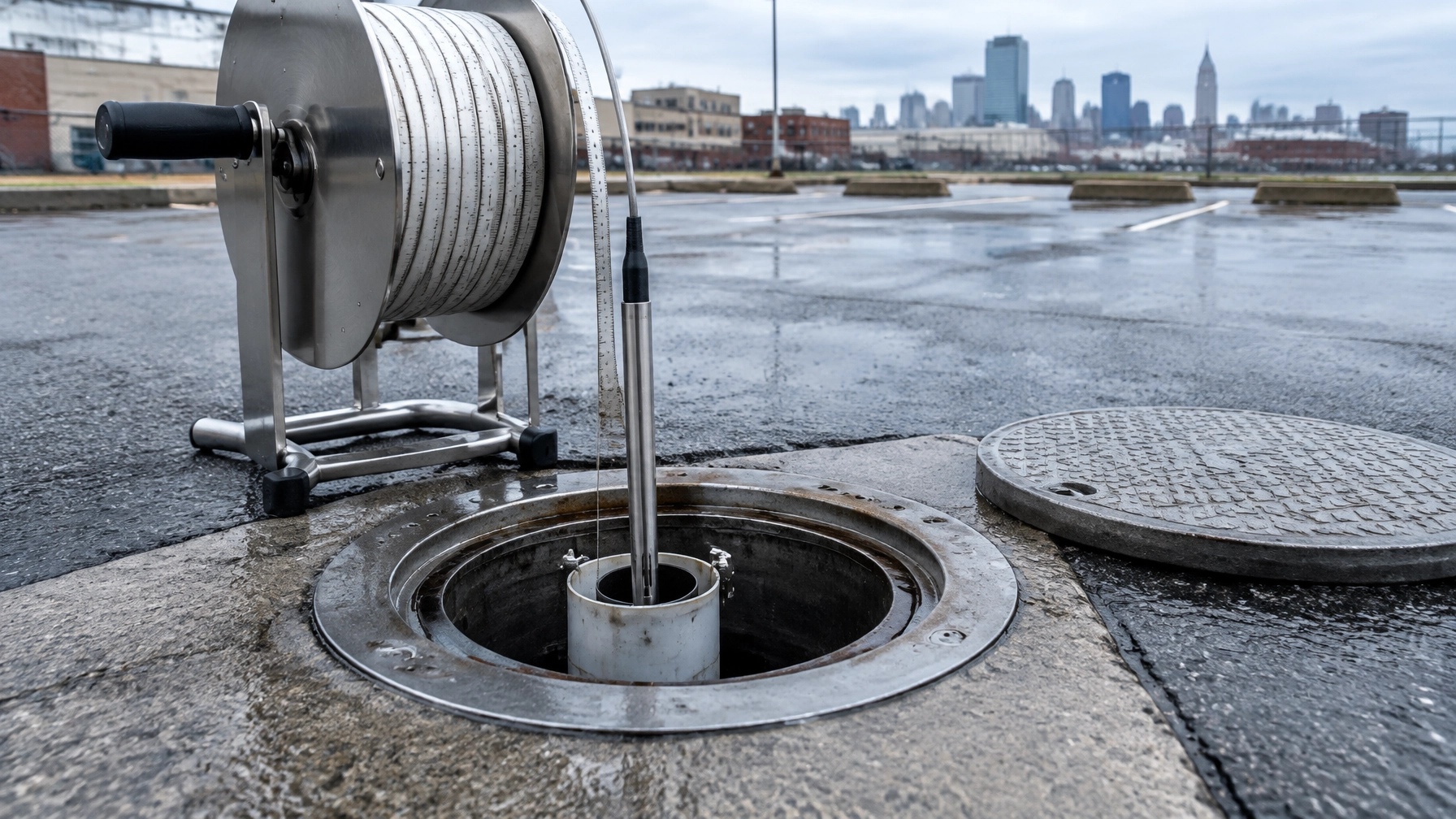
Before a Newark site gets graded, paved, or excavated, every groundwater monitoring well needs a decision: keep it for a defined purpose, transfer it through the proper process, or close it properly. A well hidden under asphalt is not out of service just because nobody can see it.
New Jersey’s well decommissioning rules, N.J.A.C. 7:9D, set requirements for who may close a well, how certain wells must be sealed, and what records the driller must submit. The NJDEP Response Action Outcome (RAO) guidance also ties well closeout to remediation milestones.
For a Phase II environmental site assessment in NJ, that means well closure belongs in the investigation and construction plan, not on a last-minute punch list.
Why an abandoned well matters before excavation
A monitoring well creates a connection to the subsurface. If it is no longer maintained or used, it may meet NJDEP’s definition of an abandoned well. Left open, damaged, or improperly sealed, it can allow water to move vertically between zones that natural soil or rock layers would otherwise separate.
That matters where a well crosses a confining layer, is screened across more than one water-bearing unit, or has an unsealed space between casing and borehole. In those conditions, a poorly sealed well can become a preferential pathway for water and potentially contaminants.
The concern is not theoretical. NJDEP’s rules require decommissioning that protects subsurface and percolating waters. They also give the Department authority to order closure in specified circumstances. The owner is responsible for ensuring a well is decommissioned when required. See N.J.A.C. 7:9D-3.1.
First locate the well. Then decide whether to close it.
On paved Newark properties, the hardest step can be finding the well. A flush-mounted vault may be buried under resurfacing, concealed by stored materials, or missing its marker. Construction drawings and old sampling logs may show approximate locations, but they don’t always match current site conditions.
Start by reconciling the well inventory against available permits, well records, site plans, prior reports, and field records. Then walk the site with the project team and surveyor. Where needed, use a suitable locator and expose the vault carefully. Verify the location and elevation against the grading and excavation plans before mobilizing the well driller.
If a well cannot be found, don’t treat it as closed. NJDEP’s rule for lost, damaged, or destroyed wells calls for documenting efforts to locate or assess the well and contacting the Department as required. The NJDEP well-permitting program provides program information and well-search procedures.

NJDEP requirements: licensed driller, proper seal, complete record
Under N.J.A.C. 7:9D, well decommissioning must be performed by, or under the on-site supervision of, a New Jersey well driller with the proper license class. For wells larger than two inches in diameter, the driller must obtain the applicable well records or follow NJDEP’s well-search process to confirm construction details before closure.
Some conditions require a written, NJDEP-approved decommissioning plan before work begins. These include wells with no available record, hazardous-waste or radiological contamination, multiple casings, certain wells screened in more than one aquifer, wells that cannot be cleared of obstructions, or discrepancies between field measurements and the well record. If the crew finds unexpected construction or an obstruction, stop and resolve the method with the Department before proceeding where approval is required.
For standard closures, the rule requires clearing the well of pumps, pipes, debris, and other obstructions. The selected method and materials depend on the well’s construction and site conditions. In general, approved sealing material is placed from the bottom upward. If a known unsealed annular space exists, the casing must be perforated, ripped, or removed so the space can be sealed. The driller must return within the required 24-to-72-hour period to fill settlement. These are not details to replace with a generic “fill and cap” scope. The current rule and any approved site-specific plan control.

The licensed driller must submit the well decommissioning report through NJDEP’s electronic system within 90 days after completing the work. The report includes information such as the decommissioning date, well and permit identifiers when available, location, construction details, closure method, materials used, and driller and company information. The LSRP should verify that the report was submitted and retain supporting project records.
A practical closeout file should include:
- The site well inventory and current location plan
- Available permits, well records, and approved decommissioning plan, if required
- Field notes, photographs, and measurements documenting each closure
- The driller’s license and decommissioning report
- Sealing material and quantity records
- Proof of NJDEP report submission
- Documentation of any well that remains in service, is transferred, or could not be located
Close the well, retain it, or transfer it?
Not every well should be abandoned just because construction is approaching. The LSRP should identify the well’s role in the remediation and decide whether it remains necessary.
Close the well when it is no longer needed for site investigation or remediation. NJDEP’s RAO guidance says remediation-related monitoring wells that are no longer in use must be properly decommissioned before the applicable RAO is issued.
Retain the well under a Remedial Action Permit (RAP) when it is required for long-term groundwater monitoring. The RAO guidance allows wells needed for RAP monitoring to remain open, but they must remain part of the permit’s monitoring program. Close them before termination of the applicable RAP, following the required procedures.
Transfer or redesignate the well only when it will serve a separate investigation or remediation purpose. This is not simply a change to the site plan. NJDEP guidance describes a formal process that includes an access agreement and a well permit application for an existing constructed well. Coordinate the transfer with the LSRPs and the Department before relying on the well for the other case.
The NJDEP RAO guidance explains the well decommissioning and transfer notices. Its key distinction is straightforward: close wells no longer needed for remediation; identify and maintain wells that will remain under a RAP or approved transfer.
Put closure on the remediation and construction schedule
Well closure affects more than the final report. The LSRP may need monitoring data before approving closure. The driller may need records or a plan approval. A paved-over well may need surveying, traffic control, or careful exposure. Excavation, grading, and paving may then remove access to wells the team still needs.
Build well decisions into the project schedule:
- Inventory and locate wells during planning. Compare field locations with the latest civil and survey plans.
- Confirm which wells must remain. Have the LSRP document whether each well supports investigation, RAP monitoring, or a valid transfer.
- Resolve permits and plan approvals early. Identify wells that may require a written decommissioning plan before the driller mobilizes.
- Coordinate closure with site work. Sequence closures before grading or excavation makes access difficult, and preserve wells that remain part of monitoring.
- Close the documentation loop. Track the 90-day reporting deadline and give the LSRP the report and submission confirmation for the remediation file.
Where well vaults, pavement, or drainage features must be disturbed, coordinate erosion controls and permit obligations with the site contractor. A SWPPP in Newark may be relevant when the broader construction activity disturbs soil or affects stormwater controls.

A 2026 investigation update to keep in view
A separate NJDEP update may affect groundwater investigation scope. In its June 24, 2026 notice, NJDEP summarized adopted changes to remediation standards and sampling requirements. The notice says GenX chemicals, PFNA, PFOS, PFOA, and other listed chemicals were added to the analytes required in all media when contaminants in an area of concern are unknown or not well documented.
That notice does not replace N.J.A.C. 7:9D’s well-abandonment requirements. It is a separate consideration when planning investigation and sampling. Ask the LSRP to confirm whether the revised requirements apply to your project before finalizing sampling and closeout schedules.
Keep the closure decision connected to the site
For developers and owners, the goal is not simply to remove a well from a construction area. It is to protect groundwater, preserve required monitoring, and avoid a preventable delay when the excavator arrives.
Envicon coordinates Phase II investigation, NJ LSRP services, well location, licensed driller work, and construction sequencing as one project path. That local coordination matters in Newark, where buried infrastructure and past industrial use can complicate field access. We also support projects in Monmouth County and Queens, NY.
Takeaway: Identify each well, document its purpose, and resolve closure or continued use before grading and excavation begin. A well that remains in the ground needs a clear regulatory and project reason to remain there.