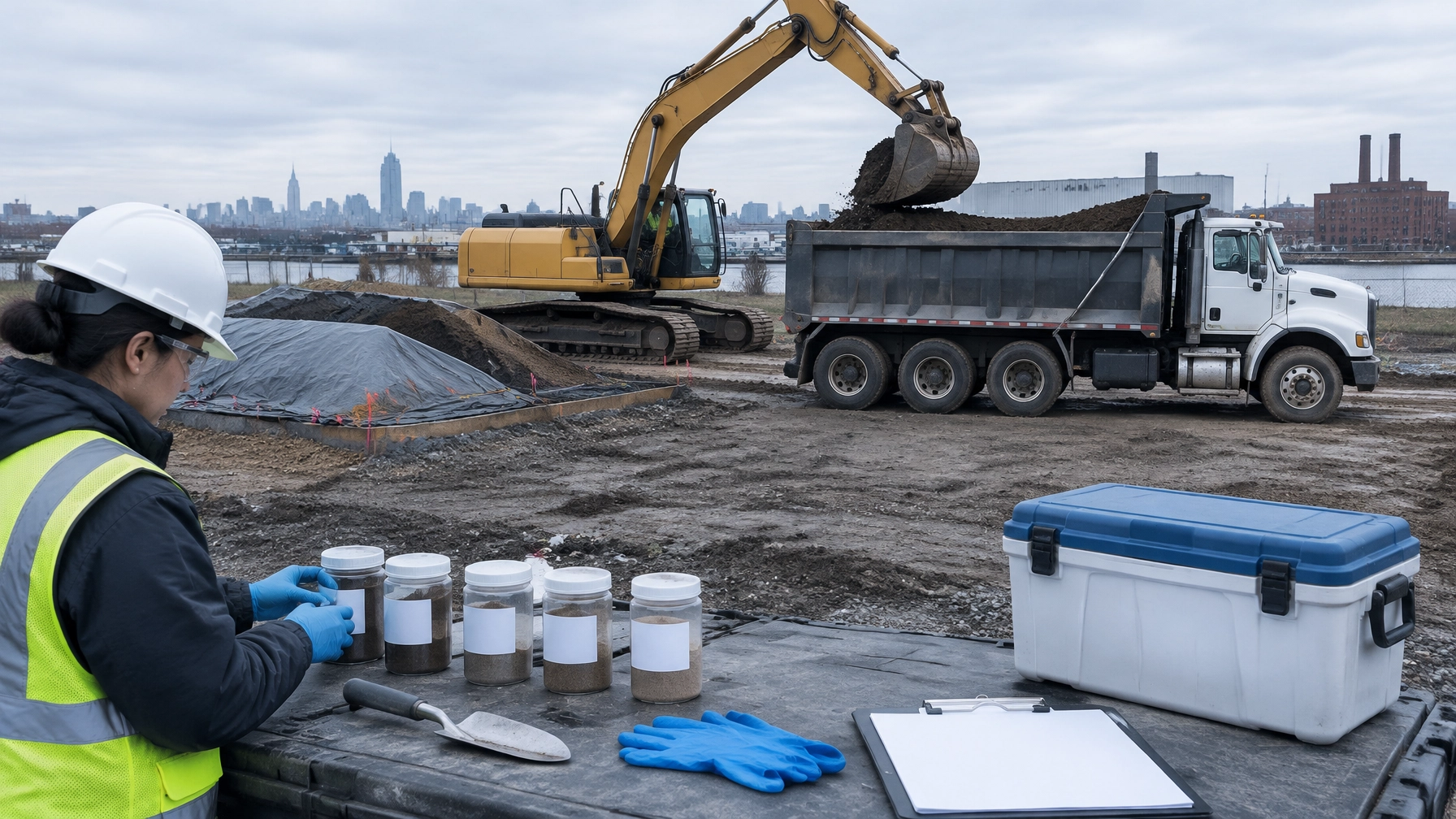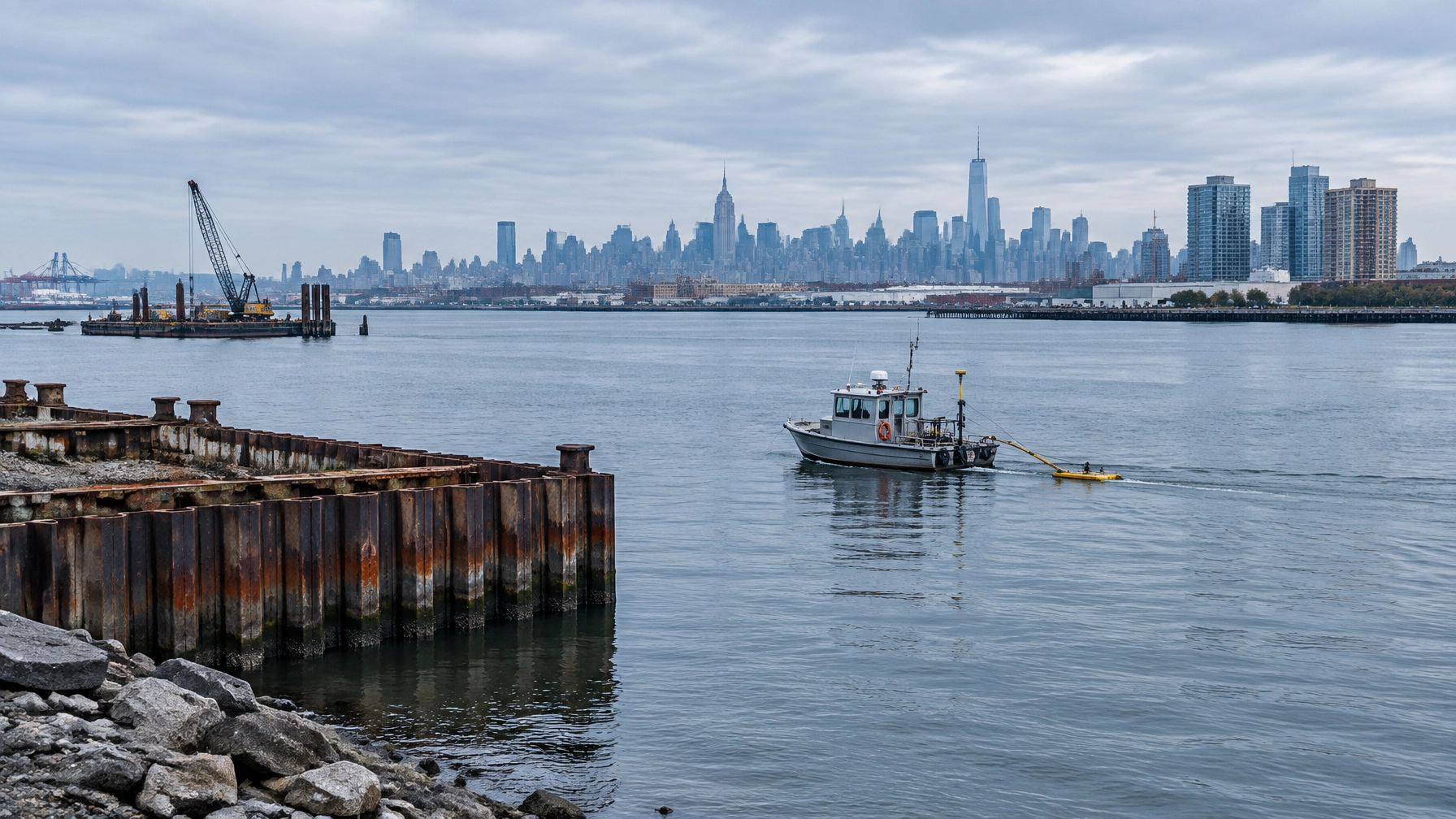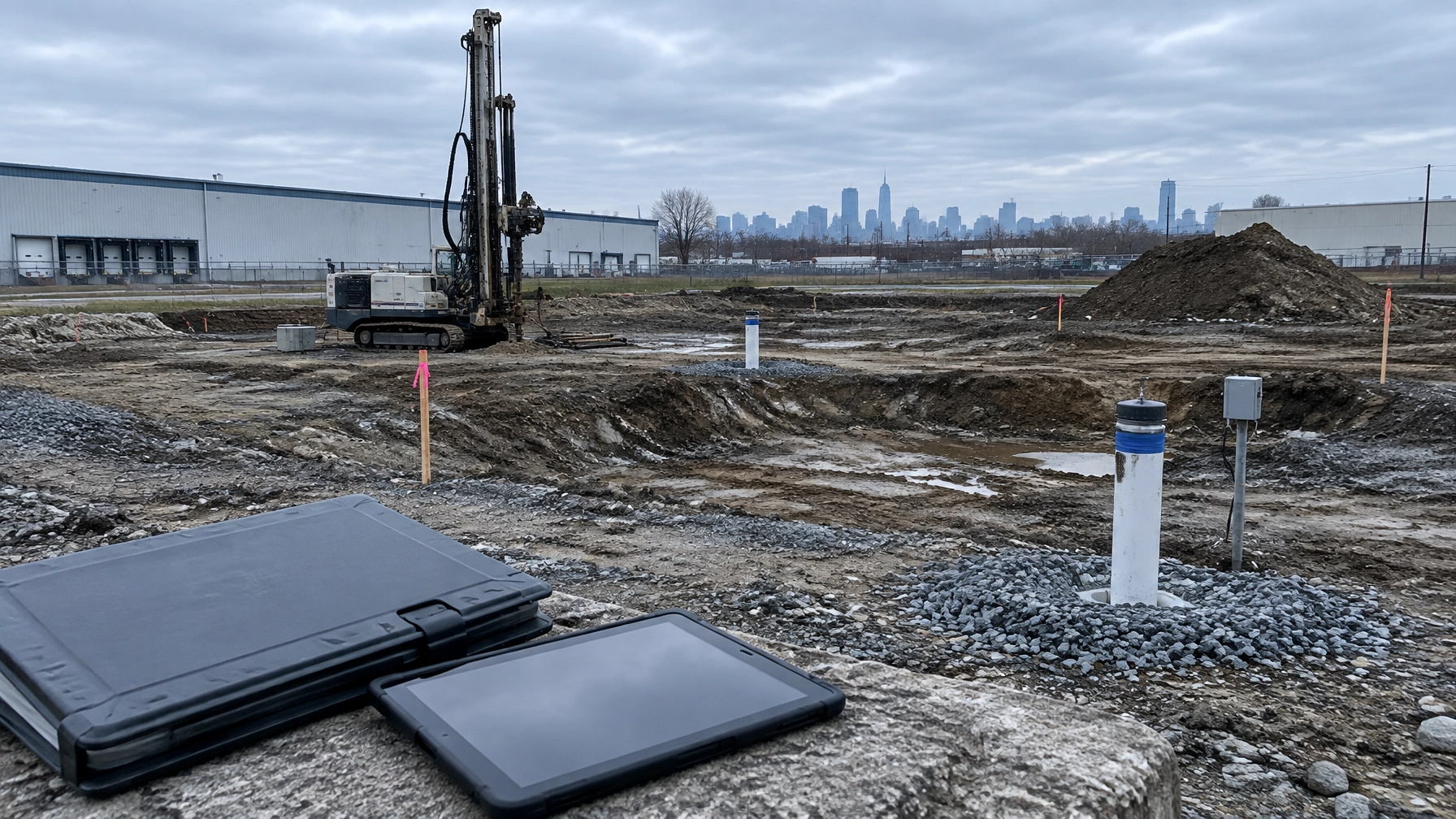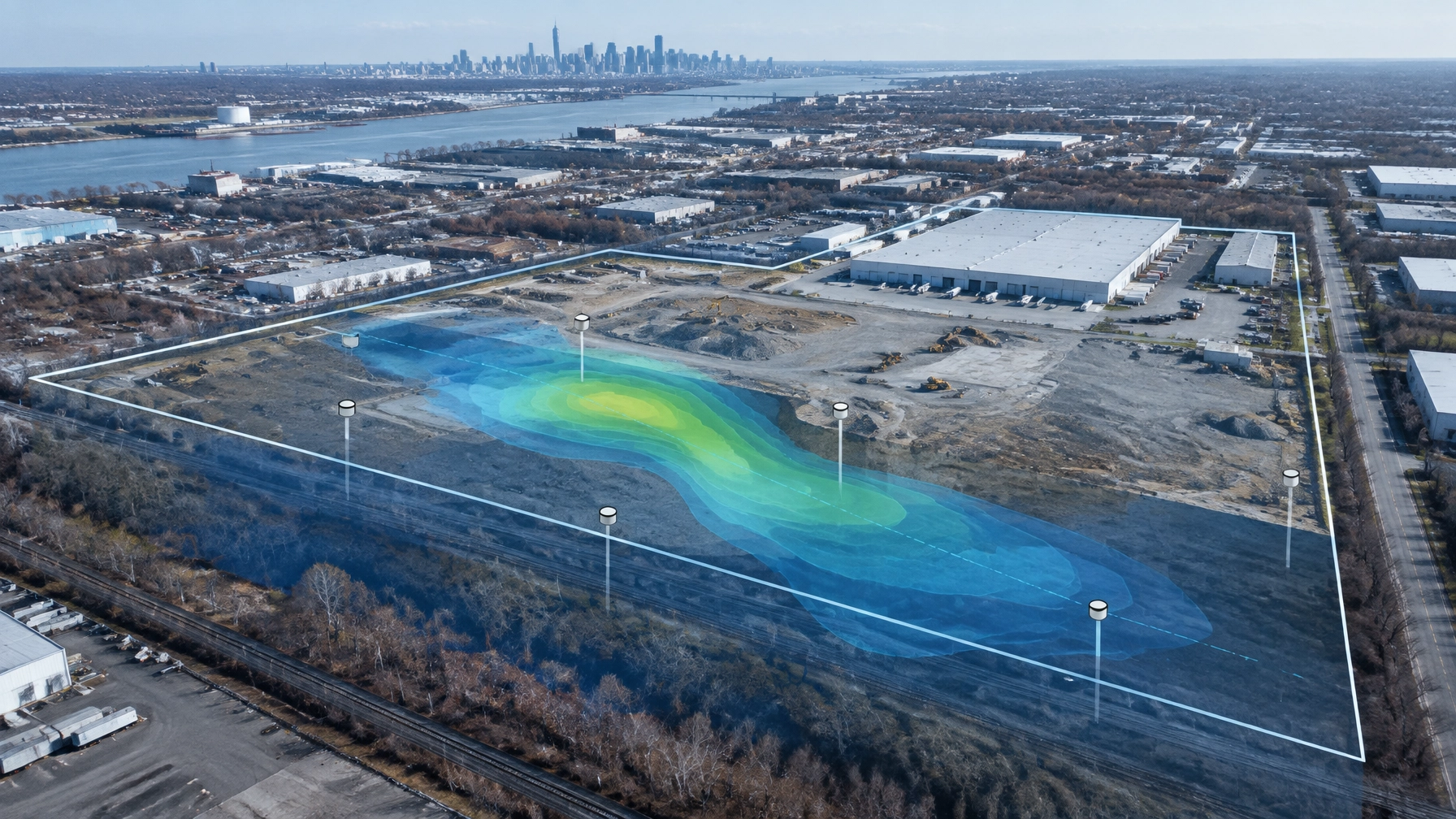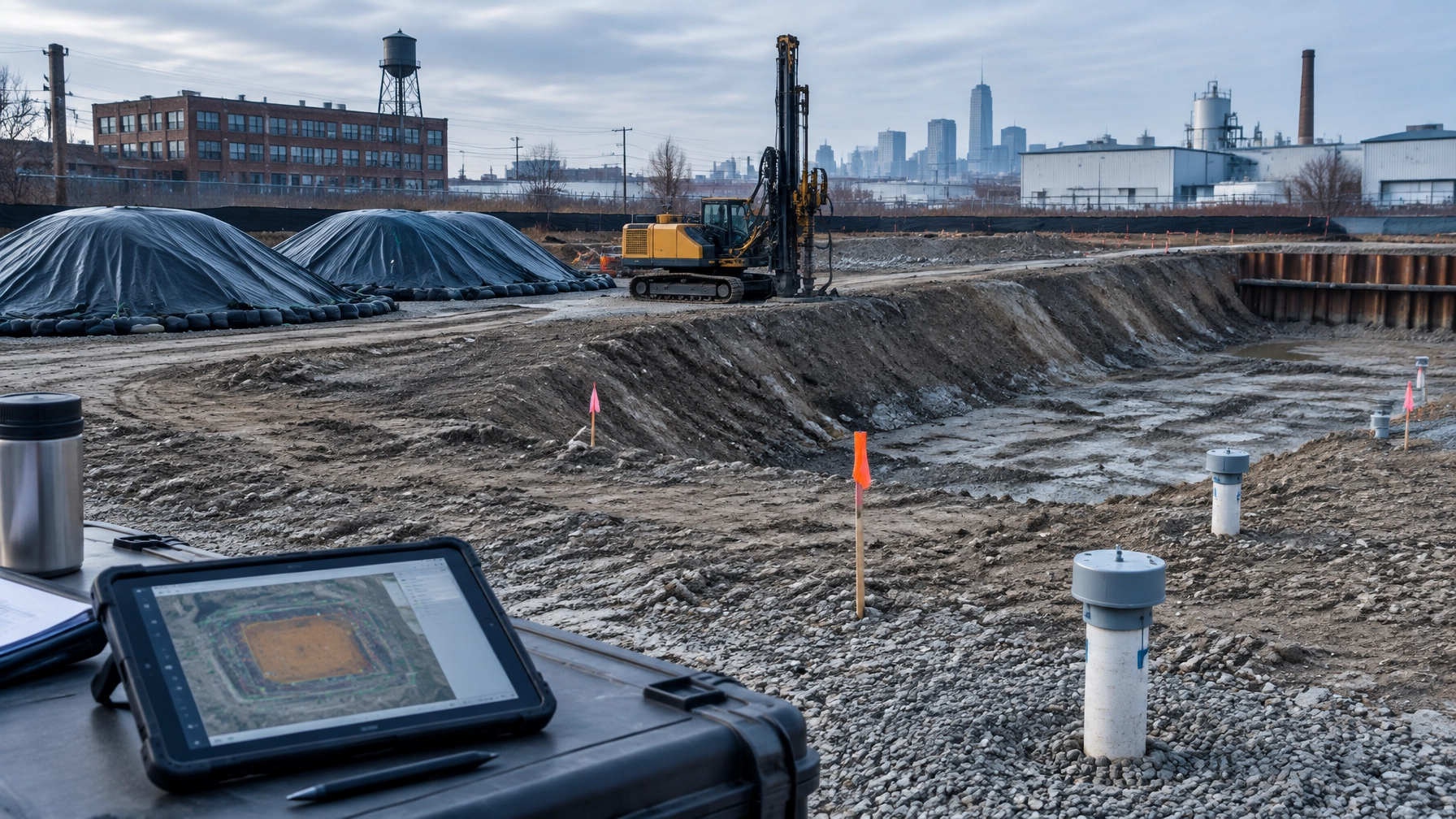
If you are developing in Jersey City, Newark, Paterson, or any of New Jersey’s legacy urban centers, you aren’t just building on soil: you are building on history. For over a century, New Jersey’s shoreline and wetlands were expanded using "historic fill": a heterogeneous mix of ash, cinders, brick, block, and dredging spoils.
While this material once literally built the state, the New Jersey Department of Environmental Protection (NJDEP) views it as a "discharge." Under N.J.A.C. 7:26E (the "Tech Rules"), this means it must be remediated. However, for a developer, "remediation" doesn't necessarily mean "removal."
Navigating NJDEP historic fill material remediation requirements is a balancing act between regulatory compliance and project pro-forma. If handled by a firm that treats your project like a cookie-cutter template, you’ll end up with a bloated sampling budget. If handled by a field-first firm like Envicon, you get a cleared path to a Response Action Outcome (RAO).
What Qualifies as Historic Fill?
The NJDEP defines historic fill as non-indigenous material, generally deposited before October 1976, used to raise the topographic elevation of a site. It typically contains large quantities of ash, coal, cinders, and construction debris.
Crucially, historic fill is NOT process waste. If your "fill" contains chromate chemical production waste, ore processing slag, or hazardous industrial byproducts, the NJDEP reclassifies it as a separate Area of Concern (AOC). These do not get the same "presumptive remedy" benefits as historic fill and can trigger significantly more expensive excavation requirements. This is why the initial Preliminary Assessment and Site Investigation is the most critical phase of your project.
The Strategy: To Sample or to Assume?
When a Site Investigation (SI) confirms the presence of historic fill, developers face a strategic fork in the road under N.J.A.C. 7:26E-3.12.
1. The "Assume Contamination" Path (The Pro Move)
NJDEP rules allow you to bypass expensive analytical characterization of the fill itself. You can simply assume the material exceeds Residential Direct Contact Soil Remediation Standards (RDCSRS) and that groundwater is impacted.
- Why do this? It saves thousands in lab fees and weeks of schedule. If you know the fill is staying on-site under a cap, why pay to prove it’s dirty? You move straight to delineating the extent of the fill rather than its chemistry.
- The Catch: You must still investigate any specific AOCs (like former USTs or floor drains) within the fill footprint independently.
2. The "Sample and Evaluate" Path
If you believe your fill might actually meet residential standards: perhaps it’s mostly clean silty sand: you can sample it.
- The Risk: If you sample and find even one exceedance of Polycyclic Aromatic Hydrocarbons (PAHs) or Lead (extremely common in NJ fill), you are back to square one, but with a lighter wallet.
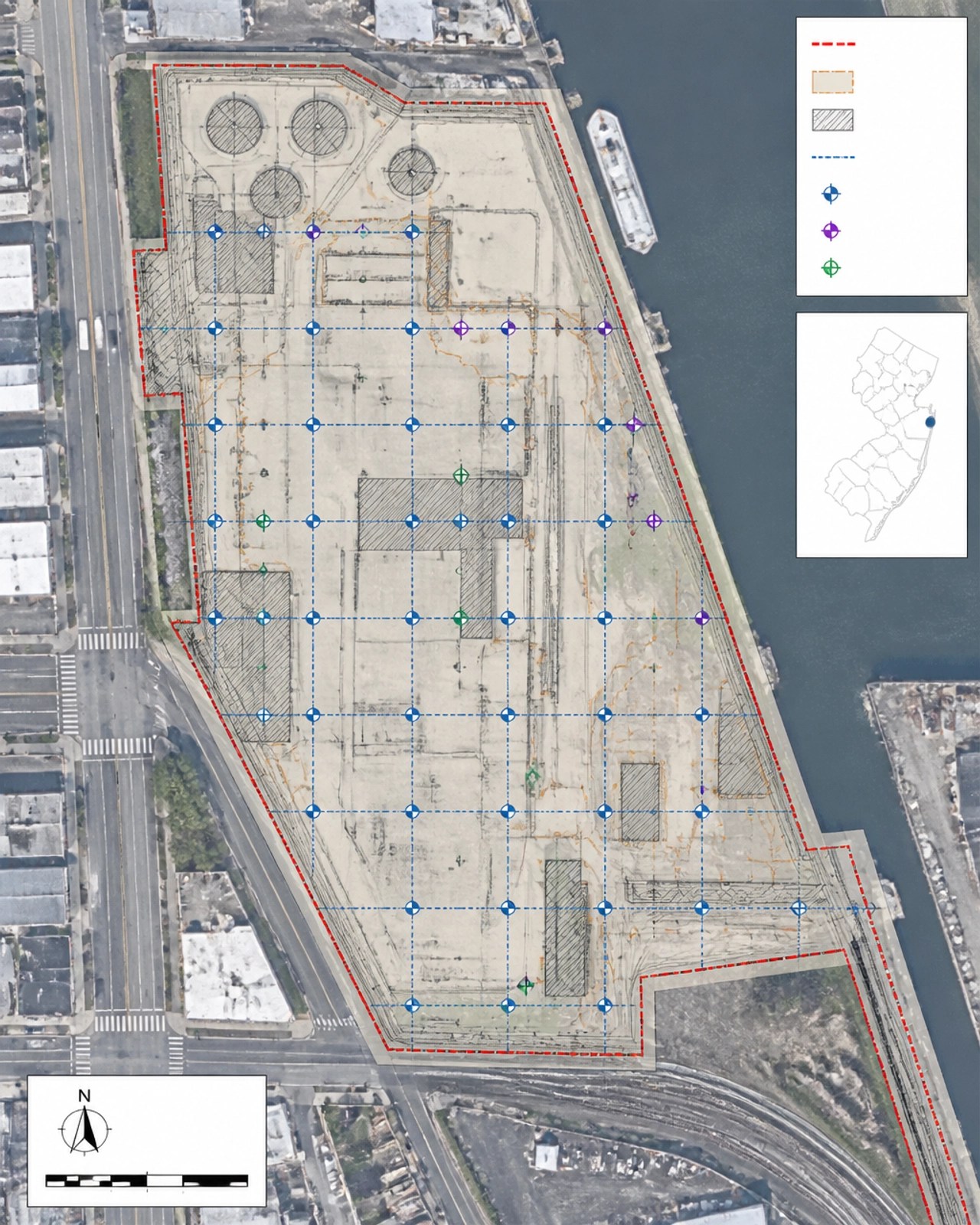
The Presumptive Remedy: Engineering and Institutional Controls
New Jersey law (specifically the Brownfield Act) provides a "rebuttable presumption" that you do not have to remove historic fill. Instead, the standard remediation is to leave it in place and "manage" it. This involves a three-pronged approach:
1. Engineering Controls (The Cap)
You must prevent humans from touching the contaminated fill. In an urban redevelopment, your project is often its own remedy.
- Building Slabs: The footprint of your new building serves as a perfect cap.
- Pavement: Asphalt or concrete parking lots and sidewalks are approved engineering controls.
- Clean Fill/Landscaping: In "green" areas, NJDEP typically requires 12 to 24 inches of certified clean fill over an orange poly-marker "warning barrier" to prevent future utility workers from accidentally digging into the historic fill.
2. Institutional Controls (The Deed Notice)
Since you are leaving contamination on-site, the public must be notified. A Deed Notice is recorded with the County Clerk, describing the location of the fill and the requirements to maintain the cap. This stays with the property title forever (or until the fill is removed).
3. Ground Water Classification Exception Area (CEA)
Historic fill almost always impacts groundwater, usually with metals or PAHs. Instead of active pumping and treating, NJDEP allows for a CEA. This is a "paper" restriction that designates the groundwater under your site as non-potable for a specific duration. For historic fill, the CEA is typically set to the property boundary, making the process significantly simpler than a traditional chemical plume investigation.
Why Your Choice of Consultant Matters
At many national firms, historic fill is treated with a defensive, "check-the-box" mentality. They’ll send a junior staffer to the field, write a 400-page report that protects their liability more than your project, and then hand you a massive bill for "regulatory coordination."
Envicon does it differently:
- Direct LSRP Access: You don't talk to a project manager who talks to a Licensed Site Remediation Professional (LSRP). You talk to the person signing the forms. Our NJDEP LSRP Guide outlines how we cut through the bureaucracy.
- Field-First Engineering: We look at your civil grading plans while designing the remediation. If we can use the existing site soils to balance the site under a cap, we save you six figures in disposal costs.
- Regulatory Fluency: We know the reviewers at NJDEP by name. We don't guess what they want; we know their technical preferences, which prevents the dreaded "Notice of Intent to Deny" on your permit applications.
The Post-Remediation Reality: Permits and Monitoring
Once the remedy is in place and your LSRP issues the RAO, the work isn't entirely over. You will need a Soil Remedial Action Permit (SRAP). This permit requires:
- Biennial Certifications: Every two years, a professional must inspect the cap (check for cracks in the pavement, holes in the lawn) and certify to the NJDEP that the remedy is still protective.
- Financial Assurance: For most private developers, the NJDEP requires a stand-by trust or letter of credit to ensure funds are available to maintain the cap in perpetuity.
Managing these Compliance & Permit requirements is where most projects fail long-term. Envicon’s digital solutions provide real-time dashboards so you never miss a biennial filing or a permit renewal.
Summary: Turning Legacy Land into Assets
Historic fill doesn't have to be a project-killer. In fact, for many developers, it’s a predictable hurdle that can be managed with the right strategy.
- Confirm early: Use a Preliminary Assessment to define if your fill is truly "historic" or if you have a more complex "waste" issue.
- Assume and Delineate: Don't waste money sampling what you're going to cap anyway.
- Integrate the Remedy: Make your building and parking lots do double-duty as your engineering controls.
- Plan for the SRAP: Factor the long-term monitoring costs into your project pro-forma.
"In NJ urban redevelopment, you aren't just managing soil; you're managing a regulatory timeline. If your consultant isn't thinking about the Remedial Action Permit during the first week of due diligence, they're already behind." : Envicon Engineering Team
Your project is too high-stakes for a "big box" firm to treat as an afterthought. If you’re facing NJDEP historic fill material remediation requirements on your next build, let’s clear the path.
Contact Envicon Group today to discuss your site strategy.