As of late 2026, NYC Office of Environmental Remediation (OER) applications for E-designation and Restrictive Declaration sites run through the EPIC Environment portal. The first decision matters: a project that needs a Notice to Proceed (NTP) and Notice of Satisfaction (NOS) follows a different application path from minor work that may qualify for a Notice of No Objection (NNO).
Choose incorrectly, submit incomplete records, or misunderstand the site’s actual requirements, and your filing can stall while the development schedule keeps moving.
Start with the right EPIC application
OER directs applicants to use EPIC Environment for both new development projects and NNO requests. Create an account before starting. If an OER project already exists for the property, confirm whether you should request access instead of opening a duplicate.
For a new building or a conversion to residential or office use, typically filed with DOB as a New Building or Alteration Type 1 application, OER says to submit a New Development Project in EPIC. These projects require OER to issue an NTP and an NOS to the Department of Buildings (DOB). See OER’s New Projects and Notices of No Objection guidance.
A Notice of No Objection is generally for minor alterations that do not trigger OER review for hazardous materials, air quality, or noise. OER says this route is typical for DOB Alteration Type 2 work. “Minor” is about the scope and its environmental implications, not just the size of the job. Soil disturbance, a change in use, window work, or changes to boilers, HVAC, fuel type, or stack location may call for a different review path. Check the project details against OER’s current rules before selecting an application.
A save in EPIC is not the same as a filed application. Follow the portal’s instructions through the final submission step, then check the project status and respond to OER requests through the active record.
Identify the requirements for your tax lot
An E-designation can cover hazardous materials, air quality, noise, or a combination. Do not assume the designation type from a neighboring property or a map marker alone. Identify the requirements tied to your parcel and the zoning action that established them.
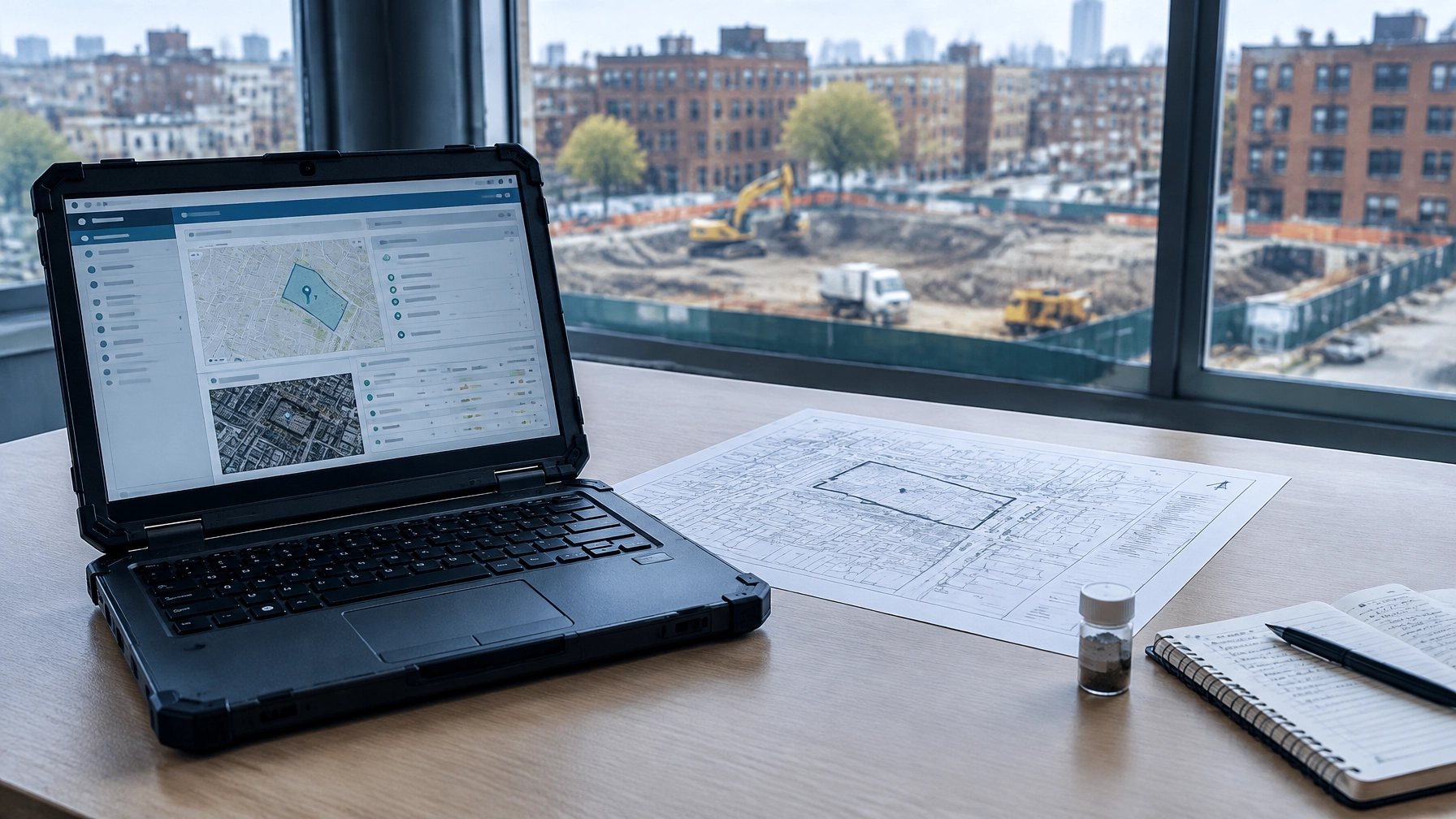
Start with the property’s borough, block, and lot (BBL). Use NYC Planning’s ZoLa map to look up the address or BBL and review environmental requirements. Then compare the result with the applicable entry in Zoning Resolution Appendix C, Table 1. The table lists E-designations by E-number, type, block, and lot. It also warns that later lot changes may not appear in the record. When there is uncertainty, review the related CEQR documents and confirm the current lot history.

Illustrative parcel map. It is not a screenshot of the official ZoLa application.
The NYC Department of City Planning E-designation FAQ explains where to find the environmental requirements and why block-and-lot verification matters. A nearby E-designation does not automatically establish your parcel’s obligations. And a recorded lot merger, subdivision, or condominium conversion can complicate the match between older records and the property as it exists today.
An E-designation is not a building violation
An E-designation is an environmental requirement established through a zoning or land-use review. It is not a building violation, and it does not, by itself, prohibit the property’s existing legal use. The requirement generally becomes relevant when you plan new construction, an enlargement, or a qualifying change in use.
The practical effect is significant: DOB approvals and permits for covered work depend on OER’s review of the site-specific requirements. For a phased development project, the NTP and NOS serve different purposes. The NTP follows OER review of required plans and controls and supports the applicable DOB permit path for approved remedial work. The NOS comes after the required work and closeout documentation satisfy OER. It is typically a key milestone for DOB sign-off and occupancy.
OER manages three broad E-designation topics:
- Hazardous materials: investigation and, when needed, remediation before development can proceed.
- Air quality: requirements that may affect items such as boiler fuel or stack location.
- Noise: requirements that may affect building envelope design, windows, or ventilation.
The actual scope comes from the E-designation record and the related CEQR materials. It is not safe to assume every site needs soil remediation, or that every site has only one environmental issue.
Sequence investigation, RAP, field work, and closeout
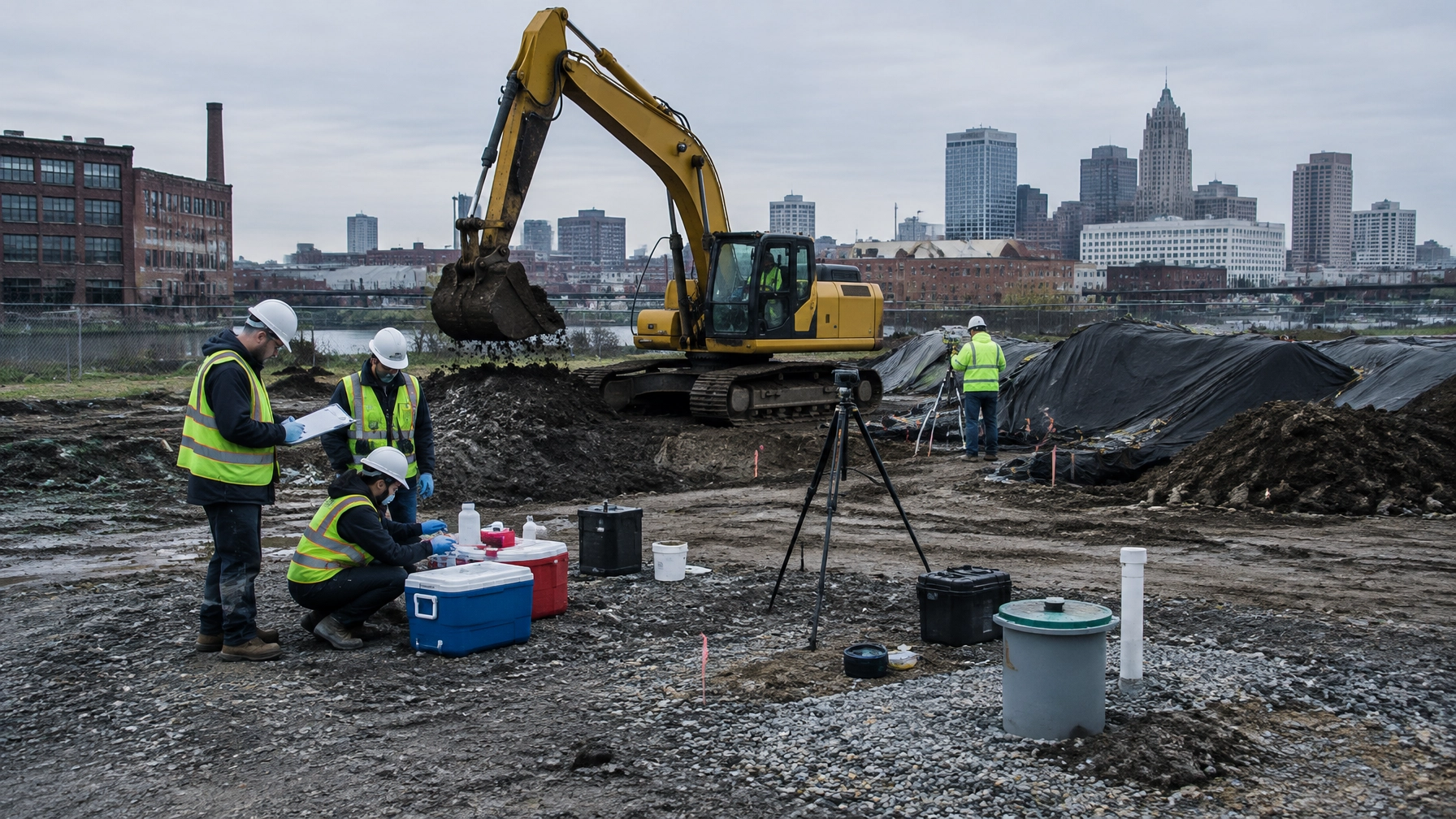
For a Queens project with a hazardous-materials requirement, the work commonly moves from records review and site investigation to an OER-reviewed remedial plan, field implementation, and closure. The sequence should be tied to both the project design and DOB schedule.
- Confirm the parcel and obligations. Verify the BBL, E-designation type, related CEQR documents, existing OER history, proposed DOB filing, and project scope.
- Set up the EPIC record. Select the correct application type and provide complete project and site information. Coordinate the account and submission with the owner, design team, and environmental consultant.
- Build the technical package. Depending on OER’s requirements, this may include prior reports, a site investigation, a Remedial Action Plan (RAP), a Construction Health and Safety Plan (CHASP), or design documentation for required controls. Air and noise requirements call for their own appropriate analysis and design response.
- Resolve review comments before mobilizing. Submit the applicable materials through the OER process and address reviewer comments against the actual site conditions and proposed work. A revised project design can affect the plan and filing.
- Implement and document the approved work. Coordinate contractors, environmental monitoring, field records, and required notices with the approved plan. OER’s current instructions and project-specific requirements govern the timing.
- Submit closure documentation. Prepare the required remedial closure report, certifications, and supporting records through the appropriate OER process. Obtain the NOS when OER accepts the closeout.
Indoor air or vapor sampling can be relevant when site conditions and the investigation scope call for it. It is not a standard requirement for every E-designation project.

Example of an indoor air sampling setup. Sampling methods depend on the site-specific investigation plan and OER requirements.
Common EPIC mistakes that cost time
These problems are avoidable, but they can send the project into another review cycle:
- Selecting NNO for a project that needs phased review. A ground-up development or substantial change in use should not be treated as a minor alteration simply because an NNO seems faster.
- Using the wrong block and lot. Old tax-lot records, mergers, and subdivisions can leave a filing tied to the wrong parcel or an incomplete set of requirements.
- Opening a duplicate project. Search the property and OER history first. A new record can split the project history and complicate review.
- Uploading a package without a clear scope. OER reviewers need to understand the proposed construction and how the submission addresses each applicable requirement.
- Submitting incomplete or inconsistent documents. Conflicting plans, outdated reports, missing certifications, or mismatched project details create questions that could have been addressed before filing.
- Treating a saved application as submitted. Complete the portal’s final submission step and verify receipt and status.
- Paying before OER requests payment. OER’s E-designation fee guidance says applicants should wait for a fee request with an OER project number. The published fee is $1,325 for review of each NTP or NOS phase and $475 for an NNO review. Confirm the current request and fee directly with OER.
Every clarification cycle affects more than an inbox. It can push field mobilization, design coordination, permit sequencing, and financing decisions. A schedule built without the OER path can leave your team paying carrying costs while the file waits for a corrected submission.
Keep the filing connected to the project
EPIC is the filing platform. Getting through OER review depends on accurate parcel research, a well-sequenced technical package, and clear coordination among the owner, architect, engineer, contractor, and reviewer.
At Envicon, we manage NYC OER E-designation filings directly with the project team and OER reviewers. We connect investigation results to the RAP, field monitoring, and closure records, so you know what is needed next and what could affect the schedule. Our NYC E-designation compliance service supports the OER clearance process, and our broader regulatory compliance and permitting services help keep agency requirements aligned with the rest of the work.
For property owners and developers in Queens, NY, Brooklyn, Manhattan, and the Bronx, the first practical step is to confirm the BBL, identify the exact designation, and choose the correct EPIC application before the filing clock starts.
FAQ
Is EPIC mandatory for NYC E-designation applications?
OER directs applicants to submit new development and NNO applications through EPIC Environment. Review the current OER instructions for your project type before filing.
When should I file a New Development Project instead of an NNO?
OER says new buildings and conversions to residential or office uses, typically DOB New Building and Alteration Type 1 applications, should be filed as New Development Projects. NNOs are generally for minor alterations that do not trigger hazardous-materials, air-quality, or noise review. Confirm the proper path for your exact scope with OER.
How do I find the E-designation requirements for my property?
Look up the property by address or BBL in ZoLa, then verify the designation and requirements in Appendix C and the related CEQR documentation. Check for tax-lot changes that may not appear in older records.
Does an E-designation mean the building has a violation?
No. NYC’s E-designation FAQ states that an E-designation is not a building violation. It flags environmental requirements that may need to be satisfied before certain redevelopment work can proceed.
What do the NTP and NOS mean?
The NTP is part of OER’s phased process and follows review of required plans and controls. The NOS is issued after OER accepts the applicable work and closeout materials. DOB requirements depend on the project and filing stage.
The takeaway
Treat EPIC as part of the project’s permitting strategy, not as a last-minute upload task. Confirm the lot, read the requirements, choose the correct application, and sequence investigation, RAP review, field work, and closeout before they become schedule problems. A clean filing gives your team a clearer path from site condition to permit and occupancy.