Published October 5, 2026 at 2:00 PM ET
A New York City site with an E-designation or an active Office of Environmental Remediation project is not ready for excavation simply because the contractor is booked.
Before intrusive work begins, the owner and construction manager need the correct OER filing path, the right supporting documents, and the approval that matches the work. For many projects, that means using the EPIC Environment portal to move from investigation to remedial approval, Notice to Proceed, field implementation, and final closeout.
The difference between a clean filing and a thin one can be several weeks of delay, re-mobilization costs, and a crew waiting behind a fence.
First, determine whether the project needs an NNO or an NTP
NYC OER uses different notices for different types of work.
Notice of No Objection
A Notice of No Objection, or NNO, generally applies to qualifying minor alterations that do not trigger hazardous materials, air quality, or noise review. OER identifies typical NNO work as projects such as certain DOB Alteration Type 2 applications.
An NNO may also apply in limited situations involving support of excavation or foundation work. In those cases, the notice may be limited to that phase and may require an interim report documenting the removal and disposal of excavated soil.
An NNO is not a blanket approval for a new building or unrestricted excavation. The scope in the OER filing must match the DOB application.
OER states that NNO applications must be submitted through EPIC. The agency reserves 30 days for review, although complete applications are often reviewed faster. That faster outcome depends on the submission being complete and internally consistent.
Notice to Proceed
A Notice to Proceed, or NTP, applies when the proposed work is necessary to satisfy environmental requirements or implement an approved remedy.
That commonly includes:
- New building construction on a hazardous materials E-designated lot
- Soil disturbance connected to development
- Remedial excavation
- Work under an OER Voluntary Cleanup Program project
- Installation of engineering controls or other remedial measures
- Construction work covered by an OER-approved Remedial Action Plan or Remedial Action Work Plan
The NTP tells DOB that OER does not object to issuing the permit or permits needed to carry out the approved remedial work. It does not authorize every phase of construction, permit sign-off, or a Certificate of Occupancy.
As DOB Buildings Bulletin 2014-026 explains, the NTP does not replace the final Notice of Satisfaction. It is an authorization step in the middle of the process.
What OER expects before it will issue an NNO
For a new NNO request, the filing sequence is specific.
The owner, PE or RA of record, and project team should prepare the following before opening the EPIC submission:
- Correct property address, block, and lot information
- Verified E-designation and environmental restrictive declaration information
- Exact DOB job number, job type, and job description
- All related DOB job numbers tied to the proposed work
- A clear scope questionnaire
- PE or RA signed and stamped project plans
- A completed and certified NNO application generated through EPIC
- Owner and PE or RA contacts registered in the portal
The OER NNO instructions make an important point. Saving an EPIC project does not complete the filing. The applicant must upload the signed and stamped certified submission and click the final submission button.
That sounds minor. It is not.
A missing certification, an incorrect DOB job number, or a plan set that does not show the actual scope can leave the application incomplete or send it into a correction cycle. OER may also determine that the project does not qualify for an NNO and requires a different review path.
Do not submit the NNO fee with the initial filing. OER issues a fee notice after determining that the project qualifies for an NNO.
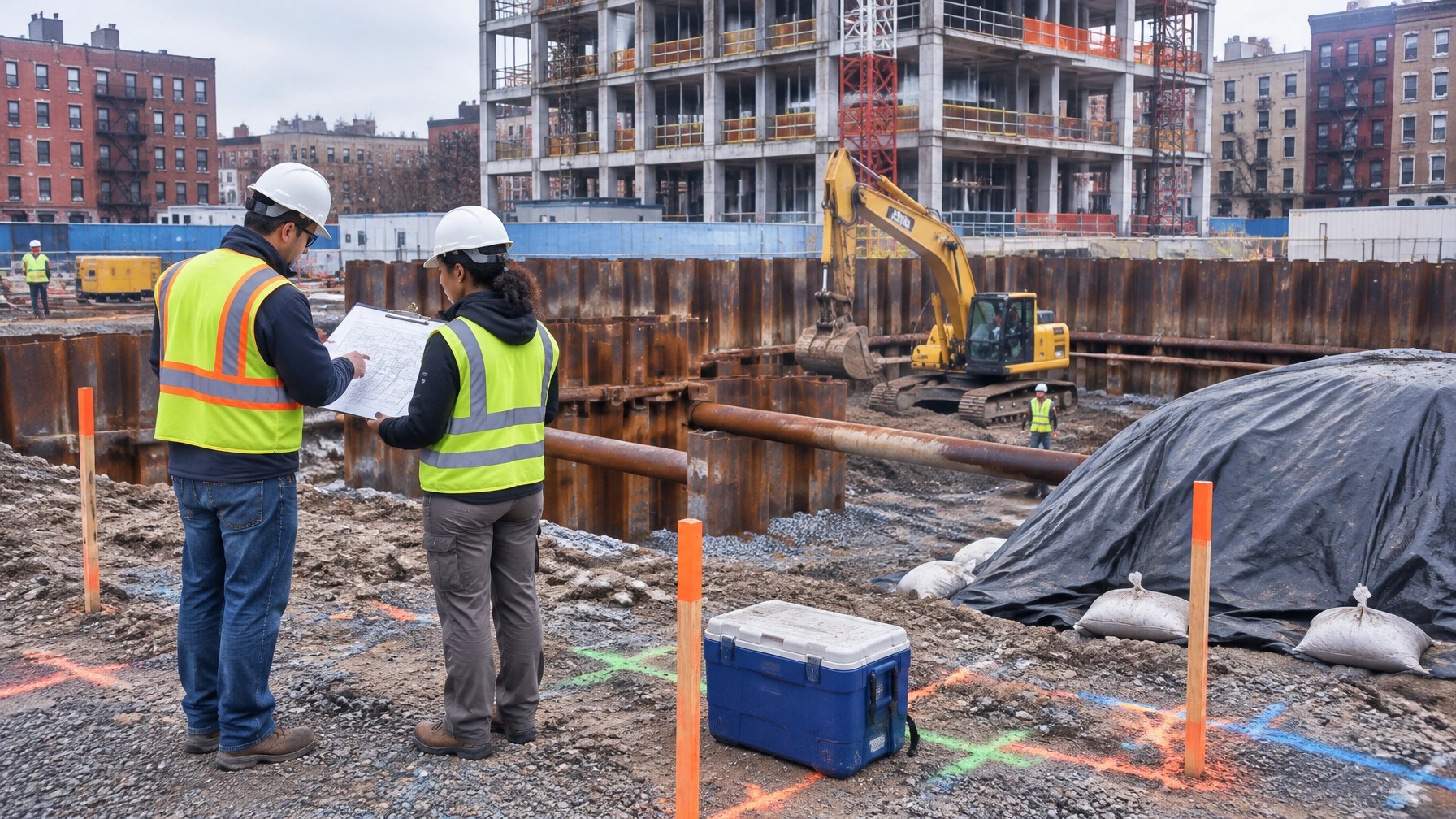
The NTP sequence: investigation, remedial plan, approval, and field work
For a full NYC OER brownfield cleanup or E-designation project, the path is more involved.
1. Confirm the regulatory history
Start by identifying:
- The type of E-designation
- Any environmental restrictive declaration
- Prior OER project numbers
- Existing investigation reports
- Open remediation obligations
- Whether the property is enrolled in the NYC Voluntary Cleanup Program
- The DOB filing and construction sequence
If the property has already worked with OER, do not automatically create a duplicate EPIC project. OER’s NNO instructions direct applicants with existing or prior OER projects to contact the assigned OER project manager.
2. Complete the remedial investigation
The investigation must answer the questions that control the remedy.
Depending on the site history and OER requirements, this may include:
- Soil borings and discrete soil samples
- Groundwater monitoring and sampling
- Soil vapor or sub-slab vapor data
- Waste characterization
- Delineation of impacted media
- Evaluation of exposure pathways
- Field observations and laboratory results
- A clear conceptual site model
The results are compiled into a Remedial Investigation Report, or RIR. The RIR should not simply list laboratory data. It should explain what was found, where it was found, how the impacts relate to the proposed construction, and what action is necessary.
3. Submit the remedial action plan
The next step is the remedial roadmap.
Depending on the project, OER may require a Remedial Action Plan, Remedial Action Work Plan, or related environmental work plan. The submission should address:
- Excavation limits and target depths
- Soil handling, staging, sampling, and disposal
- Groundwater management, if applicable
- Engineering controls
- Vapor controls, if required
- Construction Health and Safety Plan requirements
- Community protection and monitoring requirements
- Confirmation sampling
- Documentation and reporting
- Long-term institutional or engineering controls
The plan must align with the architectural, structural, excavation, and foundation drawings. If the environmental plan says one thing and the excavation drawings show another, OER has a reason to stop and ask questions.
4. Obtain the NTP before mobilization
Once OER approves the remedial approach, it can issue the NTP for the applicable work.
The NTP is not the moment to begin negotiating the excavation details with the contractor. By that point, the owner should already have:
- A booked excavator
- Confirmed disposal outlets
- Soil management procedures
- Sampling logistics
- Field oversight coverage
- A reporting schedule
- A plan for responding to unexpected conditions
A Notice to Proceed can also be affected by timing. Under the E-designation rules referenced by DOB, an NTP may become void if work on the OER-approved remedial action plan does not commence within one year of approval. Confirm the applicable conditions for the project with OER and counsel.
Where self-certification fits
Self-certification does not mean the owner can skip OER review.
After the remedial work is complete, the environmental professional prepares a Remedial Action Report or Remedial Closure Report. That report documents and certifies that the approved remedial plan was implemented.
The closeout package typically includes:
- Final excavation limits
- Soil disposal and reuse records
- Field logs and photographs
- Confirmation sampling results
- Engineering control installation records
- As-built information
- Deviations from the approved plan
- Waste manifests and disposal documentation
- Required certifications
- Site Management Plan materials, if long-term controls remain
OER then reviews the closeout submission. If the requirements are satisfied, OER issues a Notice of Satisfaction or Notice of Completion.
The DOB Certificate of Occupancy worksheet identifies the OER NTP and Notice of Satisfaction as required or waived documents for applicable TCO and CO submissions. A phased TCO may require an NNO for the specific area seeking occupancy while the broader project remains open.
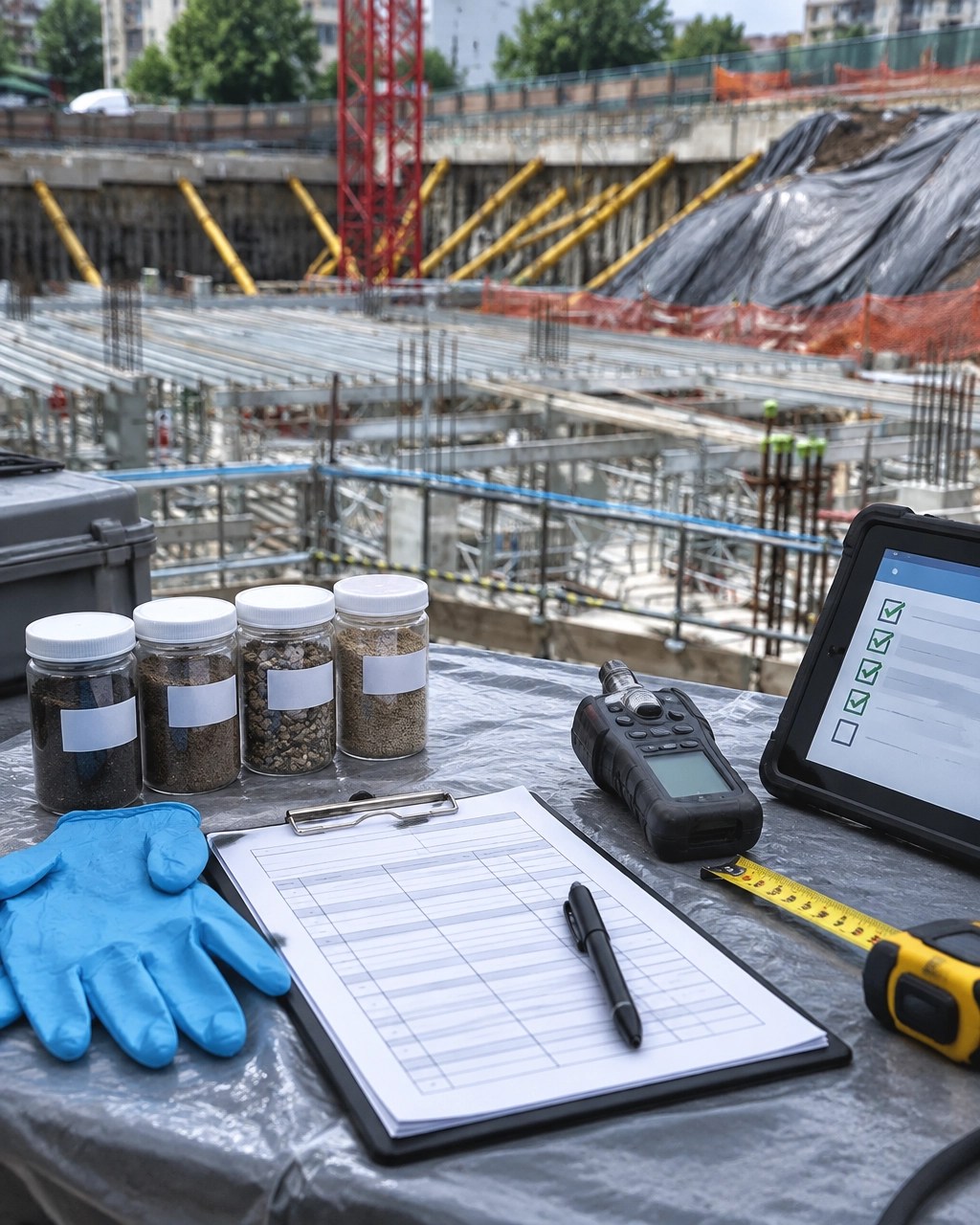
A filing calendar that keeps the excavator booked
Owners and construction managers should build the OER calendar backward from the planned excavation date.
Eight to twelve weeks before planned mobilization
- Confirm the E-designation, restrictive declaration, or VCP status
- Pull prior OER and DOB records
- Confirm the environmental review path
- Assign the PE or RA of record
- Review existing investigation data
- Identify missing technical information
Six to eight weeks before mobilization
- Complete the remedial investigation or supplemental sampling
- Finalize the conceptual site model
- Coordinate the excavation and foundation drawings
- Prepare the RIR and remedial work plan
- Draft the CHASP and field documentation procedures
Four to six weeks before mobilization
- Submit the complete package through EPIC
- Confirm that the filing matches the DOB job numbers
- Track OER comments and respond through the assigned project manager
- Confirm contractor scope and soil handling assumptions
- Hold disposal and laboratory capacity
Two to four weeks before mobilization
- Resolve OER comments
- Confirm the NTP or applicable NNO
- Confirm DOB permit coverage
- Finalize field staffing and monitoring
- Issue the approved environmental requirements to the excavation contractor
Before the first bucket enters the ground
- Confirm required OER notice is issued
- Confirm DOB permits are active
- Confirm the approved remedial plan is available on site
- Confirm field personnel understand stop-work conditions
- Confirm soil, sampling, disposal, and reporting procedures
- Document the initial site condition
If the filing starts after the excavator is booked, the project is already behind.
Why local OER experience matters
A national firm may have the technical staff to prepare an environmental report. That is only the baseline.
The practical question is whether the deliverable answers the reviewer’s questions before the reviewer has to ask them. NYC projects require coordination among OER, DOB, the owner, architect, structural engineer, construction manager, contractor, and legal team.
At Envicon, we work directly with NYC agencies and understand how OER comments affect the construction schedule. Our goal is not to produce a long report that sits in a document repository. We prepare filings that move the file toward approval, keep the owner informed, and connect the environmental requirements to the work happening in the excavation.
That is the difference between submitting information and advancing a project.
The takeaway
For an NYC OER E-designation or VCP project, the sequence matters:
- Confirm the regulatory path.
- Complete the remedial investigation.
- Prepare a defensible remedial action work plan.
- Submit through EPIC.
- Resolve comments.
- Obtain the NTP or applicable NNO.
- Implement the approved work.
- Submit certified closeout documentation.
- Obtain the Notice of Satisfaction before final DOB sign-off or CO.
Do not book excavation first and ask OER questions later. Build the filing calendar before you mobilize.
Learn about Envicon’s NYC E-Designation and OER clearance services or review our broader compliance and permitting services. We help owners across Manhattan, Brooklyn, Queens, and the Bronx move from environmental obligation to buildable site.
Ready to keep your NYC excavation on schedule?
- Call now: (917) 764-2171
- Use Envicon’s proprietary cost estimator
- View our complete list of services