Published September 28, 2026 at 2:00 PM ET
If you’re asking, “How much does a Phase I ESA cost in NYC?” the practical 2026 answer is usually $1,800 to $4,500 for a straightforward commercial property, with more complex sites and rush schedules reaching higher.
The price depends on what the consultant actually does. A low quote may cover a narrow review with limited lender value. A properly scoped ASTM E1527-21 Phase I Environmental Site Assessment should give you a defensible review of the property’s environmental history, current conditions, surrounding land uses, and potential Recognized Environmental Conditions.
The report is not the product. The outcome is a cleaner closing process with fewer surprises.
“The cheapest report is expensive when it cannot close the deal.”
What a $1,800 to $4,500 Phase I ESA includes
A complete Phase I ESA for a typical NYC commercial property generally includes four core work areas.
1. Historical records review
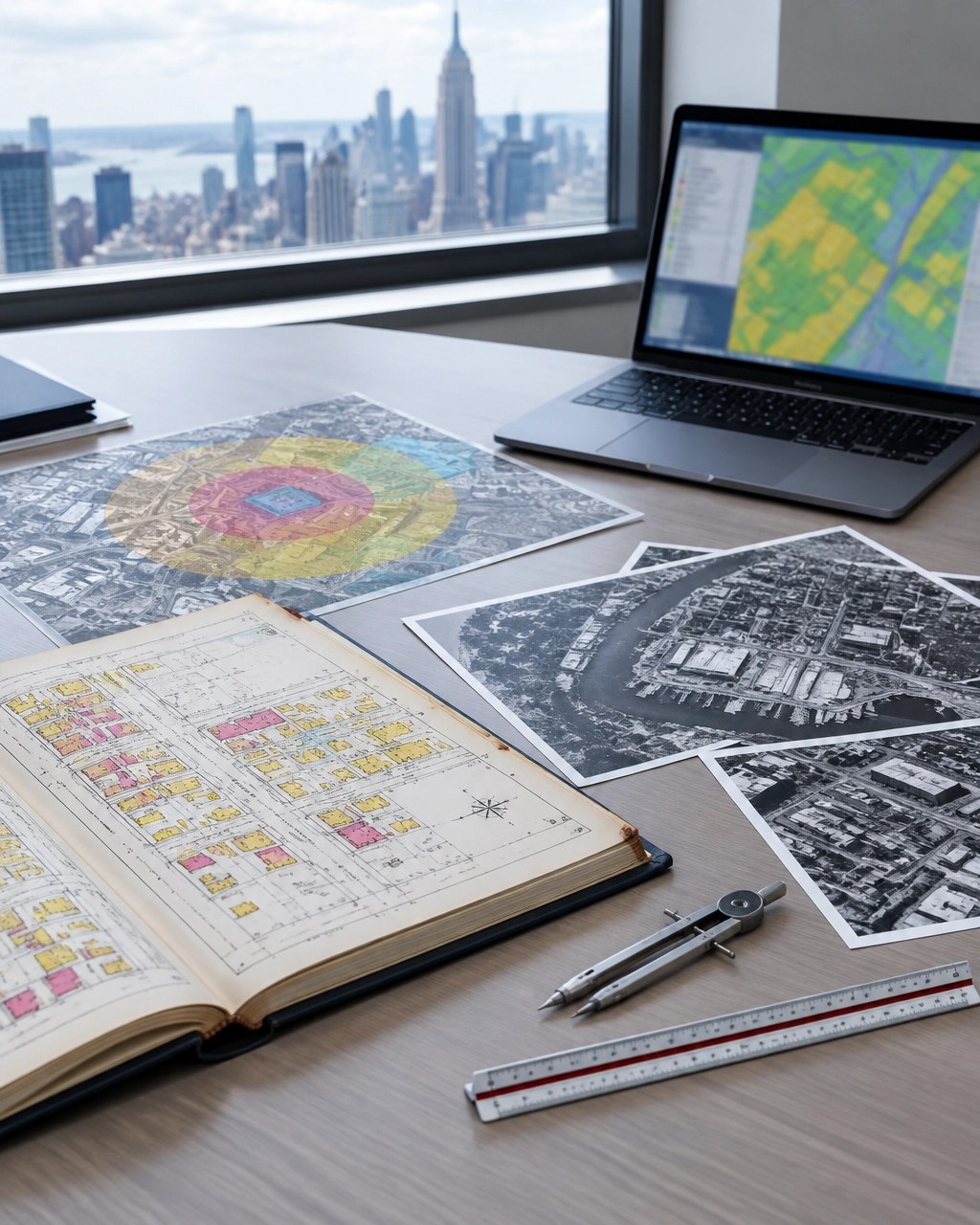
The environmental professional reviews available records to understand how the property and surrounding parcels were used over time.
That can include:
- Sanborn fire insurance maps
- Historical aerial photographs
- City directories
- Topographic maps
- Building and property records
- Prior environmental reports
- Federal, state, and local regulatory files
- Owner, tenant, and operator interviews
In New York City, historical use matters. A former dry cleaner, gas station, metal shop, auto repair facility, printing operation, or manufacturing site can create environmental concerns that do not appear during a short site walk.
The objective is not to collect documents for their own sake. It is to determine whether past or current operations indicate a potential environmental condition that could affect value, liability, financing, or redevelopment.
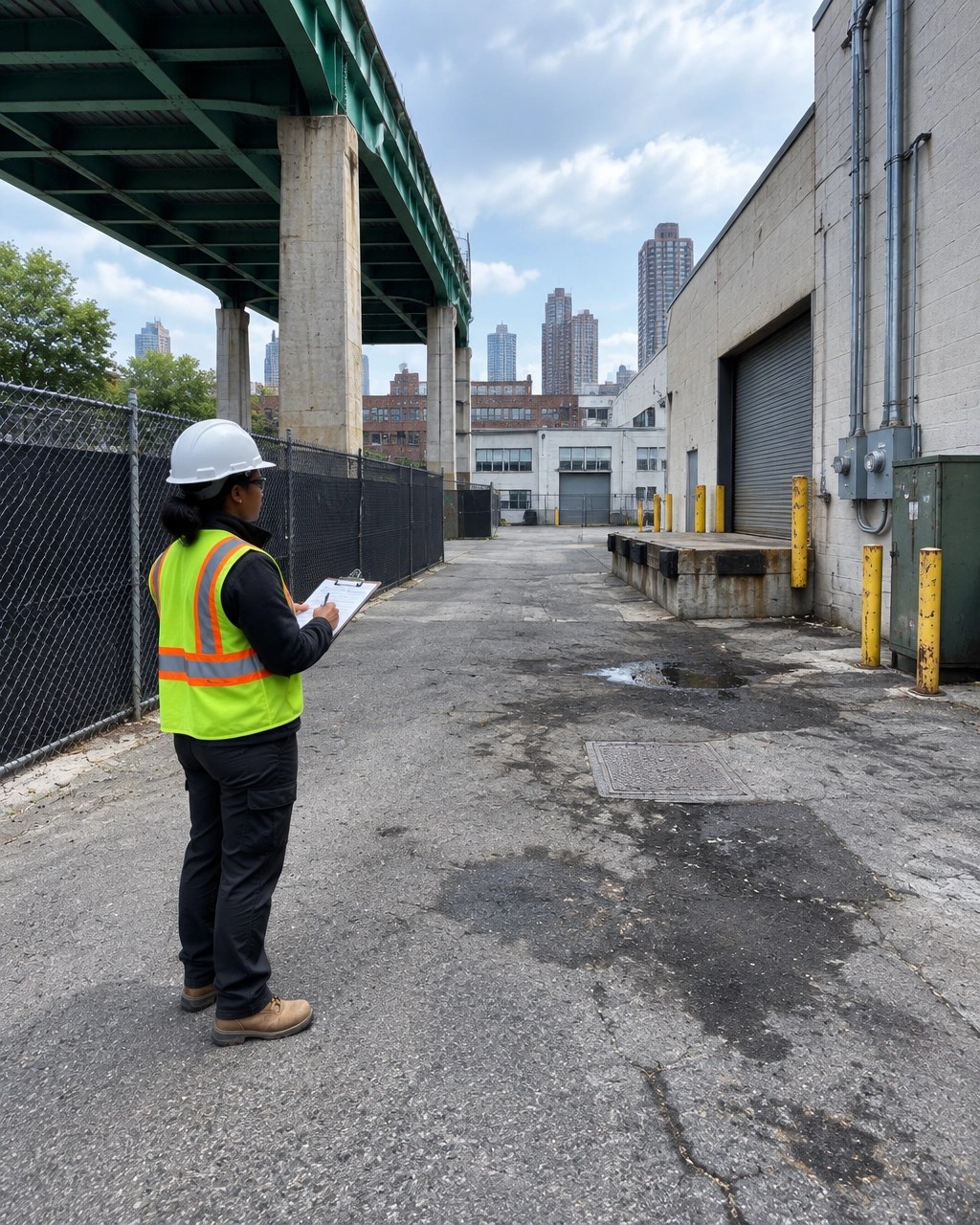
2. Site reconnaissance
The site visit is where a desktop review meets current conditions.
The Environmental Professional looks for visible evidence such as:
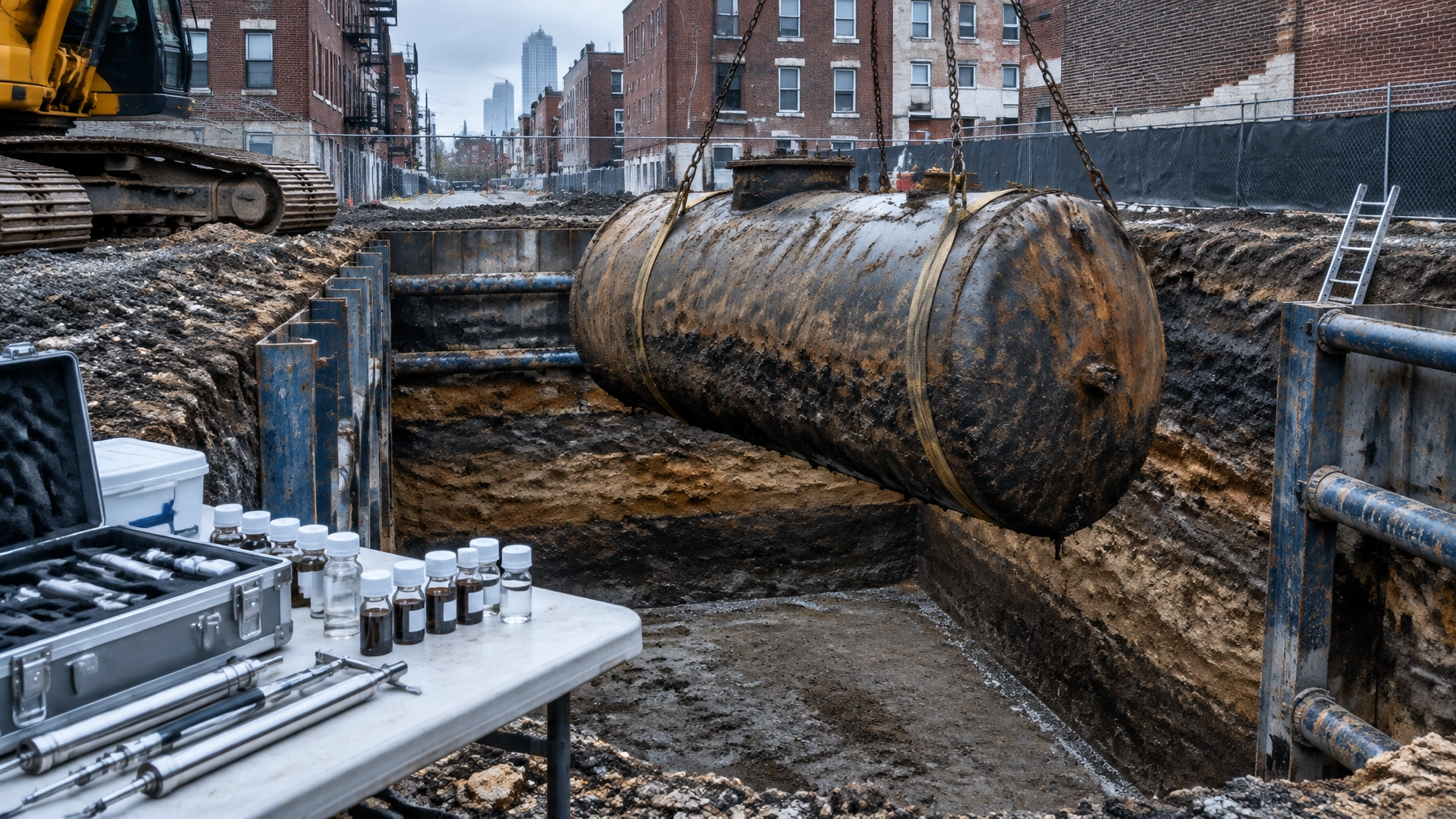
- Aboveground or underground storage tanks
- Staining or stressed vegetation
- Drums, containers, or waste storage
- Floor drains and hydraulic equipment
- Spills or chemical handling areas
- Electrical transformers
- Strong chemical or petroleum odors
- Industrial operations on adjoining parcels
- Areas where vapor migration could affect the property
For NYC properties, access can be complicated. A site may include multiple buildings, rooftops, basements, loading areas, rear yards, easements, or shared utility corridors. A report written without meaningful site access may miss conditions that matter to your lender or attorney.
Envicon’s Phase I ESA service includes site reconnaissance, records review, interviews, regulatory database research, and a written REC determination consistent with ASTM E1527-21.
3. Regulatory database radius report
A regulatory database search reviews environmental listings within a defined radius of the subject property.
The search can identify:
- Spill records
- Leaking underground storage tanks
- Hazardous waste facilities
- Superfund or federal listings
- State cleanup sites
- Brownfield properties
- Dry-cleaning or industrial facilities
- Landfills and waste sites
- Nearby properties with groundwater or vapor concerns
A database hit does not automatically mean your property is contaminated. The Environmental Professional must evaluate the listing, location, status, historical relationship, and likely migration pathway.
That interpretation is where professional judgment matters. A report that simply attaches a database printout without explaining the relevance leaves the buyer, lender, and counsel to do the important work themselves.
4. Adjacent property research
NYC properties rarely exist in isolation. A neighboring parcel can be as important as the subject property.
For example, a former industrial operation next door may have affected shared groundwater. A dry cleaner across the street may create a vapor concern. A former gas station nearby may have a long regulatory history that requires closer review.
Adjacent property research typically considers:
- Current and historical neighboring uses
- Shared or nearby groundwater pathways
- Former industrial operations
- Dry cleaners and auto-related businesses
- Fuel storage and dispensing
- Known spills and regulatory cases
- Potential vapor encroachment
This is one of the areas where a fast, generic report can fall short. NYC blocks are dense, and environmental conditions do not follow property lines.
NYC Phase I ESA pricing by scope
Here is what the common price ranges generally buy.
Around $1,800 to $2,200
This range may apply to a small, straightforward, single-parcel property with:
- Clear site access
- Limited development history
- No known industrial use
- Standard lender requirements
- Normal turnaround
- Readily available historical records
Ask questions before accepting this price. Confirm that the scope includes a site visit, regulatory database radius report, historical research, interviews, and a report signed by a qualified Environmental Professional.
A desktop review is not the same as an ASTM-compliant Phase I ESA. It may provide an initial go or no-go opinion, but it does not provide the same level of lender or liability protection.
Around $2,200 to $3,500
This is a common range for a standard NYC commercial Phase I ESA with full ASTM E1527-21 scope.
The property may have:
- A more complicated historical record
- Multiple adjoining parcels
- Mixed commercial or residential use
- Previous fuel, industrial, or dry-cleaning operations
- More extensive agency records
- A lender with specific report requirements
Envicon’s published Phase I ESA pricing identifies $2,200 as a starting point for a standard engagement. The actual fixed fee depends on the property, scope, timing, and transaction requirements. See the Envicon Phase I ESA cost guide for more detail.
Around $3,500 to $4,500
This range often reflects additional complexity or schedule pressure.
Common cost drivers include:
- Multiple tax lots or parcels
- Former manufacturing or industrial use
- Known or suspected spills
- Difficult site access
- Extensive adjacent property concerns
- Prior environmental reports requiring review
- Lender-specific forms or reliance requirements
- Rush delivery before closing
The number should still come with a clear scope. You should know what is included, what is excluded, when the site visit will occur, and when the final report will arrive.
Why a lender rejection costs more than the report
A rejected Phase I ESA does not just create another consulting invoice.
It can affect:
- Your closing date
- Loan commitment deadlines
- Interest rate locks
- Purchase agreement extensions
- Carrying costs
- Investor confidence
- Construction scheduling
- Seller negotiations
- Legal and transaction management time
If a lender rejects the report because it lacks ASTM scope, omits required records, fails to address a database listing, or does not meet the lender’s reliance requirements, you may need to order a second assessment.
That can mean a new site visit, new records research, another review cycle, and another wait for a report. If the replacement consultant identifies a REC that the first report missed, the transaction may require a Phase II investigation before closing.
The real cost is the delay.
Envicon approaches the assignment around the transaction driver. We ask who the lender is, what the closing date requires, whether counsel has specific conditions, and whether the property has a prior report that needs to be updated or relied upon.
Our published service information notes a 100% lender approval track record for Phase I and Phase II ESAs. No consultant can control every lender decision, but proper scope, direct communication, and clear documentation reduce avoidable rejection risk.
What large national firms may pad into the price
Large national firms have real capabilities. Their pricing also often carries layers that smaller, field-led teams do not need to add to every assignment.
Those layers can include:
- Regional project management
- Multiple internal review tiers
- Corporate procurement administration
- National account coordination
- Travel and mobilization from outside the local market
- Standard rush premiums
- Broad contingency allowances
- Junior staff execution with senior staff review
- Bundled services you did not request
Those costs may be reasonable for a large institutional program. They are less useful when you need one NYC property reviewed before a closing date.
At Envicon, we keep the scope tied to the property and the transaction. We do not add unrelated testing simply to enlarge the proposal. We do not make you wait for a national queue to answer a local regulatory question. Our team coordinates directly with developers, attorneys, lenders, architects, and project managers.
You get a fixed-fee scope, a delivery date, and a clear explanation of what the findings mean.
Can an NYC Phase I ESA be completed in 48 hours?
Sometimes.
Envicon has a 48-hour turnaround capability for qualifying assignments, subject to site access, document availability, property complexity, and lender requirements. A 48-hour schedule is not a shortcut around ASTM E1527-21. It requires immediate authorization, fast access to the property, responsive owner or tenant interviews, and a team that can perform research and review in parallel.
A 48-hour ESA may be appropriate when:
- The property has a straightforward history
- Site access is available immediately
- The lender accepts the proposed scope
- Prior reports and property records are accessible
- The transaction has a firm closing deadline
It may not be appropriate for a large industrial property, a multi-parcel portfolio, or a site with unresolved spills and complicated agency records.
A fast report is valuable only when it is complete and usable.

Questions to ask before hiring a Phase I ESA consultant
Before you compare prices, ask:
- Does the scope meet ASTM E1527-21?
- Will a qualified Environmental Professional sign the report?
- Is the regulatory database radius search included?
- Does the price include adjacent property research?
- Will the consultant review Sanborn maps and historical aerials?
- Is the site visit included?
- Can the report satisfy my lender’s reliance requirements?
- What happens if the consultant identifies a REC?
- Is the fee fixed or subject to internal change orders?
- What is the actual delivery date from authorization?
The answers tell you more than the headline price.
The bottom line on Phase I ESA cost in NYC
For 2026, $1,800 to $4,500 can be a reasonable planning range for a NYC Phase I ESA, but the scope behind the number matters.
A lower price may fit a simple property with clear records and normal timing. A higher price may be justified by complex historical uses, multiple parcels, lender requirements, difficult access, or a short closing deadline.
You are not buying a PDF. You are buying a defensible path through due diligence.
Envicon helps New York City developers, investors, lenders, attorneys, and property owners solve environmental and engineering challenges with precision, speed, and trust. We work across Manhattan, Brooklyn, Queens, the Bronx, and Staten Island, including from our Manhattan service area.
Get a Phase I ESA cost estimate for your NYC property
Start with the property address, closing date, prior use, and lender requirements. We will help you determine the right scope before you commit to the wrong report.
- Use our proprietary Phase I ESA cost estimator
- Get a free consultation
- Call Envicon now at (917) 764-2171
Collaboration is not a buzzword. It is how we keep transactions moving.